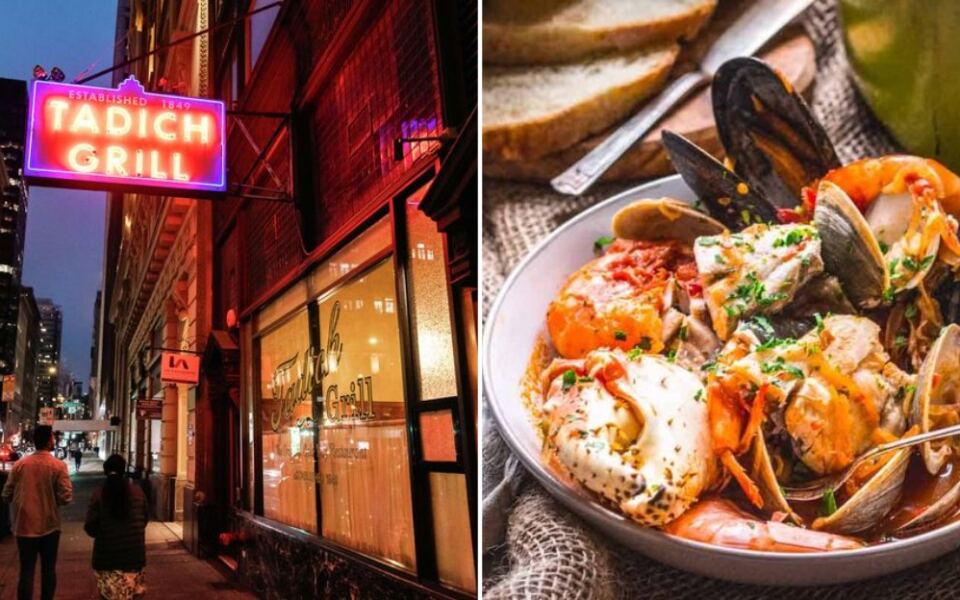
Crab legs, clams, and fish can share one bowl of cioppino, the seafood stew with deep Italian American roots. Its tomato base ties the catch together, while the shells make dinner feel like a small, delicious project.
The dish grew from the cooking traditions of Italian fishing families in a California port city. Its name connects to a Ligurian seafood stew, giving this American favorite a link across the Atlantic.
I like how one meal can tell that story without needing much explanation beyond a spoon and some bread. You get a dish shaped by working boats, immigrant kitchens, and whatever seafood makes sense for the pot.
Recipes vary, which makes choosing a bowl part of the fun rather than a test of authenticity. The interesting question is what each kitchen brings to that shared tradition.
A Bowl That Tells San Francisco’s Story
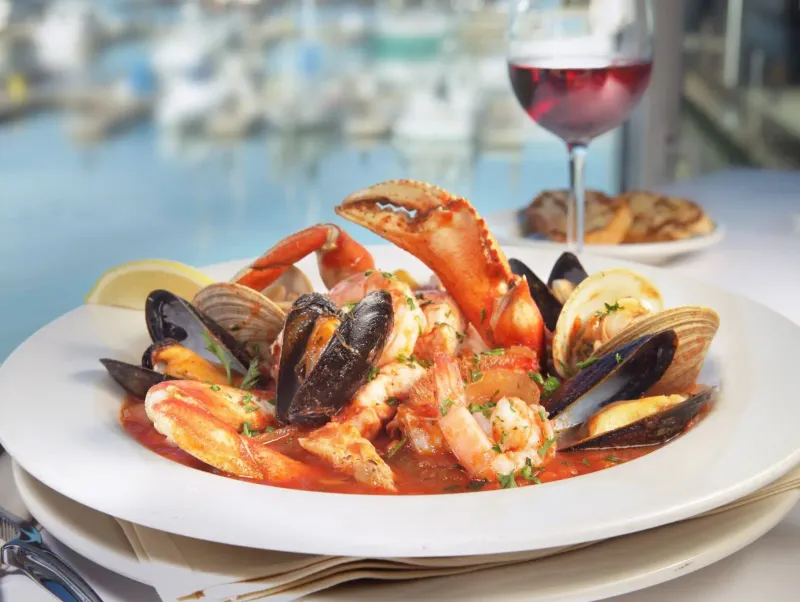
A seafood dinner can carry a surprising amount of history, especially when its roots reach across an ocean. San Francisco cioppino belongs to the city’s Italian American food tradition, with fishing communities central to its story.
Rather than tracing everything to one famous chef, most accounts connect the dish with immigrant fishermen and their households. That broader origin matters because it explains why recipes differ instead of following one fixed ingredient list.
The familiar bowl combines seafood with a tomato base, often bringing shellfish and pieces of fish into the same pot. Dungeness crab has become especially associated with the San Francisco version, though every preparation deserves its own description.
I find that flexibility more interesting than arguments about which restaurant serves the single correct recipe for everyone. A working waterfront dish makes sense as something adaptable, shaped by available seafood and the cook handling it.
Keep that history in mind when comparing menus at Tadich Grill, Scoma’s, Anchor Oyster Bar, or Hog Island Oyster Co. Their individual offerings need checking before a visit, but the larger story gives your search a useful starting point.
The Name Has an Italian Connection
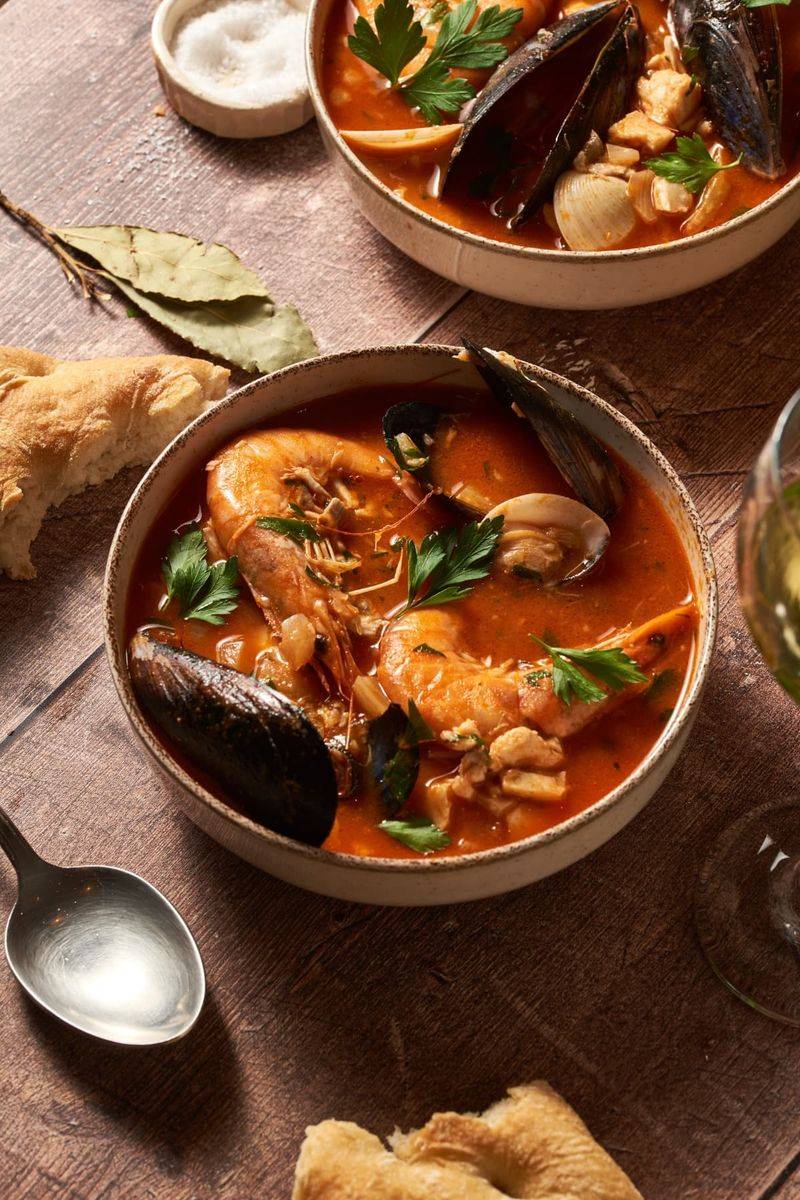
Say cioppino aloud, and you already have a clue to its family history before the first spoonful arrives. The name is generally linked to ciuppin, a seafood soup associated with Liguria, along Italy’s northwestern coast.
That connection fits the migration story behind the dish, since immigrants brought cooking habits as well as family recipes. In California, those traditions met Pacific seafood and developed into a meal with a strong local identity.
You may also encounter the cheerful explanation that fishermen would ask one another to chip in their catch. Treat that as a popular story rather than a settled explanation of where the actual word came from.
Food history often collects a little folklore, and cioppino has certainly attracted its share over the years, too. Keeping the language connection separate from the colorful tale makes the history clearer without taking away its charm.
For your dinner plans, the useful lesson is simple: this dish has roots, but it also welcomes variation. Look at what a kitchen actually puts in its bowl instead of expecting every version to match an imagined original exactly.
Tadich Grill Connects Dinner With a Long Restaurant History
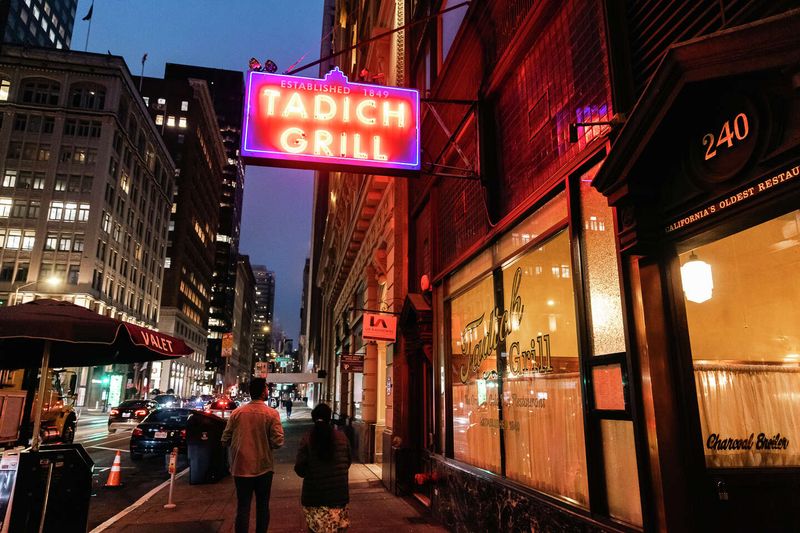
Few restaurant names fit a discussion of old San Francisco food traditions as naturally as Tadich Grill does. Its history reaches back to 1849, although that does not mean its present address dates from the beginning.
You will find the restaurant at 240 California Street, San Francisco, CA 94111, in the city’s Financial District. That gives you a downtown option when a waterfront meal does not fit the rest of your day.
Cioppino is associated with Tadich’s seafood-focused menu, making it a sensible restaurant to investigate for this particular dish. Confirm the latest menu directly before setting out, since ingredients and availability can change without much advance notice.
The historical distinction matters here: a restaurant’s age and a recipe’s age are two separate pieces of information. You can appreciate Tadich’s long story without claiming it invented cioppino or has served one unchanged version forever.
For planning, check service hours and the restaurant’s seating policy rather than relying on an older dining guide. I like this choice for readers who want their seafood search tied to California restaurant history, not an unsupported claim about origins.
Scoma’s Puts the Waterfront Back in the Story
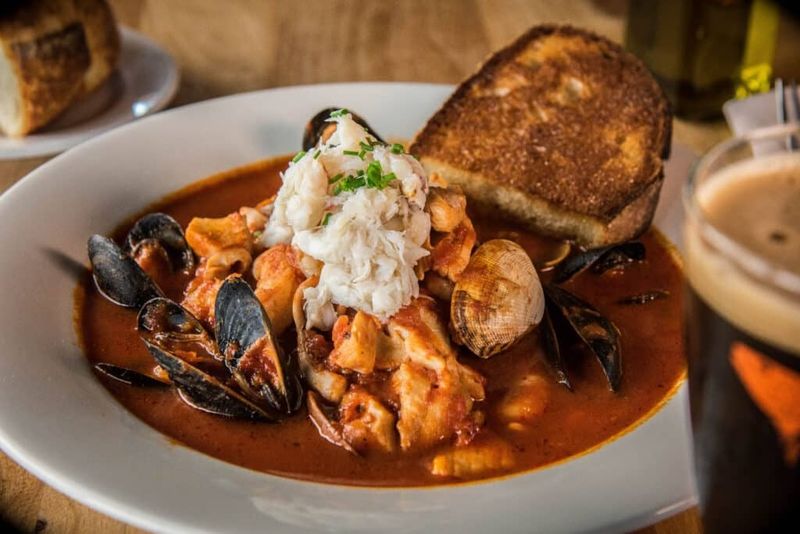
The waterfront gives cioppino’s fishing history a setting you can connect with immediately, without adding any invented romance. Scoma’s is located at 1965 Al Scoma Way, Pier 47, San Francisco, CA 94133, near Fisherman’s Wharf.
The restaurant dates to 1965, giving it its own substantial place in the city’s seafood dining history today. That is a restaurant milestone, not evidence that the dish itself began there or followed one permanent recipe.
Scoma’s is known for a preparation called Lazy Man’s Cioppino, a useful name to recognize while checking menus. Ask what seafood the current version includes and how it is prepared before assuming the name explains every detail.
That small conversation can help if you prefer less shell handling or need clear information about particular ingredients. It also keeps expectations tied to the kitchen’s actual offering rather than a description borrowed from another restaurant.
Build enough time into your waterfront plans to reach the correct pier instead of stopping at the first seafood sign. The address is worth saving beforehand, and a direct menu check will tell you whether this is your bowl today.
Anchor Oyster Bar Takes the Search Into the Castro
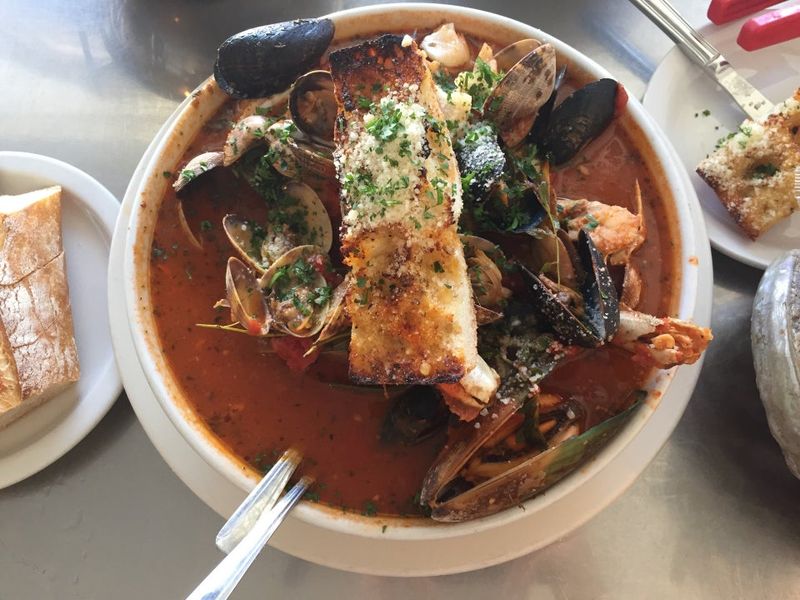
Your cioppino search does not have to stay beside the fishing boats or within the downtown street grid. Anchor Oyster Bar brings another established seafood name into the conversation, this time in San Francisco’s Castro neighborhood.
The address is 579 Castro Street, San Francisco, CA 94114, which helps distinguish it from similarly named businesses. Save the full name when checking directions, since a generic search for an oyster bar can send you elsewhere.
Founded in 1977, Anchor has a history of its own rather than simply borrowing the city’s seafood reputation. Cioppino is among the dishes associated with the restaurant, but confirm its availability before organizing your day around it.
Check the current seating arrangements and hours directly, especially if your group has specific access or timing needs. Those practical details matter more than old descriptions of how a restaurant usually handles an ordinary service period.
Choosing this address also lets you explore a different part of the city while keeping the same food theme. Think of it as changing neighborhoods, not changing the subject, with the seafood bowl still guiding the outing you are planning today.
Hog Island Needs a Menu Check Before You Commit
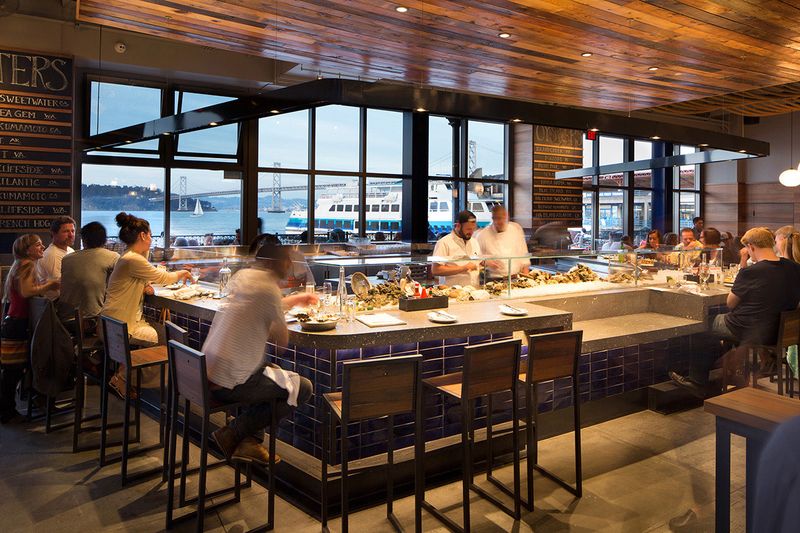
An oyster specialist can belong on your seafood shortlist without guaranteeing that your preferred stew appears every day. Hog Island Oyster Co. has a San Francisco location in the Ferry Building Marketplace, along the Embarcadero waterfront.
Its address is 1 Ferry Building, San Francisco, CA 94111, a different destination from the company’s other locations. Make sure any menu you consult belongs to that restaurant rather than another branch with its own offerings.
For cioppino specifically, ask the San Francisco team whether it is available before making a dedicated trip there. An oyster-focused menu alone does not establish that a restaurant serves this particular tomato-based seafood stew at present.
That distinction keeps your plans realistic and leaves room to choose another seafood meal if you want one. It also avoids confusing cioppino with a chowder or another shellfish dish just because both arrive in bowls.
I would treat Hog Island as a conditional stop for this article’s mission, rather than promise a guaranteed order. If cioppino is essential, get a clear answer first, then choose among the restaurants that can confirm it for your visit that day.
Read the Seafood List Before Picking Your Bowl
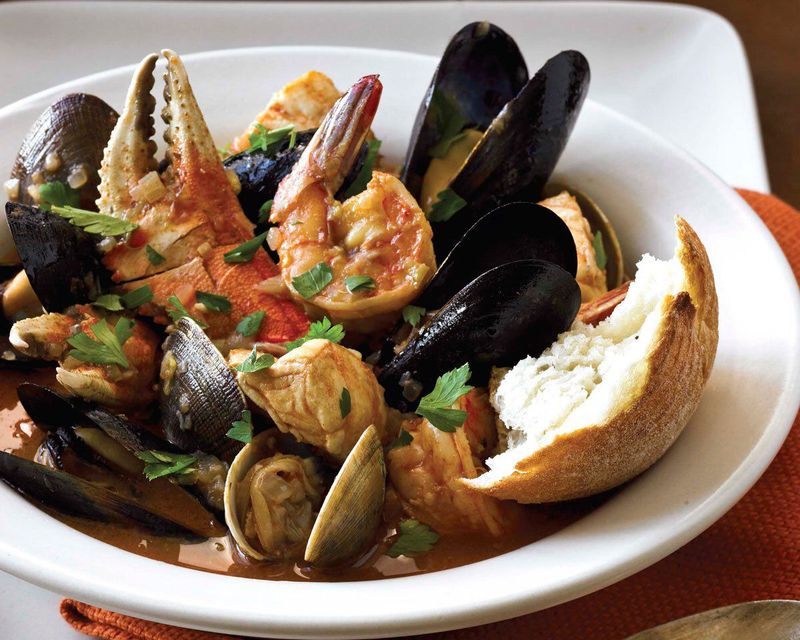
Two bowls can share a name and still give you quite different seafood combinations at the same meal. Clams, mussels, shrimp, whitefish, and Dungeness crab all belong in the wider conversation, but no list guarantees every ingredient.
Read the restaurant’s description closely, then ask about anything that matters to your tastes or your dietary needs. A photograph can suggest a serving style, but it cannot reliably establish the ingredients in your next order.
Dungeness crab deserves particular attention because availability can vary, and the species should never be assumed from appearance. Ask whether crab is included, what kind it is, and whether the kitchen expects any substitutions that day.
For allergies, explain the concern clearly rather than asking only whether a single ingredient can be left out. Shared broth, preparation equipment, and other ingredients may matter, so the restaurant needs enough information to answer responsibly.
Finally, check whether the seafood arrives in shells or has already been removed, since that changes the eating experience. Neither approach automatically wins; the better choice is whichever lets you enjoy dinner comfortably and understand exactly what you are ordering that evening.
A Little Shell Strategy Makes Dinner Easier
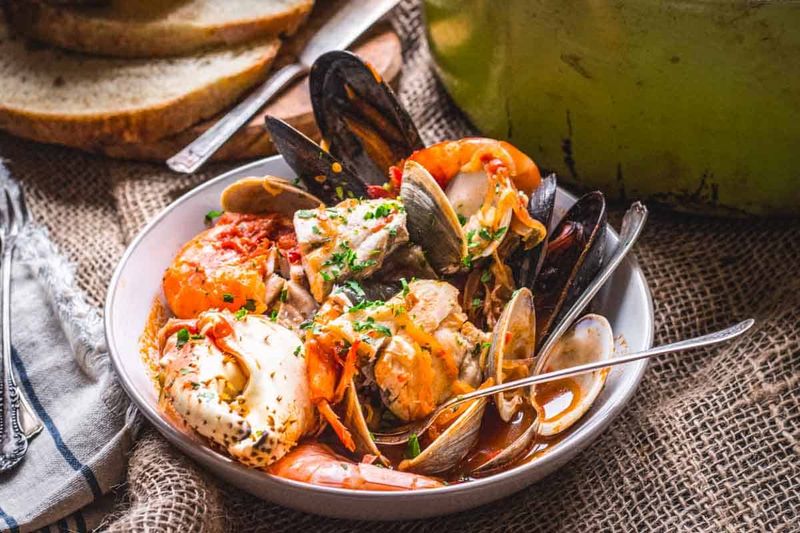
Shell-on seafood asks for a little participation, which is part of cioppino’s appeal for many diners at dinner. Before you begin, notice what utensils and extra dishes the restaurant provides, then ask for anything you need.
A separate dish for empty shells keeps the main bowl easier to manage as you work through dinner. If crab arrives in its shell, ask which tool the restaurant recommends rather than improvising with your regular cutlery.
Bread can be useful for enjoying the broth, but check whether it comes with the dish or separately. Never assume a particular accompaniment, even when photographs from an earlier menu show a familiar slice beside the bowl.
There is no need to turn the meal into a speed contest or a lesson in perfect technique. Take manageable bites, separate shells carefully, and let the broth remain part of the meal rather than an afterthought.
If handling shells does not sound enjoyable, ask about preparation before ordering instead of discovering the difference at the table. A few practical questions protect the pleasure of the meal, leaving your attention free for what brought you here: the seafood itself.
Let Your Day’s Route Choose the Final Stop
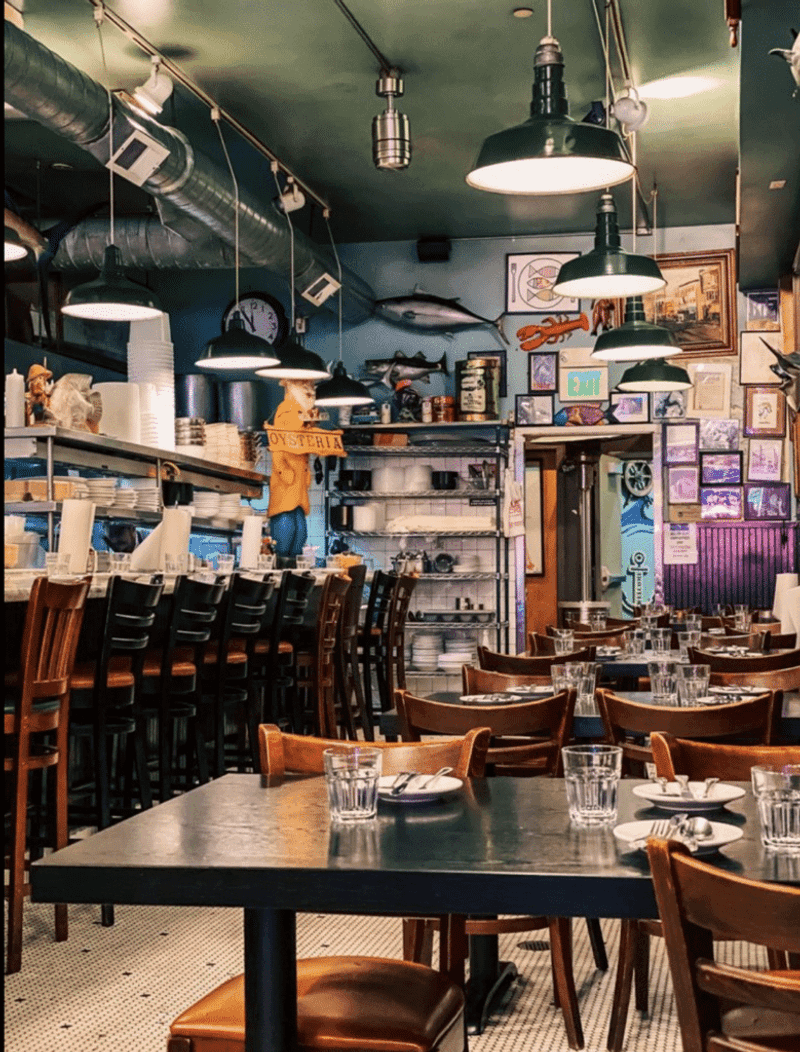
The best restaurant choice may come down to where you already plan to spend your afternoon or evening. These addresses sit in different parts of San Francisco, so treating them as interchangeable stops can complicate a simple meal.
Tadich Grill fits a Financial District plan, while Scoma’s places you near the Fisherman’s Wharf portion of the waterfront. Anchor Oyster Bar takes the search to the Castro, and Hog Island’s city location belongs to the Ferry Building.
Check travel options for the actual day rather than trusting a fixed journey time from an older article. Service changes, traffic, and your starting point all affect whether an address makes sense for the time you have.
Before leaving, confirm three things directly: the restaurant is serving, cioppino is available, and its ordering arrangements suit you. Those checks are especially useful when one particular dish, rather than a general seafood outing, motivates the trip.
I like the idea of choosing one bowl thoughtfully instead of turning dinner into a race between famous names. Cioppino began as food rooted in a community; giving it your full attention feels like a fitting way to enjoy its story today.
Share this story