Chicago takes pizza seriously, and for good reason. This Illinois city has turned deep-dish pizza into a culinary landmark, but its pizza scene offers much more than thick crusts and generous layers of cheese.
Across Chicago, you’ll find everything from traditional Neapolitan pies baked in wood-fired ovens to thin-crust pizzas with crisp edges and inventive toppings. Some restaurants have been serving generations of families, while others have introduced new approaches to familiar recipes.
What makes exploring these places especially enjoyable is how different their interpretations of pizza can be. A caramelized crust at one restaurant, a buttery deep-dish base at another, and a delicate Italian-style pizza somewhere else can create completely different experiences.
These eight names offer a look at the traditions, techniques, and local favorites that have shaped Chicago’s pizza reputation. A few historic establishments also require special attention because their operating status has changed over time.
1. Labriola
A deep-dish pizza topped with burrata and fresh basil is an excellent reminder that Chicago’s most famous pizza style can still leave room for creativity. Labriola combines the city’s deep-dish tradition with an Italian restaurant’s broader interest in carefully prepared ingredients.
The downtown restaurant is located at 535 North Michigan Avenue, putting it in one of Chicago’s busiest shopping and sightseeing districts. Its menu includes both deep-dish and thin-crust pizzas, giving visitors a choice between two very different experiences.
The burrata and basil deep-dish pizza is particularly appealing because it introduces a creamy Italian cheese to a familiar Chicago format. Burrata has a soft, rich center that distinguishes it from conventional mozzarella.
Basil adds a fresh herbal element, helping create a combination that feels connected to Italian cooking traditions. It’s an interesting alternative to the meat-heavy deep-dish pizzas many visitors expect.
Labriola’s pizza identity also reflects its background in artisan baking. That emphasis makes sense because the crust is one of the most important components of any deep-dish pizza.
A Chicago-style deep-dish crust needs enough structure to support the toppings and sauce. At the same time, the finished pizza should remain enjoyable as a complete dish rather than feeling like a collection of separate ingredients.
I particularly like restaurants that offer both thick and thin crusts because they make comparisons easy. Ordering different styles gives diners an opportunity to understand how dramatically crust thickness changes a pizza.
The restaurant also serves Italian-inspired dishes beyond pizza, including pasta and other familiar favorites. That variety makes it practical for groups with different preferences.
Its Michigan Avenue location is another advantage for travelers. You can incorporate a meal into a downtown outing without making a separate trip to a distant neighborhood.
Labriola also offers takeaway and delivery, according to its official website. That flexibility makes the restaurant useful whether you’re planning a sit-down meal or something more casual.
For a Chicago pizza experience with a slightly different personality, Labriola is an appealing place to start. Its combination of familiar deep-dish tradition and Italian-inspired toppings gives the city’s signature style another interesting interpretation.
2. Pizzeria Bebu
Chicago may be famous for deep-dish pizza, but Pizzeria Bebu built its reputation around a completely different approach. Its thin-crust pies combined familiar ingredients with creative combinations that helped the restaurant stand out.
Located at 1521 North Fremont Street, the pizzeria was developed by Zach and Rachel Smith with chef Jeff Lutzow. Their goal was to create a casual restaurant where inventive food and a welcoming atmosphere belonged together.
Bebu’s menu included a Margherita pizza with fresh mozzarella and basil. That traditional combination provided a useful contrast to the restaurant’s more unconventional creations.
The Ode to Rubirosa pizza featured vodka sauce, pesto, and fresh mozzarella. It was a good example of how the kitchen incorporated familiar Italian American flavors into a thin-crust format.
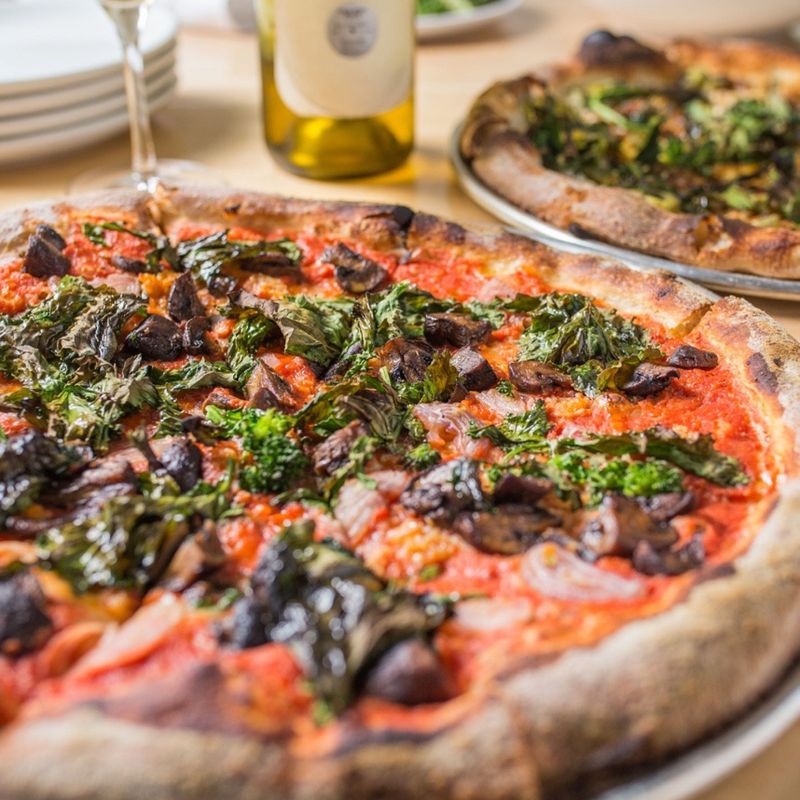
Another distinctive option combined house-made sausage with broccoli rabe and ricotta. The pairing introduced a slightly bitter vegetable alongside richer ingredients.
The restaurant also offered a pepperoni pizza with garlic, Calabrian chile, Parmesan, mozzarella, and basil. That combination demonstrated how a recognizable favorite could take on a different character through seasoning.
I particularly like the balance between familiar and unexpected flavors in Bebu’s former menu. The restaurant didn’t abandon traditional pizza ideas, but it was willing to explore beyond them.
Bebu also received Michelin Bib Gourmand recognition, helping establish its reputation in Chicago’s competitive dining scene. The distinction reflected the attention its cooking attracted.
However, Pizzeria Bebu is not currently operating. Its official website announces a temporary closure, while other restaurant directories classify the business as permanently closed.
That conflicting information makes it inappropriate to recommend an immediate visit. The restaurant’s former menu and reputation remain worth discussing as part of Chicago’s recent pizza history.
Its contribution was to demonstrate that thin-crust pizza could hold its own in a city strongly associated with deep-dish pies. Bebu’s inventive combinations gave pizza enthusiasts another way to appreciate Chicago’s culinary diversity.
For now, this is a look back at a notable restaurant rather than a current dining recommendation.
3. Pequod’s
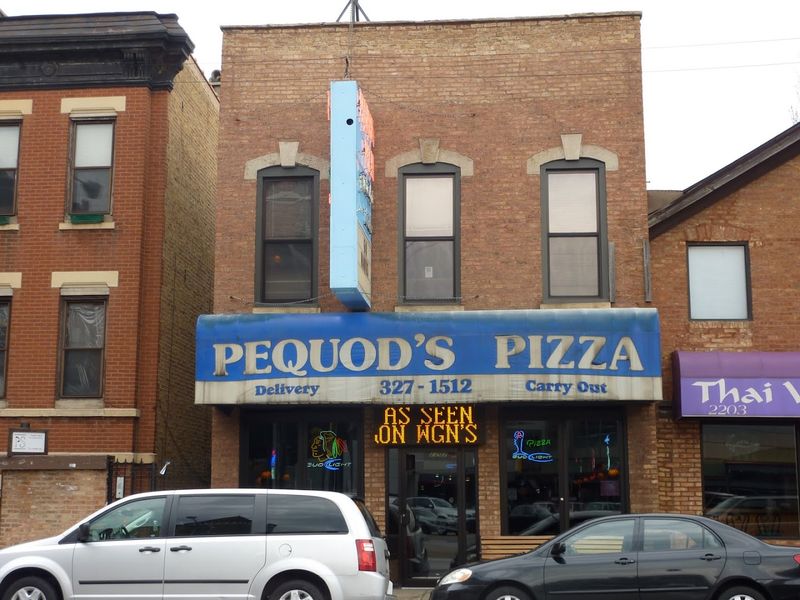
A dark, caramelized ring of cheese around a thick pizza crust is one of Chicago’s most recognizable pizza signatures. At Pequod’s, that distinctive edge is the main attraction.
The Chicago restaurant operates at 2207 North Clybourn Avenue in Lincoln Park. It’s known for pan pizza with a caramelized cheese crust that sets it apart from more conventional deep-dish preparations.
The signature effect comes from cheese cooking against the hot sides of the pan. As the pizza bakes, the cheese develops a deeply browned exterior.
That technique gives the crust a different identity from the buttery edges associated with some other Chicago pizzerias. It’s one of the reasons Pequod’s has attracted so much attention from pizza enthusiasts.
The restaurant offers pan pizzas with a range of topping options, allowing diners to customize their order. Cheese, sausage, pepperoni, vegetables, and other familiar ingredients can all become part of the experience.
I particularly appreciate how the caramelized edge gives the pizza a recognizable personality before you even consider the toppings. It’s a cooking detail that changes the entire impression of the finished pie.
Pequod’s also offers thin-crust pizza, appetizers, sandwiches, and pasta. However, the pan pizza remains the clearest expression of its identity.
The restaurant has a second location in Morton Grove, but the Lincoln Park address is the one to use when planning a meal within Chicago. The two locations should not be confused when checking reservations or delivery options.
Reservations are strongly recommended at the Chicago restaurant. Its official website specifically encourages visitors to book ahead rather than assuming a table will be immediately available.
The business also provides dine-in, takeaway, and delivery service. That makes its signature pizza accessible through several different arrangements.
For travelers interested in the technical differences between Chicago pizza styles, Pequod’s is especially informative. Its caramelized crust demonstrates how a seemingly small change in preparation can create a distinctive result.
This is the sort of pizza that deserves attention all the way to the final bite.
4. Spacca Napoli
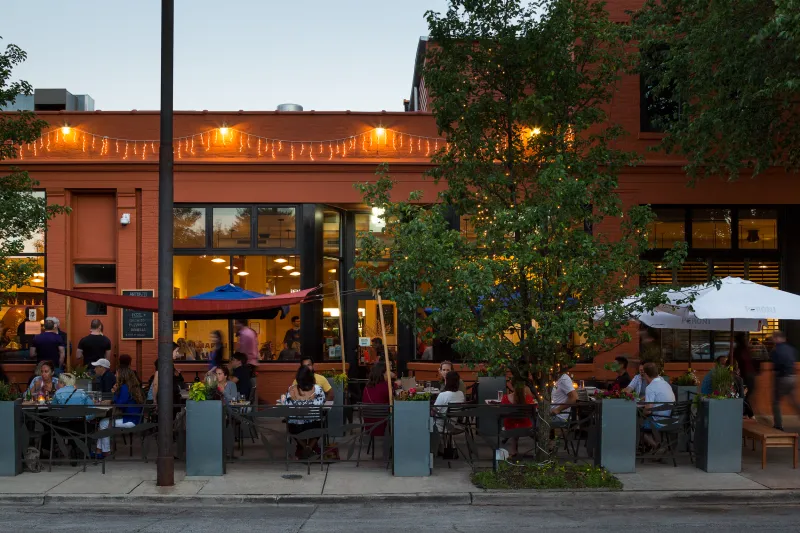
A thin Neapolitan pizza baked in a traditional oven offers a completely different experience from Chicago’s famous deep-dish pies. Spacca Napoli has spent nearly two decades celebrating that distinction.
Located at 1769 West Sunnyside Avenue, the restaurant focuses on pizza-making traditions associated with Naples, Italy. Its approach emphasizes carefully prepared dough, thoughtfully sourced ingredients, and traditional baking techniques.
Owner Jonathan Goldsmith is a certified pizzaiuolo who has dedicated years to learning the craft. His commitment to Neapolitan pizza is central to the restaurant’s identity.
The restaurant uses an oven built by artisans from Naples. That detail reflects its interest in preserving the traditional methods associated with this style.
Neapolitan pizza is known for its relatively thin center and raised outer crust. The dough develops its characteristic structure through careful preparation and baking.
Spacca Napoli’s menu includes familiar Italian combinations such as Margherita pizza. The simplicity of tomato, mozzarella, and basil makes it a useful way to appreciate the underlying dough.
Other pizzas introduce different cheeses, meats, and vegetables while maintaining the restaurant’s Neapolitan focus. That variety gives diners options without moving too far from the central baking philosophy.
I particularly like how Spacca Napoli provides a contrast to Chicago’s heavier pizza traditions. The restaurant demonstrates that a city can embrace multiple approaches without requiring one style to replace another.
The dining experience also reflects the owners’ interest in art and community. Goldsmith’s partner, artist Ginny Sykes, contributes to the creative identity of the restaurant.
Spacca Napoli accepts reservations by phone, and walk-in diners are also welcome. Its patio seating operates on a first-come, first-served basis.
That distinction is worth remembering when planning a visit during warmer weather. The restaurant’s outdoor dining arrangements differ from its indoor reservation system.
For pizza enthusiasts interested in Italian traditions, Spacca Napoli is an important Chicago destination. Its commitment to Neapolitan techniques offers a fascinating alternative to the city’s better-known pan pizzas.
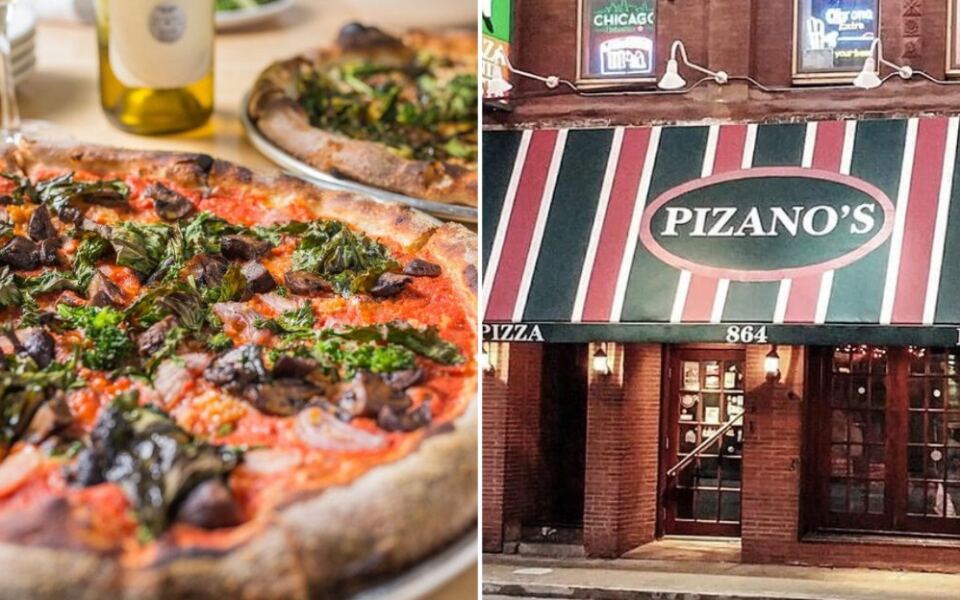
5. Pizano’s
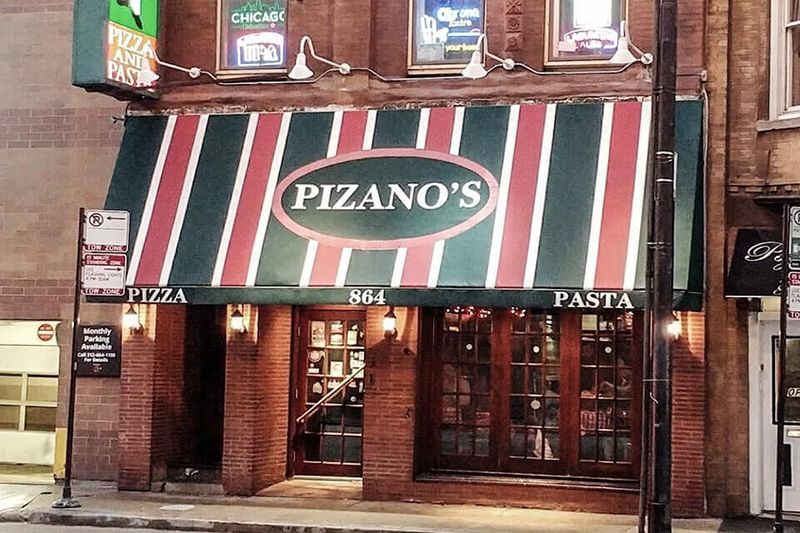
A restaurant offering both thin-crust and deep-dish pizza is an excellent place to explore Chicago’s two most recognizable pizza traditions. Pizano’s has built its identity around exactly that kind of variety.
The business has several Chicago locations, including a restaurant at 61 East Madison Street in the Loop. This downtown branch provides a convenient option for visitors exploring the city’s central business district.
Pizano’s is closely associated with the Malnati family’s pizza heritage. Founder Rudy Malnati Jr. grew up connected to the traditions that helped establish Chicago’s deep-dish reputation.
That background gives the restaurant an important place in the city’s pizza history. Its menu reflects a longstanding interest in familiar ingredients and carefully prepared crusts.
The thin-crust pizza is especially worth considering for anyone who assumes Chicago pizza must always be thick. It offers a contrasting style that emphasizes a different balance between crust and toppings.
Deep-dish pizza, meanwhile, provides the more substantial experience many visitors associate with the city. The format allows the restaurant to build a pizza around a generous combination of cheese, sauce, and other ingredients.
I like the idea of ordering both styles when dining with a group. Comparing them makes the meal more interesting and helps illustrate how much variety exists within Chicago pizza.
Pizano’s menu also includes Italian American favorites beyond pizza. Pasta, salads, and other familiar dishes give diners additional options.
The Madison Street location offers dine-in and takeaway service, according to the restaurant’s official location information. Delivery is also available, making it a practical choice for different dining plans.
Other Chicago branches include State Street, South Loop, and Dearborn Street locations. However, the Dearborn branch operates as a takeaway and delivery location rather than a full-service dining room.
That distinction matters when choosing where to visit. Restaurant features and services should always be checked for the specific branch.
For anyone interested in Chicago’s pizza heritage, Pizano’s offers a compelling combination of history and variety. Its continued focus on thin-crust and deep-dish pizza makes it a useful stop for understanding the city’s culinary traditions.
6. Bacino’s
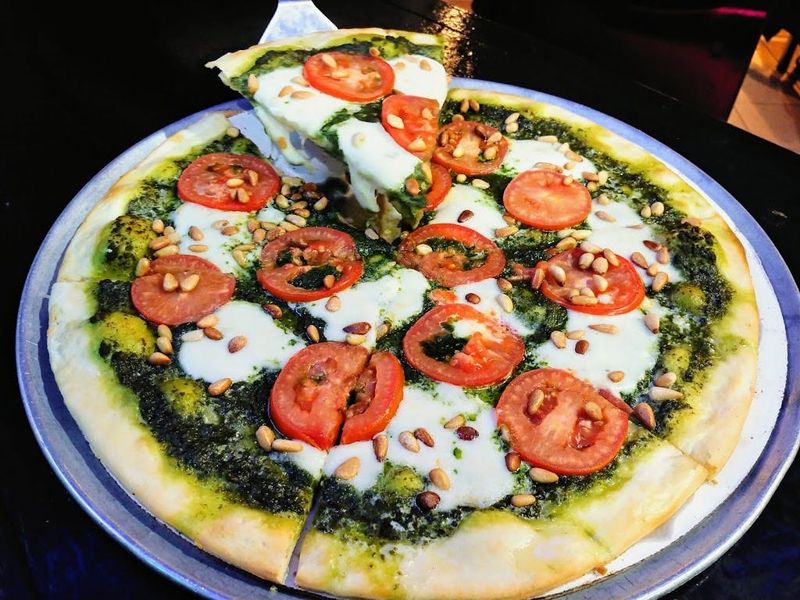
Spinach might not be the first topping that comes to mind when imagining a substantial Chicago pizza. At Bacino’s, however, it’s central to one of the restaurant’s most recognizable specialties.
Bacino’s of Lincoln Park operates at 2204 North Lincoln Avenue. The restaurant serves stuffed pizza, thin-crust pizza, pasta, sandwiches, and other Italian American favorites.
Its Spinach Supreme stuffed pizza is particularly noteworthy. The combination demonstrates how vegetables can become the defining ingredient in a pizza rather than simply an optional topping.
Stuffed pizza is a distinctive variation within Chicago’s broader deep-dish tradition. It generally features a substantial filling enclosed between layers of dough, with tomato sauce incorporated into the preparation.
That construction creates a different experience from a conventional thin-crust pie. It also helps explain why stuffed pizza has developed a following of its own.
Bacino’s offers other specialty pizzas, including a broccoli-focused thin-crust option. These vegetable-centered creations contribute to the restaurant’s identity.
The menu also includes Margherita pizza, sausage and mushroom combinations, and pesto pizza. Those choices give diners opportunities to explore more familiar Italian-inspired flavors.
I particularly like the contrast between the stuffed and extra-thin pizzas. Ordering different styles can reveal how much the crust influences the overall character of a meal.
The restaurant’s menu includes a Spinach Supreme pizza among its established specialties. That makes it a natural starting point for visitors interested in something beyond the usual sausage or pepperoni.
Bacino’s also serves pasta, salads, and sandwiches, providing alternatives for anyone who isn’t in the mood for pizza. Its casual format makes it suitable for family meals and informal gatherings.
The Lincoln Park location offers dine-in, takeaway, and delivery service. Its position near Lincoln Avenue and Webster Avenue places it within an established neighborhood dining area.
For pizza enthusiasts interested in Chicago’s stuffed-pizza tradition, Bacino’s deserves attention. Its spinach-centered specialty provides a distinctive interpretation of a style often associated with rich meat fillings.
It’s a useful reminder that vegetables can play a starring role in even the most substantial Chicago pizza.
7. Lou Malnati’s
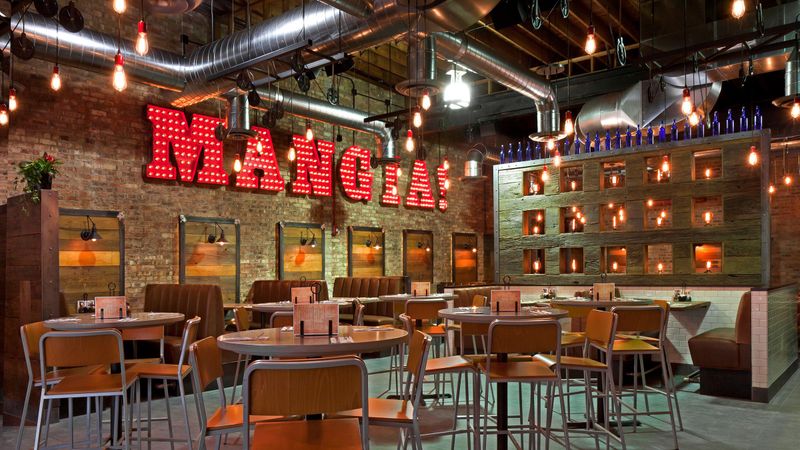
Few names are more closely associated with Chicago deep-dish pizza than Lou Malnati’s. The restaurant has spent more than five decades developing a style that has become part of the city’s culinary identity.
The company began in Lincolnwood, Illinois, in 1971 and has since expanded throughout the Chicago area and beyond. Its River North location at 439 North Wells Street provides a convenient option for visitors staying downtown.
Lou Malnati’s is particularly known for its deep-dish pizza and distinctive buttery crust. That crust is a central part of the restaurant’s approach to the Chicago classic.
The Malnati Chicago Classic is among its signature pizzas. It combines sausage, extra cheese, and the restaurant’s tomato sauce in a substantial deep-dish format.
The restaurant’s sausage preparation is especially recognizable because of its generous coverage. Rather than scattering small pieces across the pizza, the combination emphasizes sausage as a major component.
Lou Malnati’s also offers thin-crust pizza, giving customers a different option. However, deep-dish remains the style most closely associated with its reputation.
I particularly like how the restaurant represents the family-business side of Chicago pizza history. Its expansion hasn’t erased the connection to the original Malnati tradition.
The company continues to emphasize carefully selected ingredients and longstanding preparation methods. That focus helps explain why its signature pizzas remain recognizable across different locations.
The River North restaurant offers dine-in service, takeaway, delivery, and reservations. Those options make it suitable for both planned dinners and more flexible outings.
Lou Malnati’s also operates numerous other Chicago branches, but services vary by location. Some are full-service restaurants, while others specialize in takeaway and delivery.
That distinction is important for travelers hoping to sit down for a traditional deep-dish meal. Choosing a full-service branch avoids unnecessary surprises.
For anyone visiting Chicago for the first time, Lou Malnati’s is an obvious name to consider. Its combination of family history, recognizable recipes, and longstanding popularity makes it an important part of the city’s pizza culture.
The restaurant offers a straightforward introduction to the style that helped make Chicago famous.
8. Chicago Pizza And Oven Grinder Co.
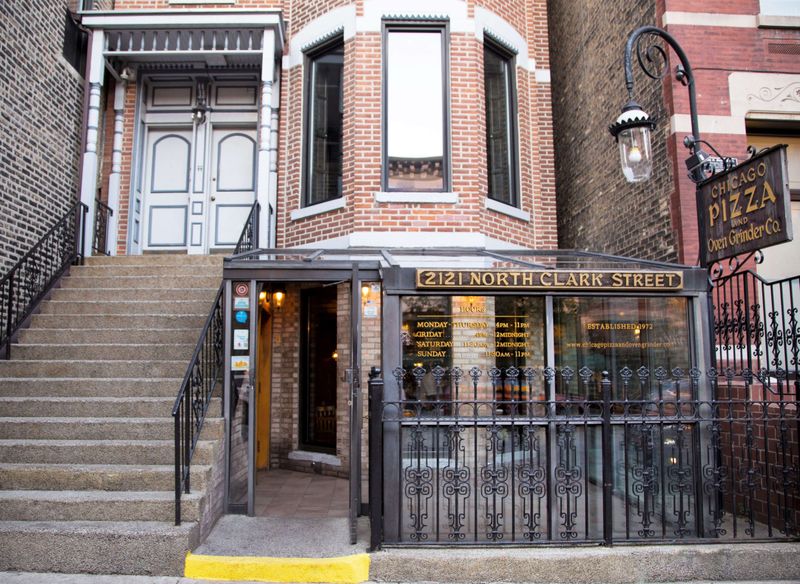
A pizza baked inside a bowl and turned upside down before serving is not what most people expect when ordering Chicago pizza. At Chicago Pizza and Oven Grinder Co., that unusual preparation is the signature attraction.
Located at 2121 North Clark Street in Lincoln Park, the restaurant has been serving its distinctive pizza pot pie for more than five decades. Its approach stands apart from conventional deep-dish and thin-crust styles.
The pizza pot pie begins with a bowl filled with ingredients and covered with dough. During baking, the components cook together beneath the crust.
The finished preparation is then turned over for serving, creating a presentation unlike an ordinary sliced pizza. That transformation is an essential part of the restaurant’s identity.
The official menu describes a homemade sauce made with olive oil, garlic, onions, green peppers, and whole plum tomatoes. A special cheese blend and other ingredients complete the filling.
The restaurant also offers a vegetarian version upon request. Customers can choose between white and whole-wheat crust options.
I particularly like how this dish challenges the usual expectations of what pizza should look like. It uses familiar ingredients but changes the format and presentation.
Another well-known specialty is the Mediterranean bread, which has become an attraction in its own right. The restaurant originally developed it as an accompaniment to other dishes.
Chicago Pizza and Oven Grinder Co. also serves oven-grinder sandwiches and salads. These additions provide alternatives for diners who want something different from the signature pot pie.
The restaurant currently operates on a walk-in basis and does not accept reservations. That policy is important for anyone planning a visit during a busy period.
Takeaway service is also available, according to its official website. Its location near Lincoln Park makes it a convenient stop while exploring the neighborhood.
For visitors who think they’ve already experienced every major Chicago pizza variation, this restaurant offers a surprising alternative. The pizza pot pie demonstrates how a familiar combination of dough, sauce, and cheese can become something entirely different.
It’s a fitting conclusion to a tour of Chicago’s many interpretations of pizza.
Share this story