Rhode Island lawmakers made coffee milk the official state drink in 1993. Yes, coffee milk.
A whole state voted for the stuff kids pour over ice after school, and I love that.
That little fact tells you a lot about American food. Some of our most loved dishes never show up on fancy menus.
They live in lunchboxes, church basements, ballparks, and grandma’s kitchen.
I find it funny how one bite can send you back twenty years. A squeaky cheese curd or a scoop of chili on spaghetti can feel like a time machine.
People outside the region might raise an eyebrow, and that only makes the bond stronger.
So I went hunting for the foods that taste like home to someone, somewhere in America. Some will make you nod.
Others might make you wonder what on earth folks were thinking. Which one is yours?
1. Coffee Milk
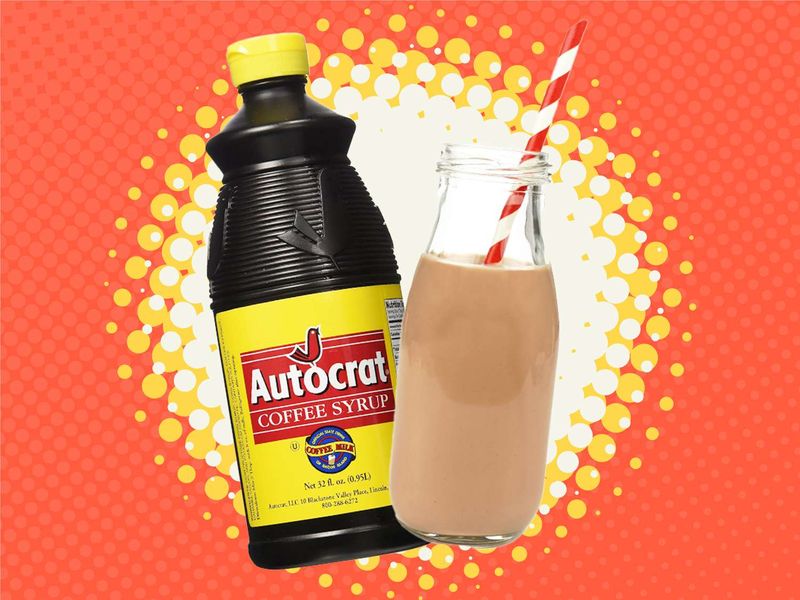
Chocolate milk has a cousin in Rhode Island, and it drinks coffee. Coffee milk is simply cold milk stirred with sweet coffee syrup, and it became the official state drink in 1993.
The syrup is the secret. Brands like Autocrat have been bottling it for generations, and you can still find it on grocery shelves across the state.
Kids in Rhode Island often grow up with a glass of this at breakfast or lunch. It tastes like a milder, sweeter version of iced coffee.
Think melted coffee ice cream, but in a glass.
Here’s a fun twist on the story. The vote that crowned coffee milk was a real contest, and it beat other local favorites for the title.
Want to try it at home? Start with about two tablespoons of syrup in a glass of cold milk.
Stir well, taste, and add more if you like it stronger.
The syrup works in more than milk, too. People drizzle it over vanilla ice cream or blend it into milkshakes, which locals often call cabinets.
That word might confuse you outside New England. In Rhode Island, a cabinet is a thick milkshake made with ice cream, and coffee is a classic flavor.
One thing to keep in mind is caffeine. The syrup is made from real coffee, so a big glass before bed might not be your smartest move.
Still, it’s hard not to smile at a state that picked such a simple drink as its symbol. It feels a bit like choosing a lunchbox snack as your mascot.
If you ever pass through the smallest state, grab a bottle of syrup to take home. You’ll be sipping a little piece of Rhode Island childhood in your own kitchen.
2. Cincinnati Chili
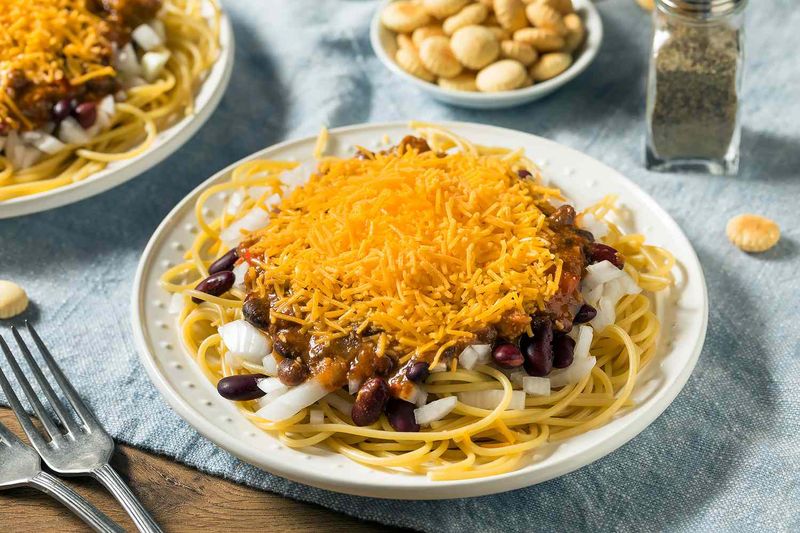
Spaghetti for breakfast? Not quite, but Cincinnati folks put chili on noodles and never looked back.
The style traces to 1922, when Macedonian immigrant brothers opened a hot dog stand called Empress.
Their chili was thinner than Texas chili. It used spices like cinnamon and cloves, borrowing flavors from Mediterranean cooking.
The way you order is half the fun. A three-way means spaghetti, chili, and a big pile of finely shredded cheddar cheese.
Add onions or beans and you get a four-way. Add both and you have a five-way, which is a serious amount of food.
Kids in Cincinnati often learn this menu language before they learn their times tables. Okay, maybe not, but it sure feels that way.
Then there are coneys. These are small hot dogs topped with the same chili, mustard, onions, and that famous mountain of cheese.
Chili parlors became a big part of city life. Chains like Skyline and Gold Star grew from family recipes, and many families have a strong loyalty to one or the other.
Most people eat it with a fork and knife, cutting through the layers instead of twirling. Oyster crackers usually come on the side for crunch.
Making it at home is easier than you’d think. Grocery stores in Ohio sell frozen and canned versions, and spice packets help you copy the flavor.
Outsiders sometimes call it strange. Fans just call it lunch, and they’d happily debate you over a steaming plate.
Give it a try with an open mind and an empty stomach. That sweet and savory mix might just win you over on the first bite.
3. Tater Tot Hotdish
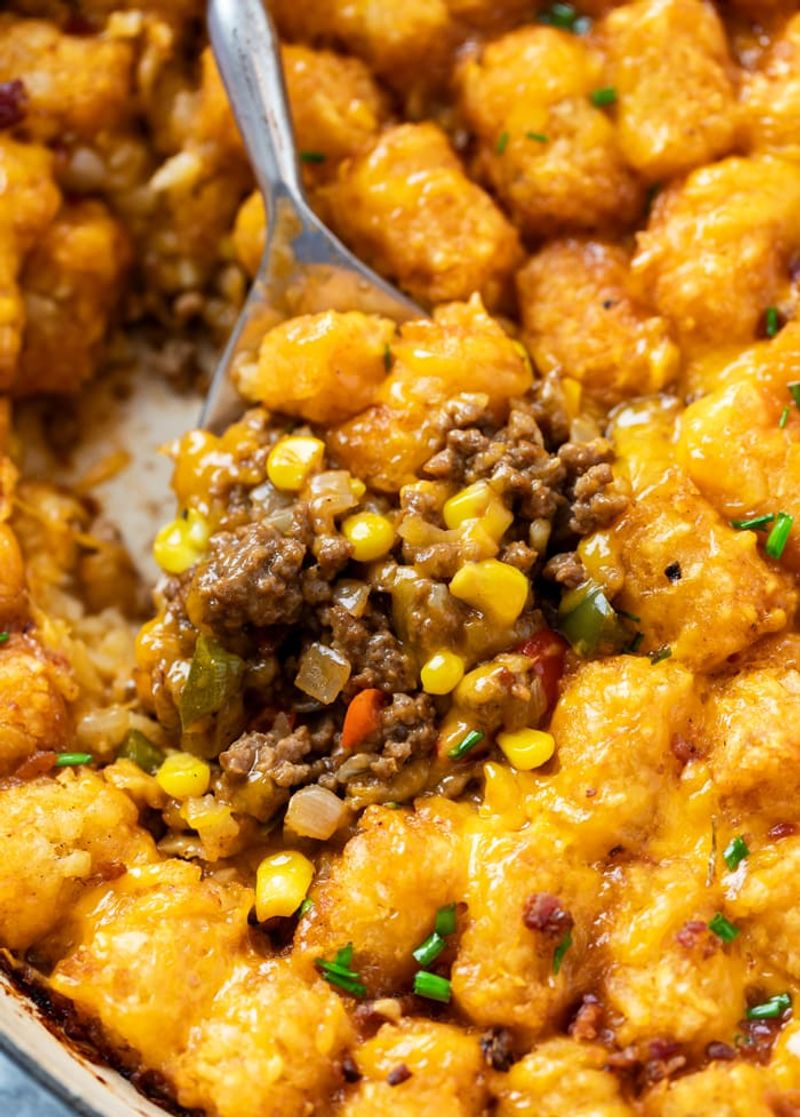
Nobody in Minnesota says casserole when they can say hotdish. The most famous version stacks golden tater tots on top of ground beef, vegetables, and creamy soup.
Cream of mushroom soup is usually the glue holding it together. Green beans or corn often join the party underneath.
This dish grew up in church basements and family potlucks across the Upper Midwest. It’s cheap, filling, and easy to carry in a covered pan.
Here’s why kids tend to love it. Those crunchy tots on top feel like a reward for eating your veggies below.
Hotdish even gets its own competition. Minnesota’s members of Congress have held a friendly hotdish contest in Washington, each bringing a home-state recipe.
You can make one in about an hour. Brown the beef with onion, stir in soup and veggies, then line up frozen tots in neat rows on top.
Bake it until the tots turn crispy and the edges bubble. Some cooks add shredded cheese at the end for an extra gooey layer.
Leftovers reheat nicely, which makes it a smart pick for busy weeknights. A big pan can feed a family for days.
Neighbors often bring hotdish to folks who just had a baby or moved into town. It’s comfort that comes with a foil lid.
Feel free to swap things around. Ground turkey, mixed vegetables, or a different cream soup all work fine.
Just don’t call it a casserole in front of a proud Minnesotan grandma. She’ll correct you, then hand you a second helping anyway.
4. Frito Pie
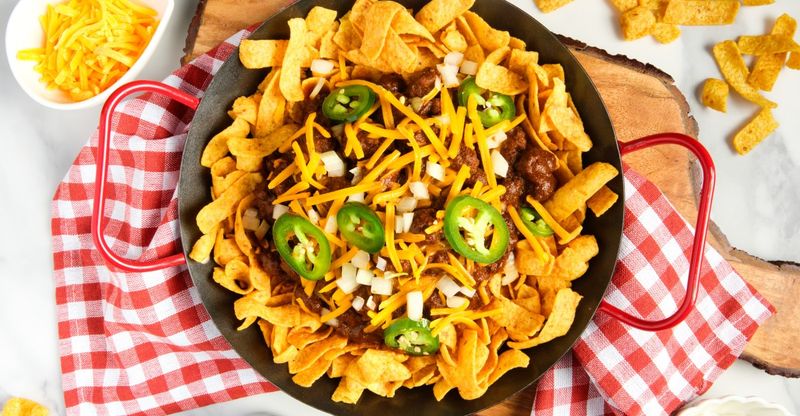
Dinner served inside a chip bag sounds like a kid’s dream, and that’s exactly what Frito pie can be. Chili, cheese, and onions get piled right on top of Fritos corn chips.
Texas and New Mexico both claim it. Frito company history often credits Daisy Doolin, mother of the Fritos founder, with early recipes using the chips.
Some versions come in a bowl. The most famous version, though, gets served right in the split-open snack bag with a fork.
You’ll find it at high school football games, county fairs, and concession stands. It’s easy to hold while you cheer from the bleachers.
Why do people love it so much? The chips stay crunchy at first, then soften into the chili as you eat.
Making one at home takes almost no effort. Heat up chili, open a single-serving bag of Fritos sideways, and spoon the chili in.
Top it with shredded cheddar and chopped onion. Jalapeños, sour cream, or a little lettuce are fine extras too.
For a crowd, try a baked version. Layer chips, chili, and cheese in a pan, then bake until melty.
This dish fits nicely into a busy schedule. It’s ready in minutes and leaves almost no dishes, especially the bag version.
Parents might roll their eyes at the idea of chips for dinner. Kids, meanwhile, usually ask for seconds.
Either way, it’s a little taste of Friday nights in the Southwest. Grab a fork and dig into the bag.
5. Fluffernutter
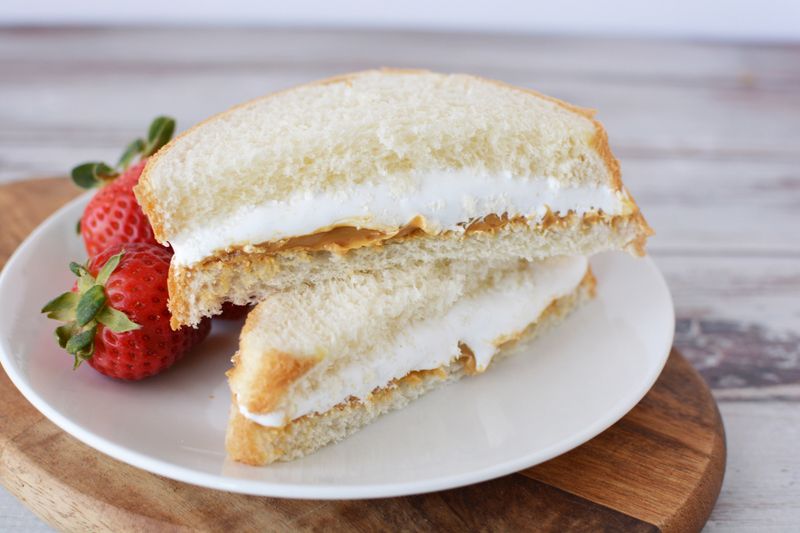
Peanut butter found its sticky soulmate in Massachusetts. A Fluffernutter is a sandwich of peanut butter and marshmallow creme, usually on soft white bread.
The creme is Marshmallow Fluff, made by Durkee-Mower, a company from Lynn, Massachusetts. Fluff has been around since the early 1900s.
The catchy sandwich name came from an advertising campaign around 1960. Ad writers knew a fun word would stick in kids’ heads, just like the Fluff sticks to the roof of your mouth.
In 2006, Massachusetts lawmakers even argued about the sandwich. One wanted to limit it in school lunches, and another pushed to make it the official state sandwich.
Neither idea became law. Still, the fuss showed how much people care about this gooey lunchbox classic.
Somerville, Massachusetts, has thrown a festival called What the Fluff to celebrate the treat. It honors Archibald Query, the local man credited with creating an early marshmallow creme.
Making one is simple. Spread peanut butter on one slice of bread and Fluff on the other, then press them together.
Pro tip: spread the peanut butter first. Fluff is tricky to spread on bare bread and tends to tear it.
Some people add banana slices for a fancier twist. Others toast the sandwich so the marshmallow gets melty.
It’s sweet, salty, and messy in the best way. Keep a napkin nearby, because your fingers will need it.
One bite and you’ll understand why it became a New England lunchbox legend. It’s basically dessert pretending to be lunch.
6. Whoopie Pie
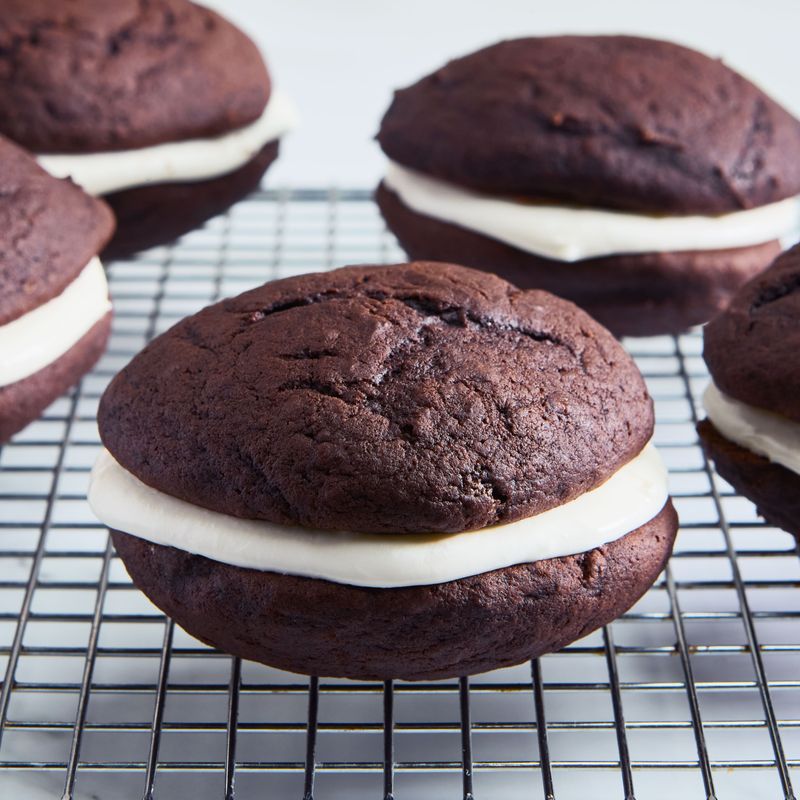
Call it a pie if you like, but it’s really a cake sandwich wearing a fun name. A whoopie pie is two soft chocolate cakes hugging a fluffy white filling.
Maine made it the official state treat in 2011. Lawmakers picked treat on purpose, since blueberry pie was already the state dessert.
Pennsylvania has its own strong claim. Amish and Pennsylvania Dutch bakers have made these treats for a long time, and both states like to say they did it first.
Nobody knows for sure where the name came from. One popular story says kids or farmworkers shouted whoopie when they found one in their lunch.
That story is hard to prove, but it sure fits. These are the kind of treats that make a kid cheer.
The cakes have a texture somewhere between a cookie and a muffin. The filling is often made with marshmallow creme or a buttery frosting.
Bakeries in Maine and Pennsylvania sell flavors beyond chocolate. Pumpkin, red velvet, and peanut butter versions show up often.
Want to bake some? Scoop cake batter onto a baking sheet in round mounds, bake, cool, and sandwich the filling between two halves.
Let the cakes cool all the way first. Warm cakes will melt your filling and make a sliding mess.
They freeze well too. Wrap each one in plastic, and you’ll have a quick snack ready for lunchboxes.
Whichever state you side with, one thing’s clear. Few desserts are this fun to hold in two hands.
7. Gooey Butter Cake
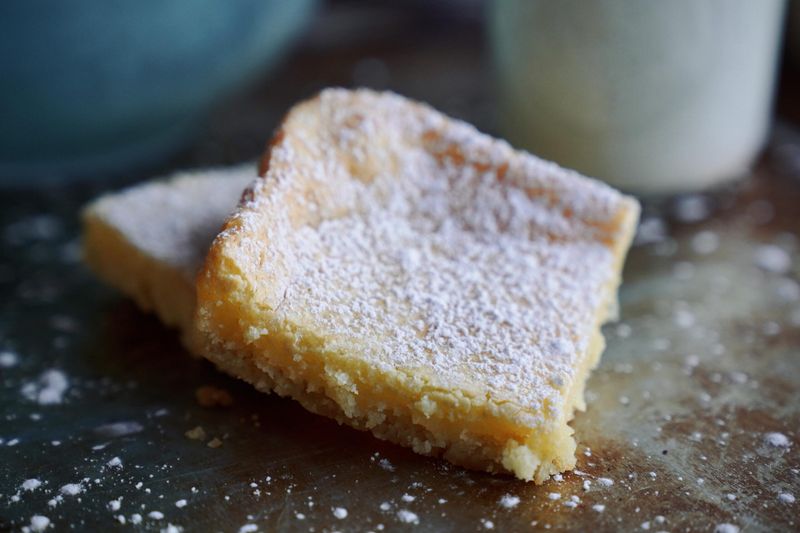
Some of the best recipes start with a mistake, and St. Louis has a sweet one. Gooey butter cake is a flat, rich cake with a soft, sticky top dusted in powdered sugar.
The popular story goes back to the 1930s. A St. Louis baker supposedly mixed up the amounts of ingredients, and the gooey result became a hit.
Different bakeries tell the tale a little differently. Either way, the city adopted it as its own.
The bottom layer is a firm, cake-like crust. The top is soft and custardy, almost like a mix of cheesecake and blondie.
For many St. Louis families, it shows up at breakfast. Yes, people eat it with coffee in the morning, and nobody judges.
It also appears at birthdays, holidays, and church bake sales. A square on a paper napkin is a common sight.
Home bakers often use a shortcut. Yellow cake mix for the base and cream cheese, eggs, and powdered sugar on top makes an easy version.
Bake it until the edges are golden but the center still jiggles a bit. It firms up as it cools.
Cut it with a sharp knife wiped clean between slices. Otherwise, you’ll end up with a gooey, sticky pile.
Bakeries also make flavors like chocolate, pumpkin, and lemon. Each one keeps that famous soft top.
Bring a pan to your next potluck and watch it disappear. You might just start your own family tradition.
8. Toasted Ravioli
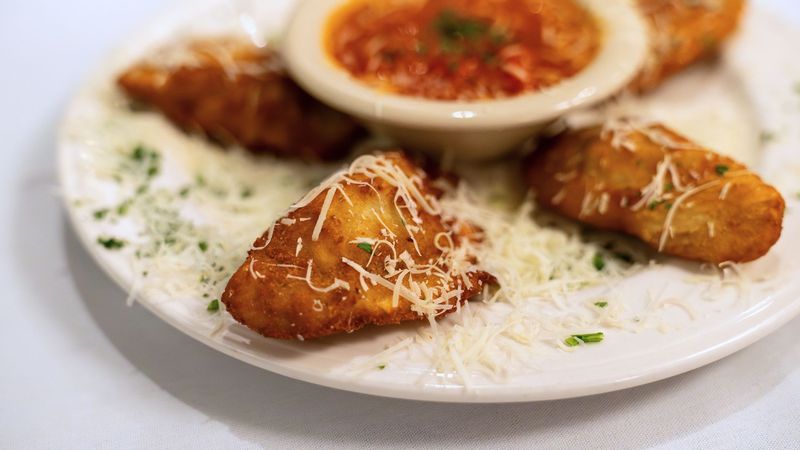
Ravioli usually swims in sauce, but in St. Louis it takes a crunchy detour. Toasted ravioli is breaded and fried, then dipped in marinara.
Despite the name, it’s not really toasted. It’s fried until golden and crispy, then sprinkled with grated parmesan.
The dish is tied to The Hill, a historic Italian neighborhood in St. Louis. Several restaurants there have claimed to invent it, and the debate continues.
Most stories say it started as a happy accident. A cook supposedly dropped ravioli into hot oil instead of boiling water.
Whether that’s true or not, the result stuck. Today it’s a common appetizer across the St. Louis area.
Kids love it because it’s basically pasta you can eat with your hands. Dipping makes any food more fun, right?
The filling is usually meat, though cheese versions are popular too. The crispy outside hides a soft, savory center.
You can find frozen toasted ravioli in many Missouri grocery stores. Bake or air-fry them for a quick after-school snack.
Making them from scratch is doable. Dip store-bought ravioli in egg, roll in seasoned breadcrumbs, and fry or air-fry until crisp.
Serve them right away while they’re hot. They lose their crunch if they sit too long.
St. Louis has given the world a few unique foods, and this one’s a crowd favorite. It’s pasta night with a crunchy plot twist.
9. Pepperoni Roll

Coal miners needed a lunch that could survive a long day underground. West Virginia answered with the pepperoni roll, soft bread baked around sticks or slices of pepperoni.
Giuseppe Argiro, an Italian immigrant, is widely credited with selling them at Country Club Bakery in Fairmont in 1927. The bakery is still known for them today.
The idea was smart. The roll didn’t need a fridge, and the pepperoni’s oils soaked into the bread while it baked.
Miners could tuck one into a lunch pail and eat it with dirty hands. No plate, no fork, no fuss.
Over time, the snack moved from mines to school lunches and gas stations. It’s now a West Virginia icon.
In 2013, state lawmakers recognized the pepperoni roll as an official state food. Pretty impressive for a humble lunch.
Some versions add cheese, either inside or melted on top. Others come with peppers or a side of sauce.
Purists often like it plain. The simple combo of bread and spicy meat is the whole point.
You can bake them at home with frozen bread dough. Wrap a few pepperoni sticks inside each piece, seal it, and bake until golden.
They make great road trip snacks. They also pack nicely for picnics and school lunches.
Next time you bite into one, think about those hardworking miners. Their practical lunch became a beloved state treasure.
10. Cheese Curds
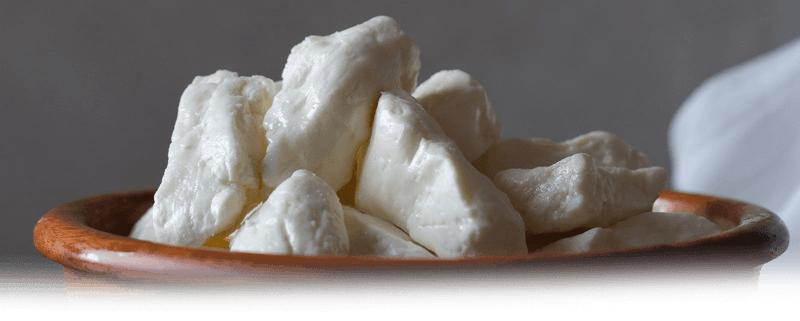
Your cheese should squeak, at least according to Wisconsin. Fresh cheese curds make a squeaky sound against your teeth, and fans treat that noise like a freshness test.
Curds are small chunks of young cheddar. They’re made before the cheese gets pressed into blocks and aged.
The squeak comes from the protein structure in fresh curds. As they age or get chilled, the squeak fades.
That’s why many Wisconsinites like them the same day they’re made. Some cheese shops even sell them warm from the vat.
Then there’s the fried version. Battered and deep-fried curds are a favorite at the Wisconsin State Fair and pubs across the Midwest.
They come out golden and stretchy inside. Ranch or marinara on the side is common.
Wisconsin makes more cheese than any other state, so it makes sense that curds are part of growing up there. Kids snack on them like popcorn.
Want to bring back some squeak? Try microwaving cold curds for a few seconds.
Many people say this helps revive the sound.
Curds also star in poutine, a Canadian dish of fries, gravy, and cheese curds. It has fans across the northern U.S. too.
Store fresh curds at room temperature for a short time if you plan to eat them quickly. Otherwise, keep them in the fridge.
Squeaky, salty, and snackable, cheese curds are pure Dairy State fun. Your ears get a treat along with your taste buds.
11. Scrapple
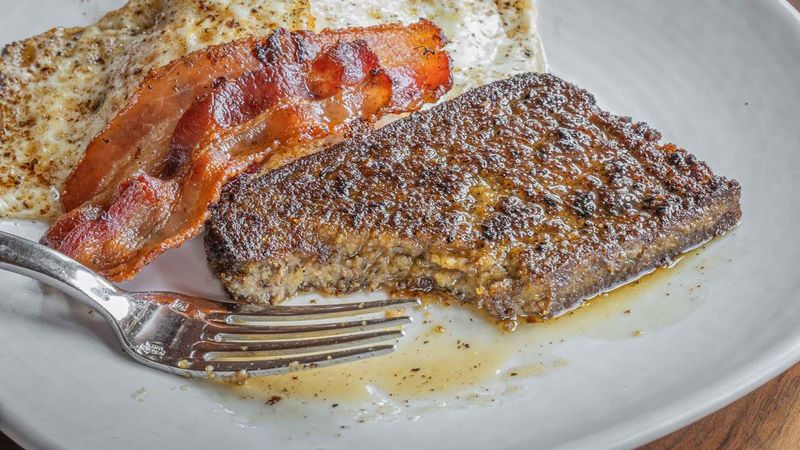
Waste not, want not could be scrapple’s motto. This Mid-Atlantic breakfast meat blends pork scraps with cornmeal and flour, then forms it into a loaf.
Pennsylvania Dutch settlers brought the idea from Germany. Their goal was to use as much of the pig as possible.
The mixture is cooked, cooled, and sliced. Then the slices get pan-fried until crispy outside and soft inside.
Buckwheat flour often shows up in the recipe. Spices like sage and black pepper give it a savory flavor.
You’ll find scrapple in Pennsylvania, Delaware, Maryland, and New Jersey. Diners across the region serve it with eggs.
Toppings start fierce debates. Some people pour on maple syrup, others swear by ketchup, and some like apple butter.
Delaware even hosts a festival in its honor. The Apple Scrapple Festival in Bridgeville celebrates the dish along with apples.
The secret to great scrapple is a hot pan. Slice it about a quarter inch thick and let it brown without moving it too much.
Patience pays off here. Flip too soon and it might fall apart in the skillet.
Many people avoid asking exactly what goes inside. Honestly, it’s best to just enjoy the crunchy edges.
For kids raised in the Mid-Atlantic, scrapple means Saturday morning breakfast. Give it a try and pick your side in the syrup versus ketchup battle.
12. Pork Roll, Egg and Cheese
Ask a New Jerseyan what this meat is called, and you might start an argument. North Jersey usually says Taylor ham, while South Jersey says pork roll.
Either way, it’s a processed pork product with a salty, tangy flavor. John Taylor of Trenton is credited with creating it in 1856.
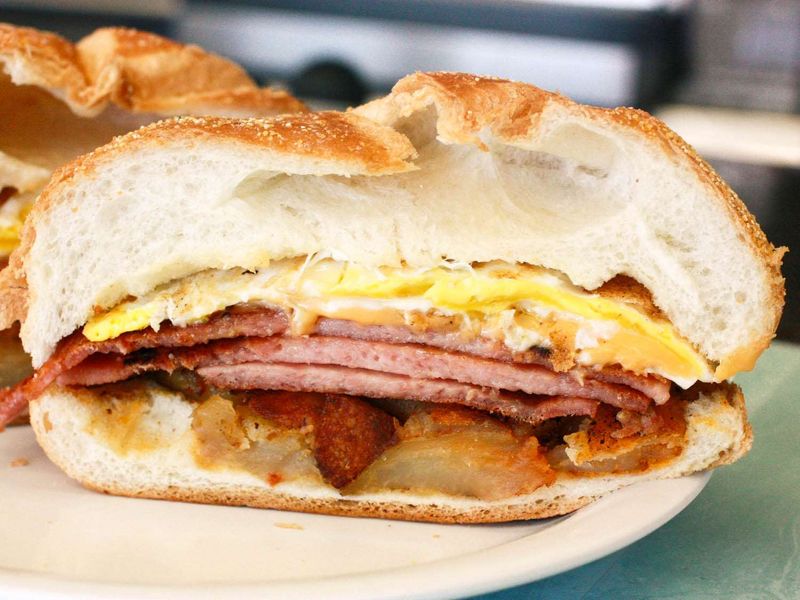
The classic way to eat it is in a breakfast sandwich. Pork roll, a fried egg, and American cheese go on a hard kaiser roll.
Delis and diners across New Jersey sell this sandwich every morning. Many kids grow up grabbing one before school.
Here’s a cooking trick. Cut small slits around the edge of each slice before frying, or it will curl up into a little cup.
Some people add salt, pepper, and ketchup. That combo is often called SPK in the Garden State.
Trenton celebrates with a Pork Roll Festival. It’s a fun sign of how much the state loves this meat.
You can buy pork roll in some grocery stores outside New Jersey. Look near the bacon and sausage.
Making the sandwich at home is easy. Fry the slices, cook an egg, melt cheese on top, and stack it all on a toasted roll.
It pairs well with home fries or hash browns. A glass of orange juice rounds it out.
Whatever you call it, just don’t take sides too loudly. New Jersey takes this debate very seriously.
13. Boiled Peanuts
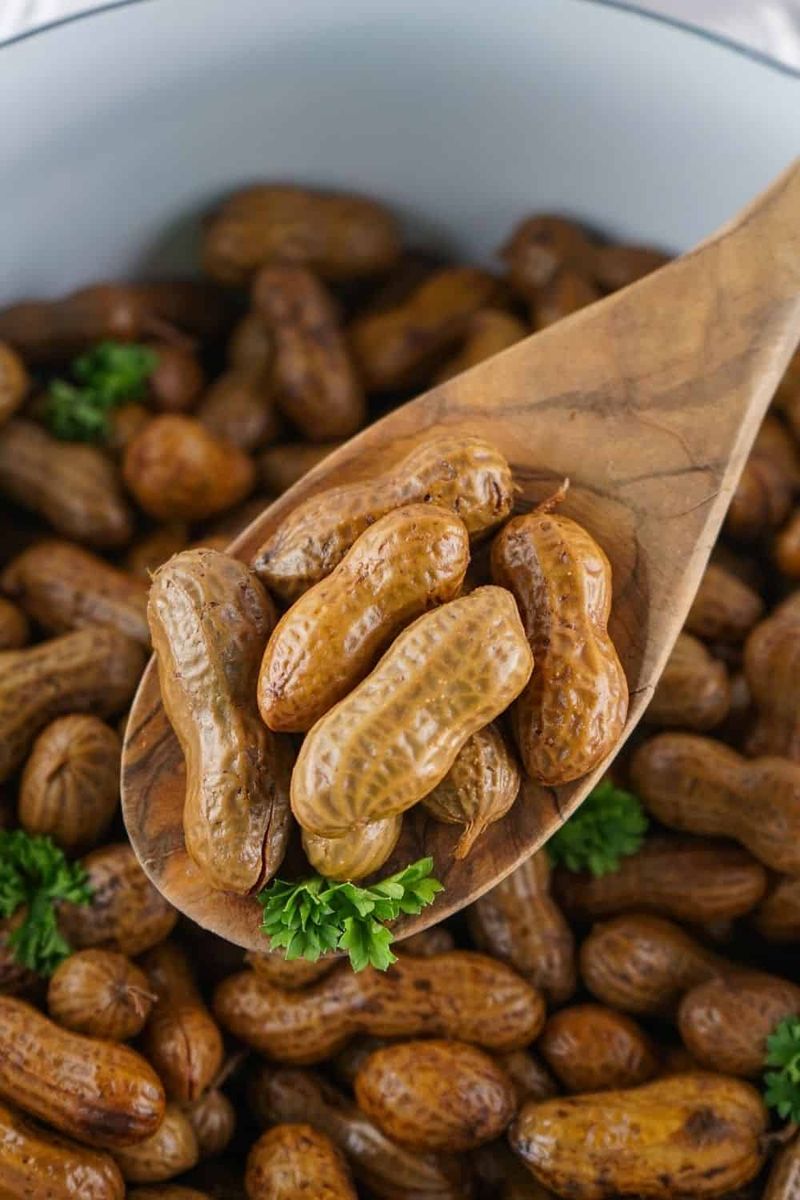
Peanuts usually crunch, but in the South they can be soft, salty, and slurpy. Boiled peanuts are cooked in their shells in salty water for hours.
South Carolina made them the official state snack in 2006. That’s a big honor for a roadside treat.
The best ones use green peanuts. That means fresh, raw peanuts that haven’t been dried yet.
When boiled, the peanuts turn tender, almost like beans. The salty water soaks right through the shell.
Roadside stands across Georgia, South Carolina, and Alabama sell them in paper cups or bags. Summer road trips just feel right with a cup in the cupholder.
Eating them takes some practice. Crack the shell, slurp out the salty juice, then eat the peanuts inside.
Yes, it’s messy. Keep a cup nearby for the empty shells and a stack of napkins.
Flavors go beyond plain salted. Cajun spice is a popular choice for folks who like a little heat.
You can make them at home too. Cover raw peanuts with salty water in a big pot or slow cooker and simmer for several hours.
Taste a few as you go. When the nuts are soft and well seasoned, they’re ready.
Boiled peanuts are a true Southern rite of passage. One cup and you’ll know why people pull over for them.
14. Chicken Fried Steak
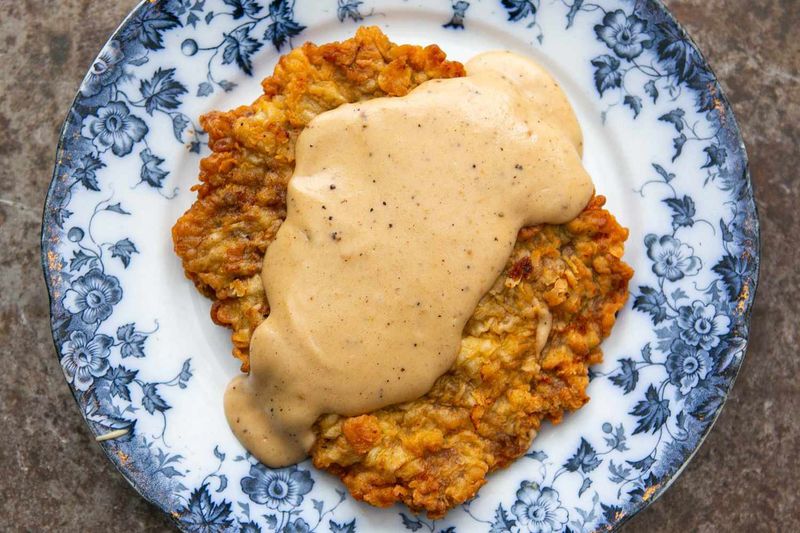
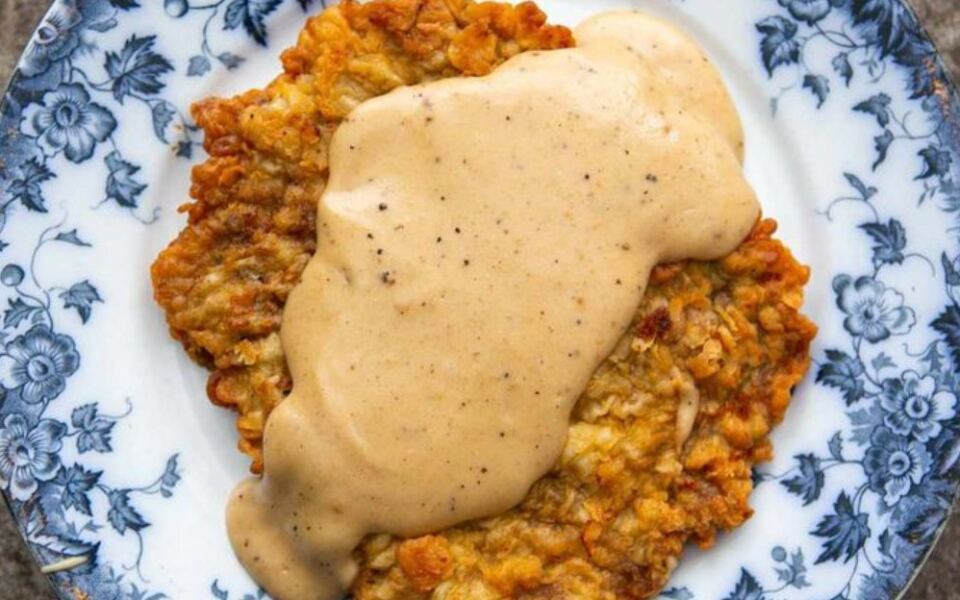
Here’s a dish whose name confuses plenty of first-timers. Chicken fried steak contains no chicken, just beef cooked the way you’d fry chicken.
A thin, tenderized beef steak gets dipped in seasoned flour and egg. Then it’s fried until golden and crispy.
The big finish is cream gravy. This white, peppery gravy gets poured right over the top.
Texas claims it proudly. Many food historians link it to German and Austrian immigrants who brought schnitzel recipes to the state.
The town of Lamesa, Texas, even calls itself the birthplace of the dish. Proving that claim is tricky, but folks there celebrate it anyway.
You’ll find it in diners and truck stops across the South and Midwest. Mashed potatoes and green beans are typical sides.
For many kids, this was the big Sunday dinner meal. It’s filling enough to keep you going until Monday.
The cut of meat is usually cube steak. It’s already tenderized, which saves you a step at home.
Here’s a tip for crispy coating. Let the breaded steaks rest a few minutes before frying so the coating sticks better.
Make the gravy in the same pan. Those crispy brown bits add extra flavor.
It’s comfort food on a plate the size of a hubcap. Bring a big appetite and maybe loosen your belt.
15. Spam Musubi
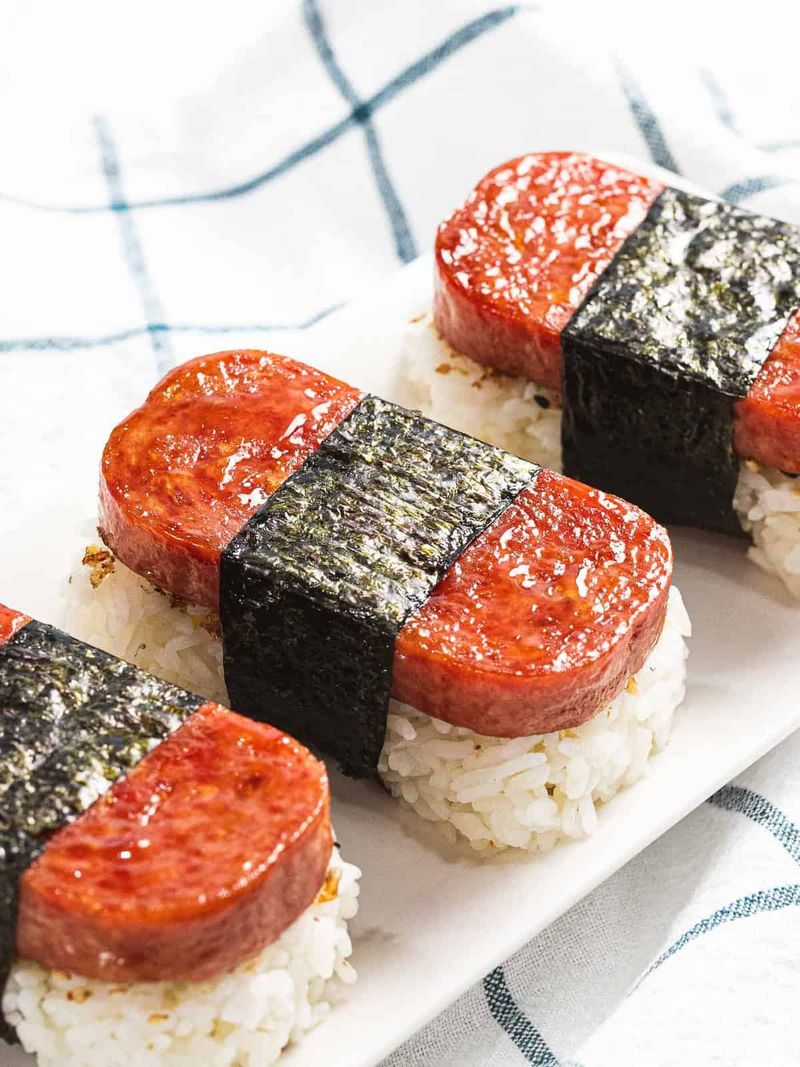
Sushi and canned meat sound like an odd couple until you visit Hawaii. Spam musubi stacks a slice of grilled Spam on a block of rice, wrapped with a strip of seaweed.
Spam became popular in Hawaii during World War II. American soldiers had it in their rations, and it stuck around.
Today, Hawaii eats a lot of Spam. It’s served at breakfast, lunch, and dinner across the islands.
Musubi blends that love with Japanese rice ball traditions. Many Japanese families settled in Hawaii, bringing their food culture with them.
The Spam is usually glazed with a sweet soy sauce mix. That gives it a salty, sweet, caramelized flavor.
You’ll find it at convenience stores and gas stations throughout Hawaii. Kids grab them as snacks after school or beach days.
Honolulu even celebrates with the Waikiki Spam Jam festival. Yes, a whole street festival for canned meat.
Want to make it at home? A special musubi mold helps press the rice into neat blocks, though an empty Spam can works too.
Fry the Spam slices, brush on the glaze, then place each on rice. Wrap with nori and press gently.
Some versions add egg or furikake seasoning. Both add extra flavor and color.
It’s a perfect grab-and-go snack. One bite and you’ll see why it’s an island favorite.
16. Green Chile Stew
New Mexico has an official state question, and it’s about chile. Red or green?
Lawmakers made that question official in 1999.
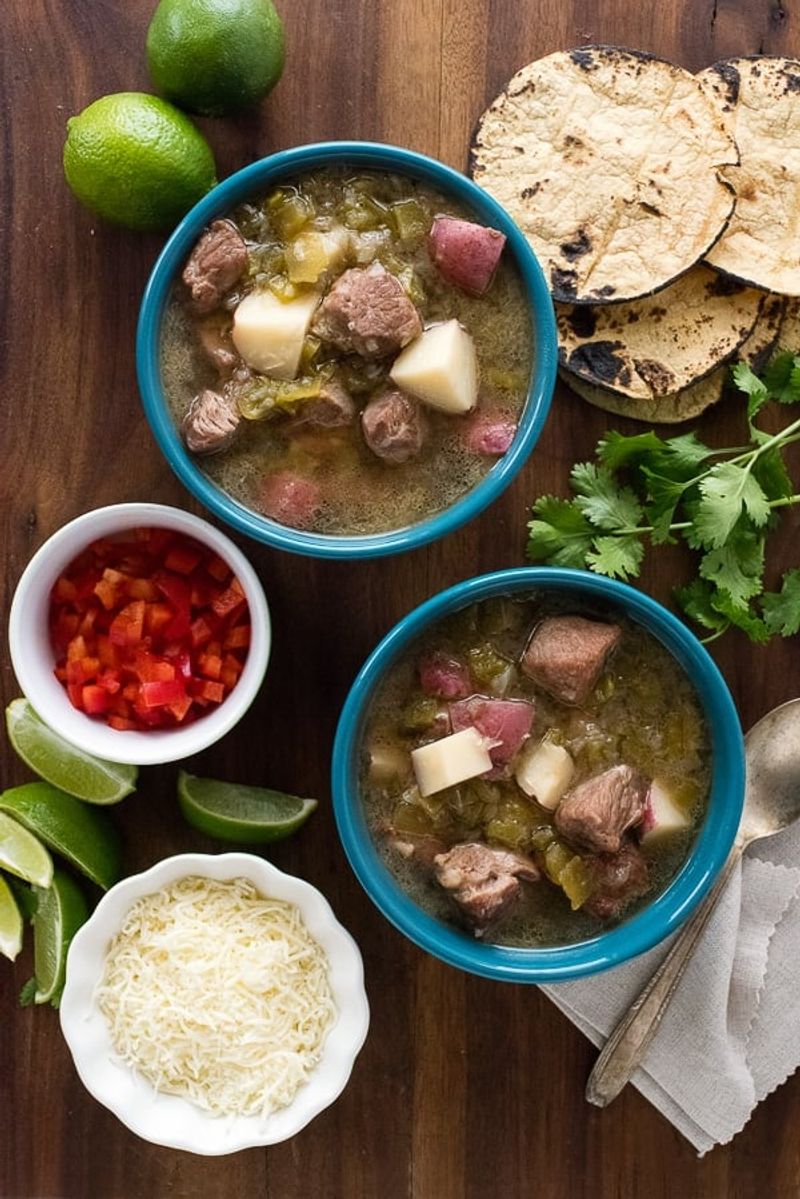
Green chile stew is one tasty way to answer. It’s a hearty soup made with roasted green chiles, potatoes, and usually pork.
Chiles from Hatch, New Mexico, are especially famous. Fans across the country look forward to Hatch chile season each year.
In late summer, stores and markets in the state roast chiles in big spinning drums. The smoky smell fills parking lots.
Families often buy chiles by the sack. They roast, peel, and freeze them to use all year long.
That stash comes in handy for stew. On chilly days, a bowl with a flour tortilla is pure comfort.
Can’t decide between red and green? Ask for Christmas, and you’ll get both.
Heat levels vary a lot. Some green chiles are mild, while others will make your eyes water.
To make stew at home, brown cubed pork with onion and garlic. Add broth, potatoes, and chopped roasted chiles, then simmer until tender.
Frozen or canned green chiles work if fresh ones aren’t around. Just pick your heat level carefully.
Many New Mexico kids grow up with chile in nearly their meals. This stew shows why it’s such a big part of life there.
17. Fry Sauce
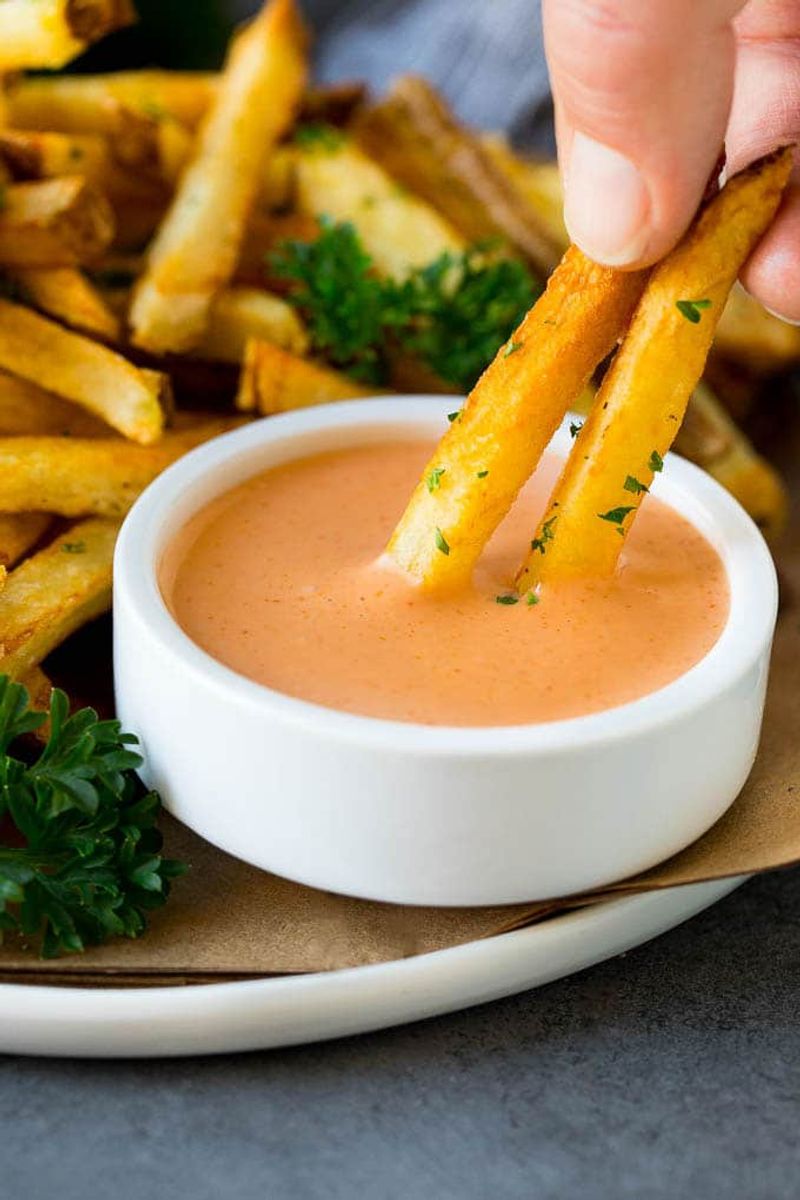
Ketchup and mayo walked into a Utah burger stand and came out as something new. Fry sauce is a pinkish dipping sauce, and Utah treats it like a local treasure.
The basic recipe blends ketchup and mayonnaise. Some versions add pickle juice, spices, or other secret extras.
Many people credit Don Carlos Edwards, founder of the Arctic Circle restaurant chain. He’s said to have started serving it in the 1940s.
Arctic Circle still promotes fry sauce today. Other Utah burger joints offer their own versions too.
Kids in Utah often grow up dunking fries in it. Asking for plain ketchup there might earn you a funny look.
It’s not limited to fries, either. People use it on burgers, onion rings, and even chicken nuggets.
Similar sauces exist in other places. Still, Utah is where it became a true regional favorite.
Making it at home takes about one minute. Mix two parts mayo with one part ketchup and stir.
Then make it yours. A splash of pickle juice, a pinch of garlic powder, or a dash of paprika can add flavor.
Store leftovers in a sealed jar in the fridge. It should keep for several days.
It may be simple, but it’s beloved. Next time you make fries, mix up a batch and taste a bit of Utah.
18. Pimento Cheese Sandwich
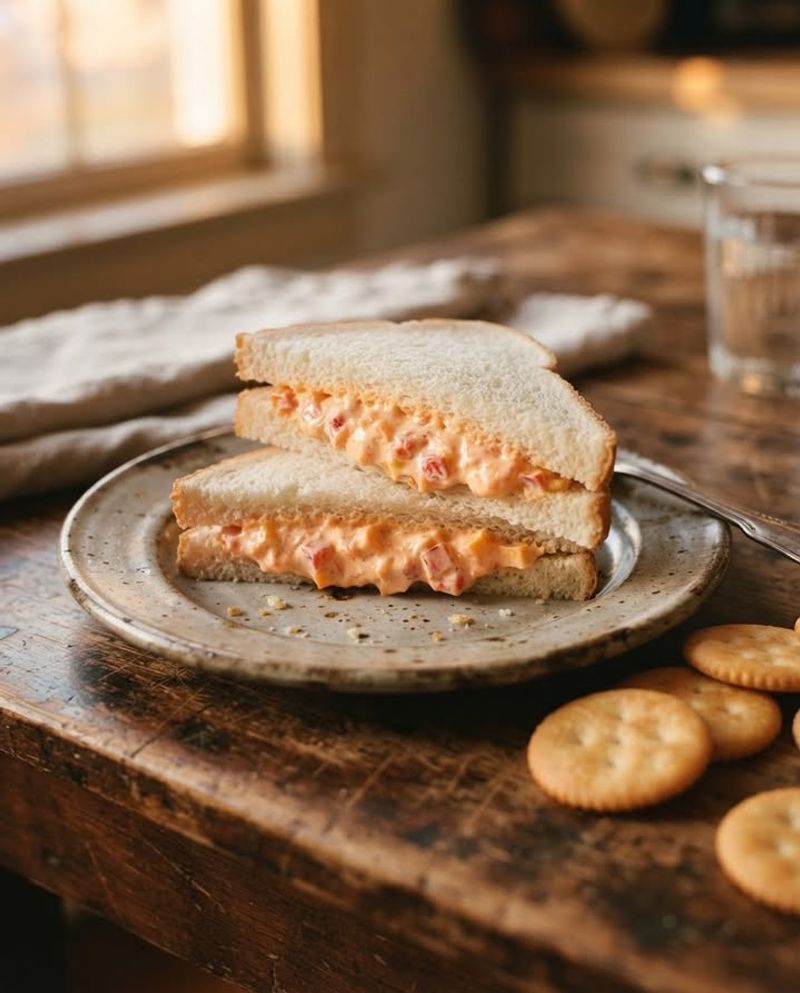
Southerners lovingly call it the pâté of the South, though it’s much easier to spread on a sandwich. Pimento cheese mixes shredded cheddar, mayonnaise, and diced red pimentos.
Oddly enough, early versions came from the North. Food historians trace it to cream cheese and pimento mixes in New York around 1900.
The South took it and made it its own. Cheddar replaced cream cheese, and homemade recipes spread across families.
It’s famous at the Masters golf tournament in Augusta, Georgia. Pimento cheese sandwiches there come wrapped in green wax paper.
For many kids, it was a lunchbox staple. A simple sandwich on white bread was all you needed.
Many families have their own twist. Some add cayenne pepper, hot sauce, or grated onion.
Duke’s mayonnaise is a popular pick in the South. Fans can get very loyal about which mayo goes in.
Making it is easy. Grate sharp cheddar yourself, then mix in mayo, chopped pimentos, and a pinch of pepper.
Grating your own cheese makes a difference. Pre-shredded cheese can feel dry because of its coating.
Beyond sandwiches, it’s tasty with crackers, celery, or on burgers. It also melts nicely in grilled cheese.
Keep it in the fridge and it’ll last a few days. That is, if anyone leaves it alone that long.
19. Buckeyes
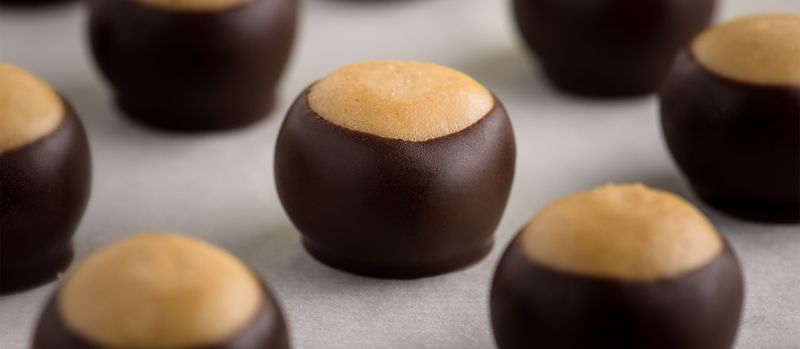
Ohio named its state tree after a nut you can’t eat, so bakers made one you can. Buckeye candies are peanut butter balls dipped in chocolate, with a round patch left uncovered.
That bare spot is the whole idea. It makes them look like the shiny brown nuts from Ohio’s buckeye tree.
Real buckeye nuts are not safe to eat. The candy version is a much sweeter choice.
Ohio State University’s teams are called the Buckeyes. That makes the candy a big hit during football season.
They’re also a classic on holiday cookie trays. Many Ohio families make batches together each winter.
The filling is simple. Mix peanut butter, butter, and powdered sugar until it forms a soft dough.
Roll it into small balls and chill them. Cold balls are much easier to dip.
Here’s the trick. Stick a toothpick in each ball and dip it in melted chocolate, leaving a circle on top uncovered.
Smooth the toothpick hole with your finger after dipping. That keeps them looking neat.
Kids love helping roll the dough. It’s a great kitchen project with tasty rewards.
Store them in the fridge or freezer. They taste just like a peanut butter cup, only homemade and full of Ohio pride.
20. Kolaches
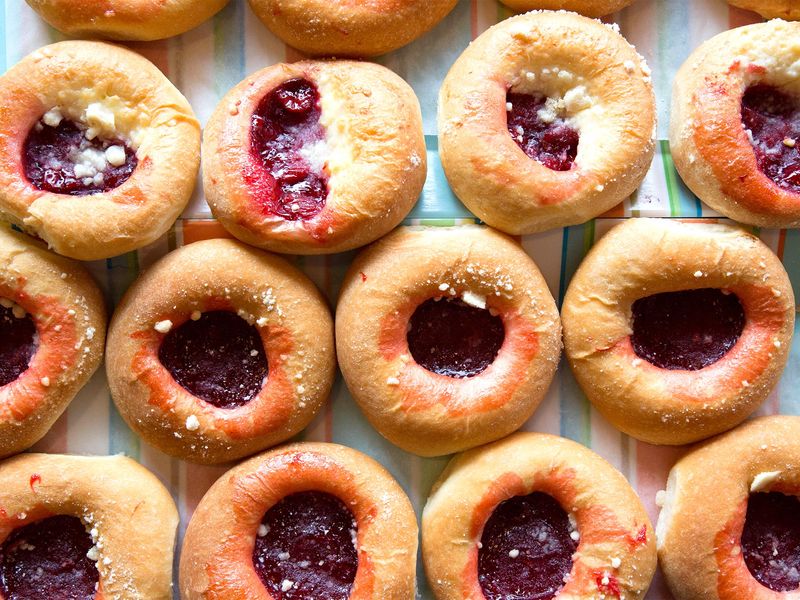
Texas breakfast has a delicious Czech accent. Kolaches are soft, slightly sweet yeast pastries with a dip in the middle for fillings.
Czech immigrants brought them to Texas in the 1800s. Many settled in central Texas towns.
The town of West, Texas, is famous for its Czech bakeries. Drivers on Interstate 35 often stop for a box.
Traditional fillings are fruit, poppy seed, or sweet cheese. Apricot, cherry, and prune are classic choices.
Then there’s the savory twist. Pastries stuffed with sausage are technically called klobasniky, but many Texans just call them kolaches.
Donut shops across Texas often sell both kinds. Kids grab them on the way to school or after Saturday sports.
Caldwell, Texas, holds a yearly Kolache Festival. The town celebrates its Czech heritage with food and fun.
Baking them takes some time because yeast dough needs to rise. Plan ahead and make a weekend project of it.
Press a little well into each round of dough before adding the filling. That keeps the filling from sliding off.
Brush the edges with butter after baking. It keeps the dough soft and shiny.
Fresh kolaches taste best the same day. Of course, that’s rarely a problem once a tray hits the table.
21. Loco Moco
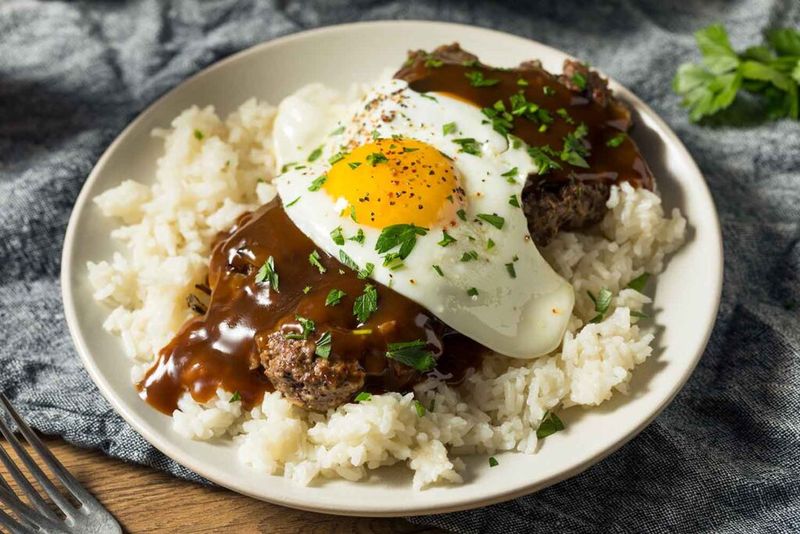
A group of hungry teenagers helped invent one of Hawaii’s most famous plates. Loco moco is white rice topped with a hamburger patty, a fried egg, and brown gravy.
The dish is credited to the Lincoln Grill in Hilo, on the Big Island, in 1949. Teens from a local sports club wanted something cheap and filling.
The name comes from one of the boys, whose nickname was Crazy, or Loco in Spanish. Moco was picked mostly because it rhymed.
The idea spread quickly. Today, you’ll find loco moco across Hawaii and at Hawaiian restaurants on the mainland.
It’s a big part of plate lunch culture. Many plates come with a scoop of macaroni salad on the side.
The runny egg yolk is a highlight. It mixes with the gravy and soaks into the rice.
Some places offer fun variations. Spam, Portuguese sausage, or fish can replace the burger patty.
It’s easy to make at home. Cook rice, fry a burger patty, fry an egg, then cover it with brown gravy.
Packet gravy works fine for a quick version. Homemade gravy with pan drippings adds more flavor.
Kids love it because it’s like breakfast and dinner on one plate. Grab a fork and dig in, island style.
22. Chicago-Style Hot Dog
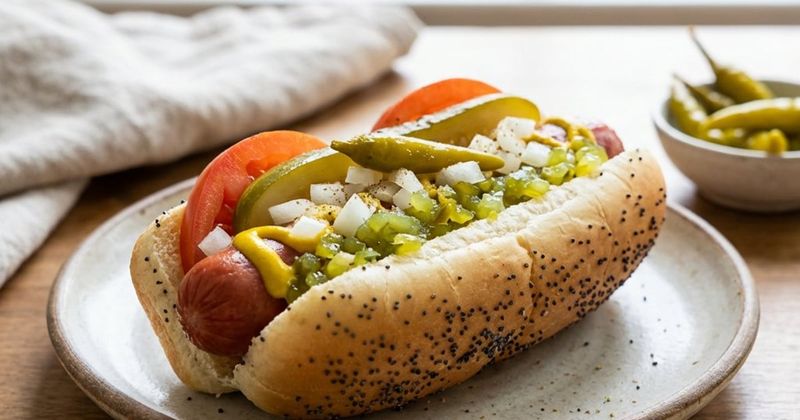
Want to spark a debate in Chicago? Ask for ketchup on your hot dog.
A Chicago-style hot dog is famous for its toppings. It’s an all-beef frank in a poppy seed bun, loaded with seven classic toppings.
Those are yellow mustard, bright green relish, chopped onions, tomato slices, a dill pickle spear, sport peppers, and a dash of celery salt. People often call it dragged through the garden.
Ketchup isn’t on the list. Many Chicagoans think it covers up the other flavors.
The style is often linked to the Great Depression era. Vendors offered lots of toppings to make a cheap meal more filling.
That neon green relish catches your eye. It gets its bright color from added dye.
Sport peppers are small, pickled, and spicy. Be ready for a little kick.
Hot dog stands across Chicago serve this classic. For many kids, it’s the taste of summer and ballgames.
Steaming the bun is a common step. It keeps the bread soft and warm.
Building one at home is easy if you find the toppings. Look for poppy seed buns and sport peppers in specialty stores.
Layer the toppings carefully so they don’t spill. Then enjoy a bite of the Windy City, no ketchup required.
Share this story