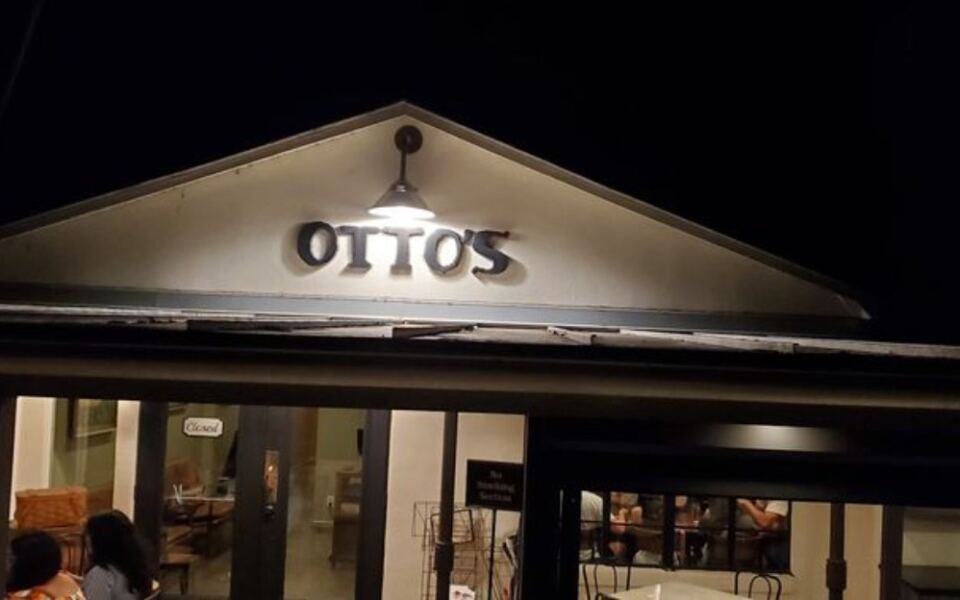
Duck breast gets the schnitzel treatment at Otto’s German Bistro, and the cheesecake comes with Cambozola and a pecan crust. Those two menu choices offer a useful introduction to this Fredericksburg restaurant, where German cooking takes a few well-considered detours.
There’s room for bratwurst and sauerkraut, certainly, but also candied bacon on flammkuchen and a wine list with a German-Austrian focus. Since opening in July 2013, Otto’s has built its identity around seasonal ingredients and a broad interpretation of Germanic cuisine.
Its influences reach into Austria, Alsace, and Northern Italy, with Texas joining the conversation. That approach makes particular sense in a town whose German heritage remains part of everyday life.
At 316 East Austin Street, familiar dishes become starting points for something more individual. The result is a menu that rewards a little curiosity, whether yours begins with cheesy spätzle, mustard, or the prospect of blue cheese in dessert.
Where Fredericksburg’s German Food Tradition Meets Modern Texas Cooking
Fredericksburg’s connection to Germany predates its restaurant reviews by quite a stretch. German immigrants founded the town on May 8, 1846, establishing the roots of a heritage that still shapes its identity.
That history gives a German restaurant here a particular kind of context. Schnitzel and sausage belong to a much longer local conversation about what people bring with them, what they preserve, and what changes when they settle somewhere new.
Otto’s entered that conversation in July 2013 with a farm-to-table approach to Germanic cooking. The choice of that broader term matters.
According to the Fredericksburg Convention and Visitor Bureau, the restaurant’s influences include Germany and Austria alongside Alsace, Northern Italy, and Texas. That leaves the kitchen room to explore regional connections rather than squeeze every dish into a single national category.
There’s still plenty on the menu for someone seeking a recognizable German dinner. The $28 Wurst Platte pairs house bratwurst with kartoffelsalat, caraway sauerkraut, senfgurken, and whole-grain mustard.
Potato salad, sausage, cabbage, pickles, mustard: the foundations are easy to recognize, even if a few menu translations help. Elsewhere, the combinations become more adventurous.
The interesting Texas connection is the restaurant’s willingness to work within its surroundings while keeping those European reference points visible. A seasonal menu can accommodate that exchange naturally, allowing familiar preparations to meet the ingredients and preferences of another place.
It also gives diners more than one way into the meal. One person can settle happily into bratwurst while another investigates duck schnitzel, and both orders make sense at the same table.
In a town with such an established German identity, that flexibility gives tradition somewhere to go next.
Local Ingredients Shape Otto’s Seasonal Menu
The first clue sits in the bread course. Otto’s lists Joju Bakery bread with whipped butter, Maldon sea salt, beet jam, and cracked black pepper for $8.
Naming the bakery gives a simple starter a specific identity; adding beet jam makes the familiar bread-and-butter opening a little less predictable. That attention to ingredients follows the restaurant’s stated approach.
Otto’s says it sources local meat and produce alongside organic and sustainable ingredients, with a menu that changes seasonally. The useful word here is “alongside.” Its sourcing philosophy leaves space for both regional products and ingredients chosen for a particular dish, rather than promising that everything comes from a nearby farm.
The duck schnitzel, for example, specifically identifies Maple Leaf Farms duck breast. That transparency is more informative than a sweeping claim about locality.
Across the menu, vegetables and accompaniments also give diners something concrete to consider. The listed halibut comes with sautéed carrots, green beans, pesto, and pine nuts.
Pierogi feature a filling of creamed potatoes, mushrooms, peas, and caramelized onion, with mushroom stock sauce, shallots, asparagus, and cherry tomatoes. These combinations widen the meal beyond the meat-and-cabbage dishes some diners may initially expect.
They also make clear why a seasonal restaurant deserves a fresh menu check before each visit: individual preparations can change, even when the overall approach stays recognizable. Otto’s Salad offers another revealing combination, bringing mixed field greens together with chèvre, candied pecans, pickled red onion, and caraway vinaigrette.
The caraway gives the salad a connection to the restaurant’s broader flavor vocabulary, while the other ingredients keep it lively. Taken together, these dishes show how sourcing and composition work together.
The interest lies in what the kitchen does with an ingredient once it arrives, whether that means beet jam beside bread or vegetables sharing the plate with fish.
Duck Schnitzel Gives a Familiar German Dish a Rich New Twist
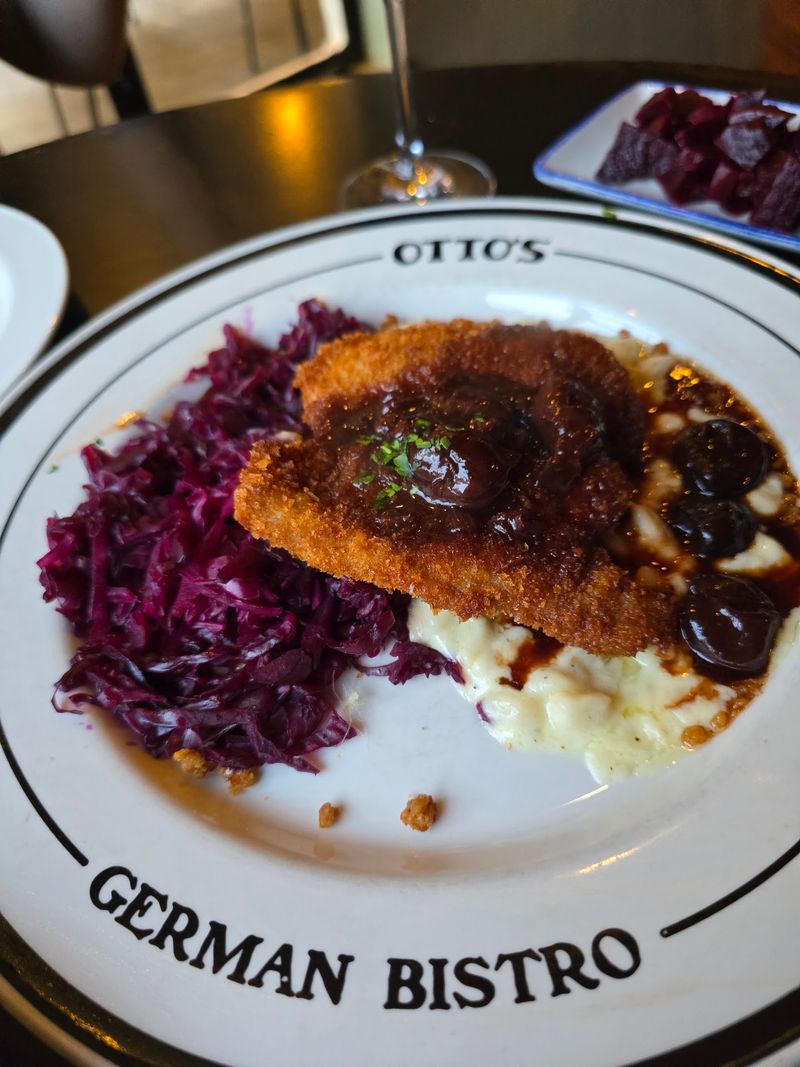
At $34 on the current menu, the duck schnitzel comes with a fairly persuasive supporting cast: käsespätzle, rotkohl, kirsch demi-glace, and duck cracklings. Even before the first forkful, that list tells you this is a substantial main course.
The central change is straightforward. Duck breast takes the place occupied by veal or pork in more familiar schnitzel preparations, bringing a different character to the dish while preserving its recognizable identity.
Otto’s names Maple Leaf Farms as the source of the breast, a useful detail for diners interested in what they’re ordering. The accompaniments deserve equal attention.
Käsespätzle brings cheese and soft egg noodles into the equation, while rotkohl supplies the red-cabbage component. Kirsch adds a cherry-spirit reference to the demi-glace, and duck cracklings bring another expression of the main ingredient onto the plate.
Read together, the components suggest a deliberate balance of richness, texture, and contrasting flavors. That is a reading of the menu rather than a claim about a particular night’s execution, but it explains why the dish stands out on paper.
Several elements remain firmly connected to German and Austrian food traditions, so the substitution of duck feels coherent within the restaurant’s larger approach. It also makes the dish a useful comparison with another listed entrée.
Otto’s $35 braised pork shank shares rotkohl and käsespätzle, but arrives with dark beer demi-glace. Similar accompaniments frame two different meats and sauces, giving diners a clear choice between preparations without requiring a complete change of direction.
For anyone who usually orders schnitzel automatically, the duck version introduces a decision worth pausing over. There’s a familiar structure to hold onto, followed by enough variation to make the order feel specific to Otto’s.
The cracklings are a particularly pointed finishing detail: the duck gets more than one role in its own dinner.
Flammkuchen Layers Candied Bacon With Creamy Cheese
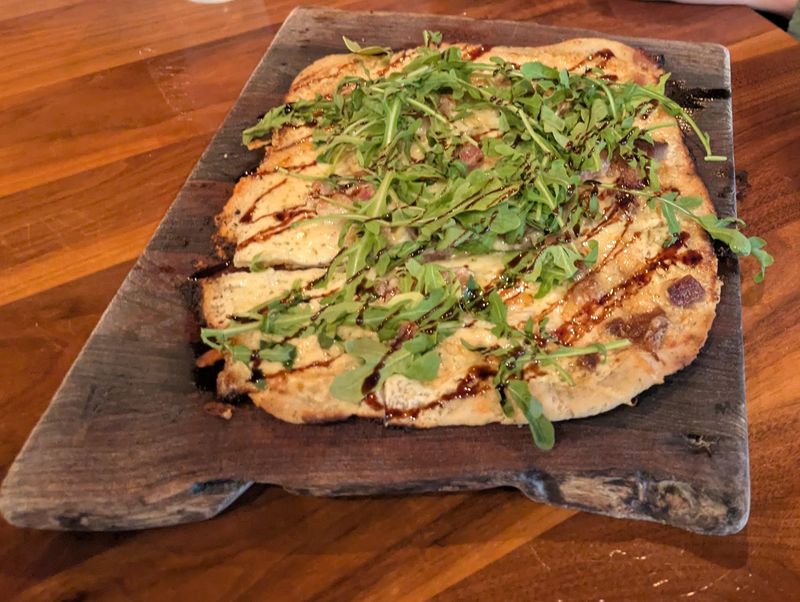
Picture the opening negotiation at a dinner table: someone wants bread, someone wants cheese, and someone has already spotted the bacon. One appetizer on Otto’s menu gives all three a reasonable argument.
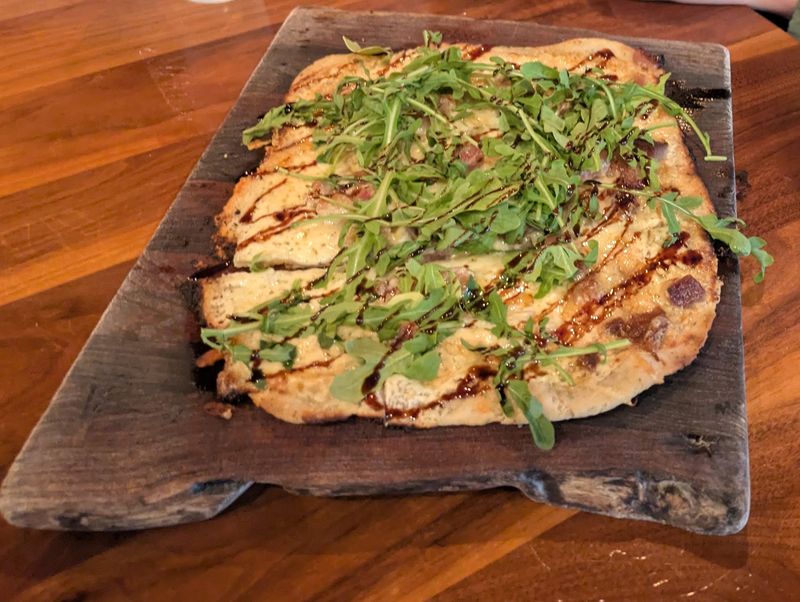
Its $20 flammkuchen starts with house-made flatbread and adds crème fraîche, candied bacon, caramelized onions, Cambozola, Gruyère, aged balsamic, and arugula. That is a busy ingredient list, but the relationships are easy to follow.
The bacon and onions introduce sweetness, the cheeses and crème fraîche supply richness, and the arugula brings a peppery element. Aged balsamic adds another sweet-tart accent.
These are the contrasts suggested by the ingredients, with each component giving the flatbread a different job to do. The dish also fits the restaurant’s stated interest in Alsace and the wider geography of Germanic cooking.
It gives that broad culinary brief a tangible form, rather than leaving it as background information about the restaurant. Samantha Grasso singled out the flammkuchen in her June 2025 review for The Infatuation, drawing attention to its bacon, onions, creamy topping, arugula, and balsamic.
The current menu supplies the more precise ingredient breakdown, including the two named cheeses. That distinction is useful because Cambozola and Gruyère make this particular version more specific than a generic bacon-and-onion flatbread.
Within the appetizer selection, it occupies a different position from the $12 pretzel with smoked Gouda beer cheese or the $18 sauerkraut balls with sausage and whole-grain mustard crème fraîche. Those options offer other routes into the same meal, depending on whether the table is leaning toward a dip, a crisp bite, or something to divide into portions.
The flammkuchen makes its case through layering. Sweetness, cheese, greens, and bacon all arrive together, giving the conversation about German cooking in Texas a practical starting point: deciding who gets the last piece.
Cambozola Cheesecake Finishes Dinner With a Pecan Crunch
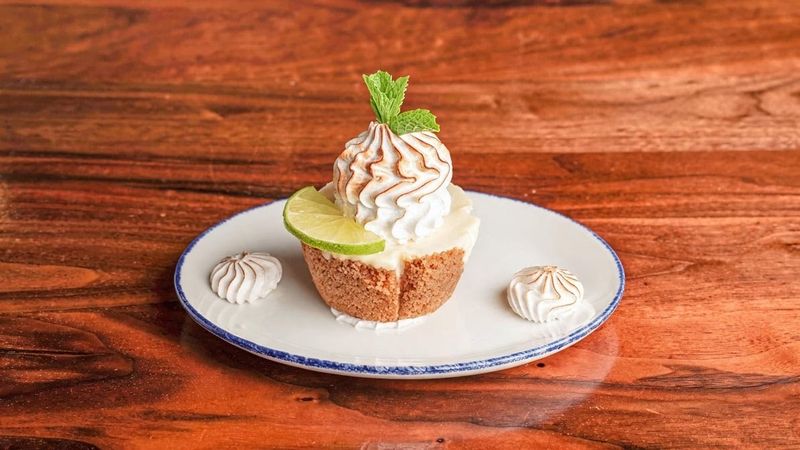
Blue cheese in cheesecake sounds like the sort of proposal that divides a table immediately. At Otto’s, the idea has a clearly described format: Cambozola and cream cheese in a pecan crust, finished with candied pecans and crème anglaise.
The current listed price is $12. Knowing that cream cheese is part of the filling helps explain the concept.
This is a cheesecake incorporating Cambozola, with the familiar ingredient sharing space with the more assertive one. The pecans appear twice, in the crust and as a candied topping, giving the dessert a nutty theme that runs beyond a decorative flourish.
Crème anglaise completes the composition with a custard sauce. On paper, it is an appealing study in contrasts: a cheese with savory associations placed within a recognizably sweet dessert, supported by nuts and cream.
The menu doesn’t specify the proportion of Cambozola to cream cheese, so its name alone cannot tell you precisely how pronounced the cheese character will be. That little uncertainty is part of the decision.
For a diner curious about sweet-and-savory combinations, it offers a more unusual ending than a conventional cheesecake. For someone firmly committed to chocolate, the dessert menu provides a separate direction.
Otto’s lists a $12 Black Forest cake with three layers of chocolate cake, cherry marmalade, and whipped cream. Its $10 Zitronenkuchen is described as a citrus, condensed-milk, and sour-cream cheesecake in a butter-cookie crust, topped with French meringue.
Those alternatives help put the Cambozola version in context: the kitchen gives familiar dessert formats several distinct personalities. The pecan-crusted cheesecake is especially relevant to the restaurant’s broader story because the European cheese and nut-focused construction sit comfortably together.
There is no need to claim the combination represents an old local recipe. Its interest comes from the pairing itself, and from letting a dessert keep a little of the cheese course’s personality.
A Relaxed Bistro Setting Completes the Otto’s Experience
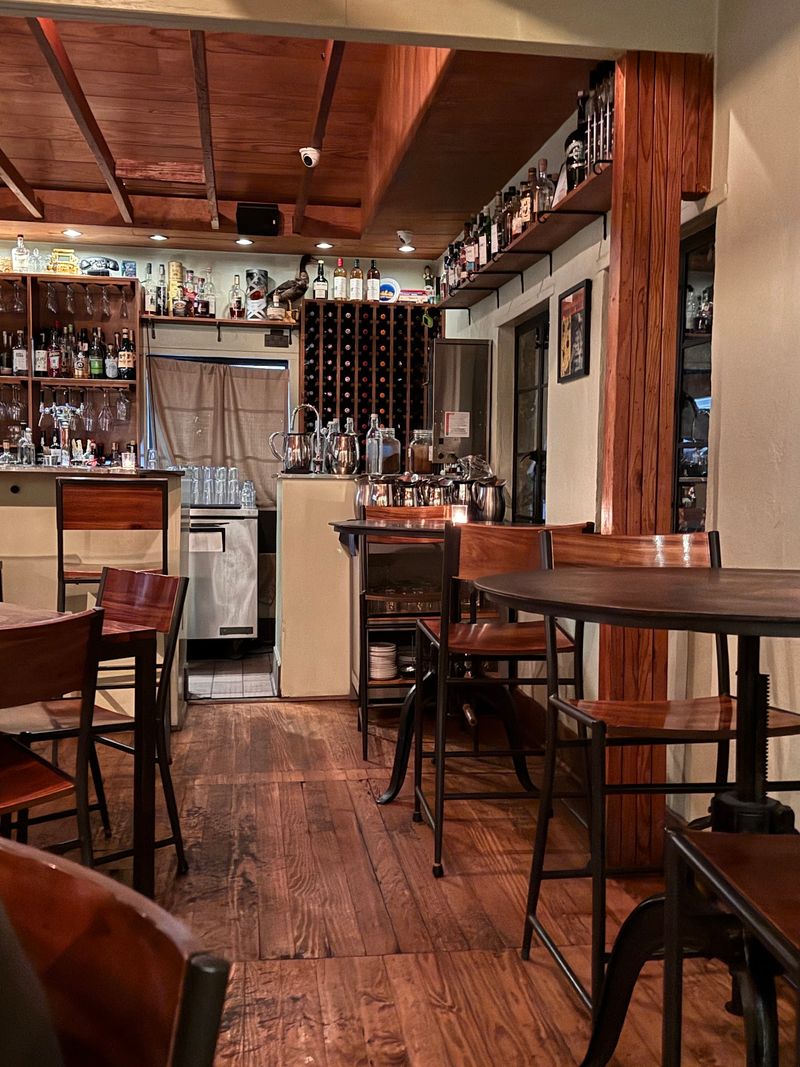
A quieter room can change how a menu reads. In her review for The Infatuation, Samantha Grasso describes an understated interior where the food carries the connection to Fredericksburg’s German heritage.
That observation fits Otto’s own description of an upscale bistro intended for convivial dining: the ambition is present, but the occasion can still revolve around conversation. The restaurant is at 316 East Austin Street, and its official website currently lists dinner service from 4 to 9 p.m.
Sunday through Thursday and 4 to 10 p.m. Friday and Saturday.
Those are useful details for planning an evening, especially because other listings show different closing times. Reservations are available through the restaurant’s website.
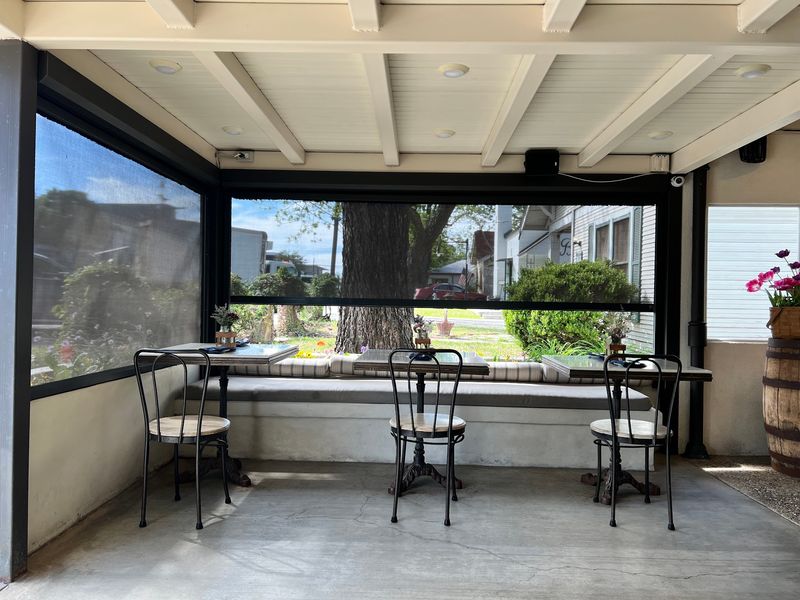
The Fredericksburg tourism listing also identifies outdoor seating, adding another possibility when the weather cooperates. Drinks belong to the picture, too.
Otto’s describes an extensive German-Austrian wine list alongside craft beers and handcrafted cocktails. That focus carries the restaurant’s regional interests beyond the kitchen and gives wine drinkers a specific area to explore with dinner.
The budget is equally worth understanding in advance. Using the current listed prices, a $20 flammkuchen shared by two, two $34 duck schnitzels, and a shared $12 Cambozola cheesecake total $100 before drinks, tax, and gratuity.
It is a useful example of what a three-course dinner might cost, rather than a promise about anyone’s final bill. These practical details support the more personal decisions that shape an evening: whether to split a starter, choose different entrées, or leave room for separate desserts.
Otto’s gives those choices a consistent setting, with enough familiarity to settle into and enough variation to discuss. A glass from the German-Austrian list, a plate of schnitzel, and a pecan-crusted cheesecake can occupy the same table without requiring a speech about tradition.
Dinner makes the connection on its own.
Share this story