A fried steak cutlet, a generous coating of red gravy, and a French roll with a demanding job ahead of it. That’s the arrangement at Ricobene’s, where keeping your shirt clean requires a little planning.
Add mozzarella and hot giardiniera, and lunch becomes an exercise in balancing beef, melted cheese, and escaping vegetables. The Chicago restaurant opened in 1946, but its breaded steak sandwich arrived three decades later, eventually becoming the dish most closely associated with the family name.
Its appeal goes beyond the impressive portion. Thin steak, seasoned breading, tomato sauce, and a sturdy roll each have a job, and the toppings let you steer the richness and heat.
This is a sandwich worth understanding before you attempt the first bite, especially if your usual definition of a steak sandwich involves grilled beef and onions. At Ricobene’s, the cutlet gets fried, the sauce gets involved, and the napkins earn their place.
How Ricobene’s Became a Chicago Institution
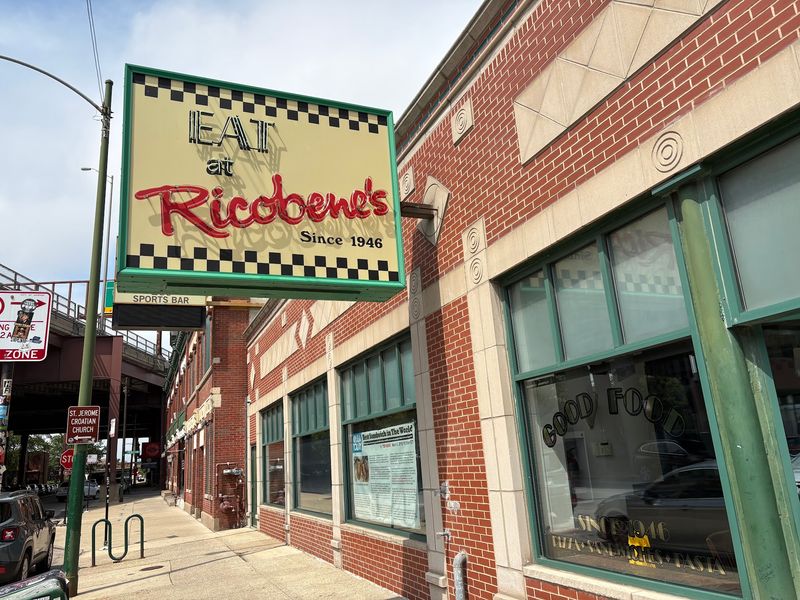
In 1946, Rosario and Antonia Ricobene opened a Chicago restaurant to supplement the income from their fruit and vegetable truck. Early offerings included sausage sandwiches and tamales, according to the family history shared through Goldbelly.
The business began with the practical work of feeding customers, long before breaded steak became its calling card. That sandwich joined the menu in 1976, after three of the founders’ sons took over during the 1970s.
South Side Weekly identifies the second-generation brothers behind it as Sam, Frank, and Russell Ricobene. The thirty-year gap between the restaurant’s opening and the sandwich’s arrival matters.
Ricobene’s had already spent decades building its business when the dish that would define it appeared. Breaded steak also belongs to a wider South Side food tradition.
Other neighborhood restaurants have served their own versions, including Ferro’s and Fabulous Freddie’s on 31st. Ricobene’s became the name that many diners beyond Chicago encountered first, giving a local specialty a much larger audience.
National attention helped. USA Today writer Ted Berg famously praised the sandwich in 2015, and Anthony Bourdain featured it on Parts Unknown.
Yet the clearest explanation of its importance came from owner Sam Ricobene during a 2023 WBBM Newsradio interview. He described breaded steak as the restaurant’s bestselling item and the order that keeps the business going.
That says something more useful than another ranking. The sandwich has a working role in the restaurant’s daily life, bringing customers through the door and anchoring its reputation.
For visitors whose Chicago eating plans revolve around deep-dish pizza and Italian beef, it adds another chapter to the city’s food story. The family’s business started with produce, sausage sandwiches, and tamales.
A fried cutlet tucked into bread eventually became the order people traveled to find.
What Goes Into the Famous Breaded Steak Sandwich
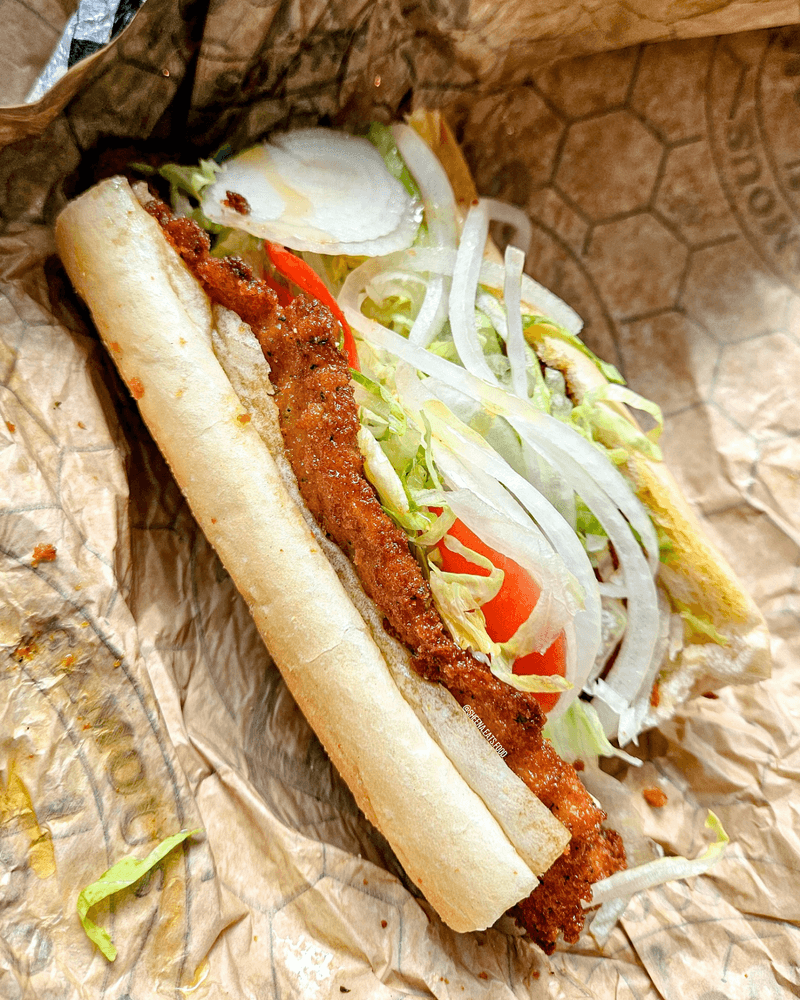
Picture a thin piece of beef receiving the full cutlet treatment: tenderizing, breading, and a trip through hot oil. Ricobene’s Goldbelly listing identifies the meat as USDA Choice skirt steak and describes an Italian-seasoned coating.
After frying, the steak is dipped into red sauce and tucked into a French roll from Chicago’s Turano Baking Company. It’s a straightforward sequence, but each step changes what you eventually bite into.
The beef supplies substance and chew, while the breading adds seasoning and gives the tomato sauce somewhere to settle. That last part is essential to setting expectations.
The cutlet begins crisp, then meets a generous amount of moisture. Some of that freshly fried texture naturally softens as the sauce works into the coating.
Expecting an uninterrupted crunch from end to end overlooks how the sandwich is assembled. The finished combination brings together tender beef, softened breading, tomato sauce, and bread sturdy enough to gather the filling.
Cheese and peppers add further layers, depending on your order. Mozzarella contributes richness and that familiar stretch of melted cheese.
Giardiniera brings pickled vegetables and heat, while sweet peppers offer a gentler addition. The restaurant’s menu lists Regular Size Breaded Steak and Original King Size Breaded Steak, both served with red gravy.
Those names give you an early decision to make, before the toppings enter the conversation. A first visit doesn’t require choosing the largest option to understand the appeal.
What helps more is arriving with the right picture in mind. The word “steak” can suggest grilled strips, sautéed onions, or a thick piece of beef.
Here, the preparation is closer to a sauced, breaded cutlet folded into a roll. Once that distinction clicks, the sandwich makes sense—and so does keeping a fork nearby in case the bread reaches its limit.
Why the Red Gravy Deserves Some Attention
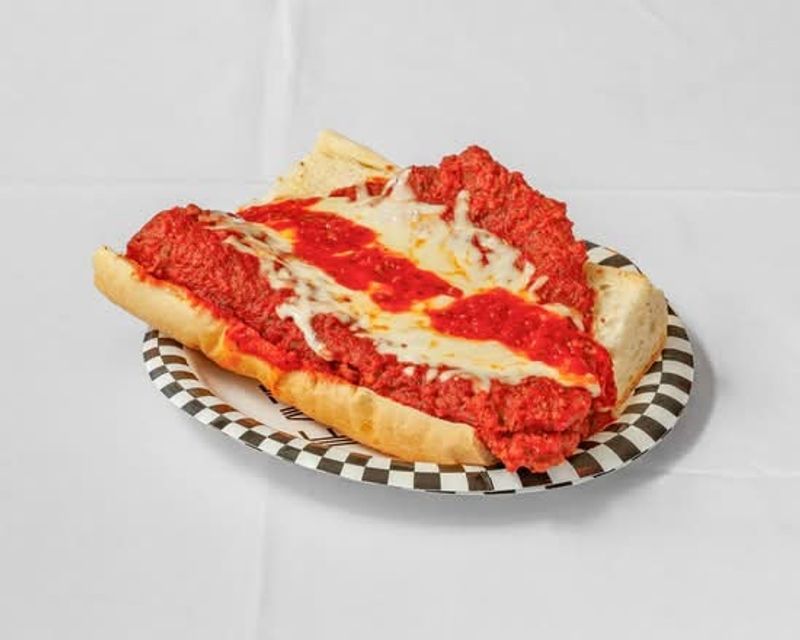
The important word on the menu is “red.” Ricobene’s lists red gravy with its breaded steak sandwiches, while Sicilian beef and the beef-and-sausage combination come with beef gravy. That distinction helps first-time customers understand what’s coming.
The breaded steak gets tomato-based sauce, giving the sandwich its unmistakable appearance and much of its character. Sauce affects everything from texture to how easily the filling stays together.
It works into the breading, coats the beef, and eventually reaches the roll. A dry fried cutlet and a thoroughly sauced one offer different experiences, even if they start with the same ingredients.
At Ricobene’s, the sauce belongs throughout the sandwich. Time Out’s review describes the cutlet being completely bathed in chunky tomato sauce, a useful detail for anyone imagining a restrained spoonful over the top.
That generous approach also explains why eating promptly is sensible. Bread continues absorbing moisture while a hot sandwich sits, so an order eaten at a table will have a different texture from one carried across town.
There’s no need to make lunch a timed event, but the combination benefits from attention while it’s hot. The gravy also gives you a starting point for choosing toppings.
Before adding anything, you already have fried beef, seasoned breading, tomato, and bread. Mozzarella makes the combination richer.
Pickled giardiniera introduces a sharper flavor alongside the sauce and meat. Sweet peppers add another vegetable element without the same emphasis on heat.
Thinking about those relationships is more useful than ordering every available addition simply because it’s there. The tomato sauce remains central whichever direction you choose.
It links the breaded steak to the roll, changes the coating’s texture, and accounts for a fair share of the napkins. By the time the first red drip reaches the wrapper, its role should be perfectly clear.
Choosing Your Toppings From Mozzarella to Giardiniera
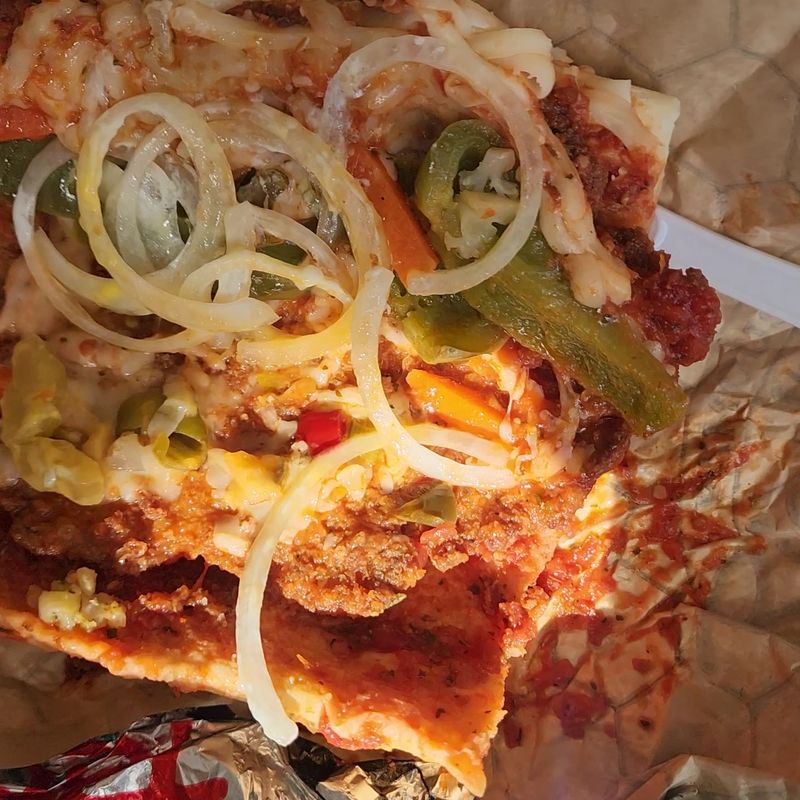
For a first order, mozzarella and hot giardiniera make a sensible pairing if you enjoy spicy food. The cheese adds a creamy element to the beef and tomato sauce, while the pickled vegetables provide contrast.
South Side Weekly’s description highlights melted mozzarella alongside crisp, tangy giardiniera, capturing why the combination appears so often in discussions of the sandwich. Still, your preferences should do the ordering.
Someone who enjoys a tomato-sauced cutlet but dislikes heat has no reason to turn lunch into an endurance exercise. Sweet peppers offer another direction, and jalapeños also appear among the restaurant’s listed sandwich options.
The useful decision is which flavor you want more of, rather than how many toppings the bread might accommodate. Mozzarella deserves a moment’s consideration of its own.
It makes an already substantial sandwich richer, which may be exactly what you have in mind. If your main interest is the beef, breading, and red gravy, keeping the additions simple can make those elements easier to appreciate.
Neither approach requires defending. It’s worth stating your toppings clearly when ordering instead of assuming that the sandwich will match every photograph you’ve seen.
WBBM’s reporting describes mozzarella and peppers as additions customers can choose. A pictured version piled with cheese and giardiniera is therefore a useful suggestion, rather than a guarantee of the default build.
If you’re sharing, settle the pepper question before placing the order. That conversation takes considerably less effort than extracting spicy vegetables from melted cheese later.
You can also keep the first visit uncomplicated by choosing a combination that already sounds good to you. There’s plenty to learn from a single sandwich without treating the counter like an examination.
Cheese, peppers, and personal appetite are enough variables to manage. The breaded steak and red gravy provide the foundation; the toppings determine where each bite goes next.
Come Hungry and Keep Plenty of Napkins Handy
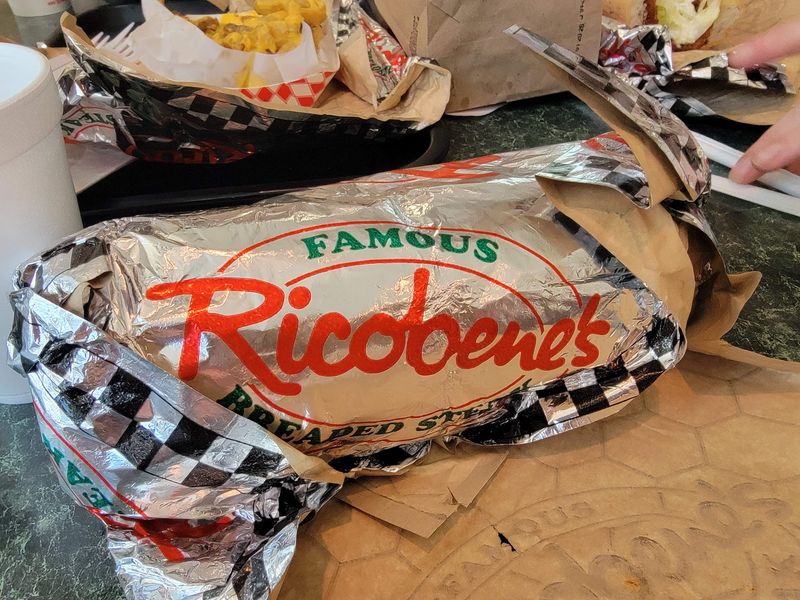
A regular sandwich and a king-size sandwich sit side by side on the menu, an arrangement that can encourage optimistic thinking. Before choosing, consider the contents: French bread, fried beef, red gravy, and whatever cheese and peppers you’ve requested.
The Infatuation describes the signature sandwich as a particularly large meal, while South Side Weekly notes that finishing one in a sitting can be challenging. For a first visit, the regular offers a reasonable place to begin.
Sharing can also make sense if you want room for something else. Ricobene’s promotes fresh-cut fries on its website, and they’re an obvious companion, but the sandwich already brings plenty to the table.
Ordering according to appetite makes the meal more enjoyable than committing to an ambitious tray and negotiating with it afterward. Once the food arrives, a little preparation helps.
Clear some space, open the wrapping carefully, and put napkins where you can reach them with one hand. Keeping part of the wrapper around the lower half may help contain loose toppings.
A plate or tray underneath gives stray peppers and sauce somewhere useful to land. Sitting down is also a sound choice.
Managing a hot cutlet, melted cheese, and a shifting roll while walking asks quite a lot of a sandwich. Smaller bites can help you keep the ingredients together instead of pulling out a large section of steak at once.
If the bread starts to give way, utensils offer an easy adjustment. There’s no special accomplishment in struggling through the last few bites with sauce running toward your sleeves.
A little mess is part of the preparation’s practical reality. The filling is generous, the sauce is plentiful, and the roll can only do so much.
With room on the table and napkins close by, you can concentrate on eating while everything is still hot.
What to Know Before Visiting Ricobene’s in Bridgeport
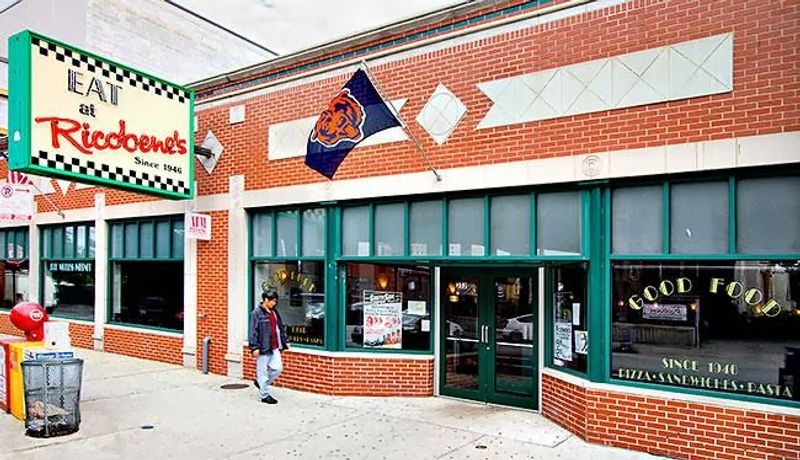
Set your destination to 252 W. 26th Street, Chicago, rather than relying on the neighborhood name alone. Restaurant coverage routinely associates Ricobene’s with Bridgeport, including The Infatuation’s review, while Time Out categorizes the address under Armour Square.
The street address removes that small geographical wrinkle and gets everyone to the same counter. The restaurant’s published hours offer a broad window for a visit.
Monday through Thursday, it opens at 9 a.m. and closes at 12:30 a.m. Friday hours are 9 a.m. to 2 a.m., Saturday runs from 10 a.m. to 2 a.m., and Sunday runs from 10 a.m. to midnight.
Those late finishes help explain the restaurant’s place in Chicago’s late-night dining landscape. For holiday hours or a specific question, the listed phone number is 312-225-5555.
Inside, expect a casual setting that suits the food. South Side Weekly describes checkerboard tile, historical photographs, counter ordering, and tables with wooden chairs.
Carryout is available, and the restaurant offers online ordering through its own website. Sitting down has practical advantages when your meal involves a sauced cutlet, but taking it home is an option too.
Groups have choices beyond the famous sandwich. The broader menu includes pizza, wings, hot dogs, and burgers, so companions can find their own lunch without committing to breaded steak.
That flexibility makes the place easier to work into a shared outing. If the sandwich is your main interest, the decisions remain pleasantly manageable: size, cheese, peppers, and somewhere to eat.
Once the order reaches the table, the setting asks very little of you. A fallen pepper or a shifting roll fits comfortably into the proceedings.
There’s hot food to work through, red gravy gathering on the wrapper, and enough room to set the sandwich down between bites.
Share this story