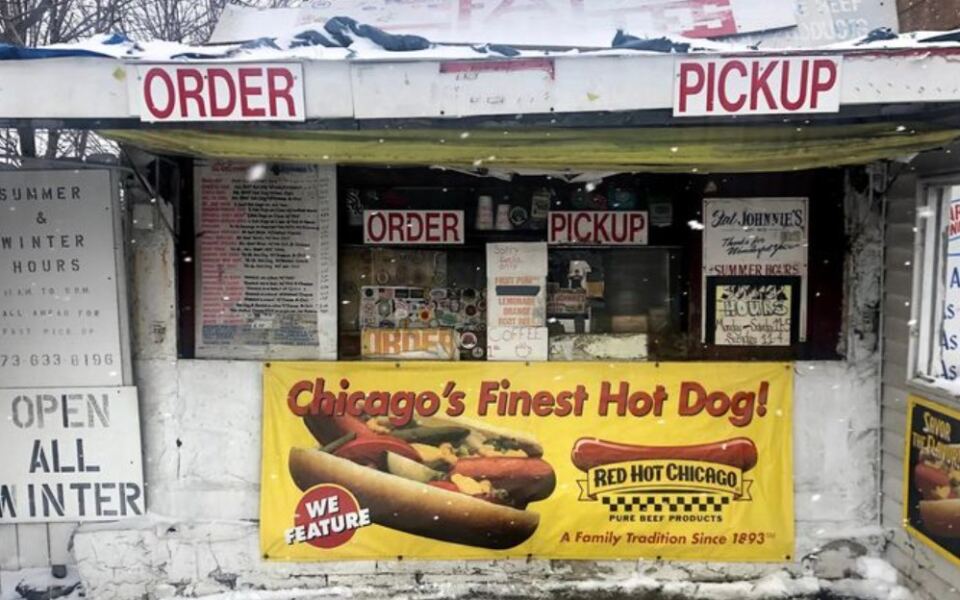
A tamale tucked into a hot dog bun might sound like someone lost track of lunch halfway through making it. At Fat Johnnie’s Famous Red Hots on Chicago’s Southwest Side, that combination has a name, a history, and a generous covering of chili.
Meet the Mother-in-Law, a sandwich whose family tree is almost as interesting as its ingredients. Founder John Pawlikowski encountered the idea years before opening his business in 1972, giving an existing neighborhood favorite a lasting place on his menu.
The construction certainly gets your attention. There’s bread around cornmeal, chili over the top, and enough potential for a slippery bite to justify keeping the wrapper close.
But the sandwich also introduces a less familiar side of Chicago eating, where tamales share menu space with red hots and a tiny stand on Western Avenue holds a surprisingly large piece of the city’s food story, one generously dressed bun at a time.
What Goes Into Fat Johnnie’s Mother-in-Law Sandwich
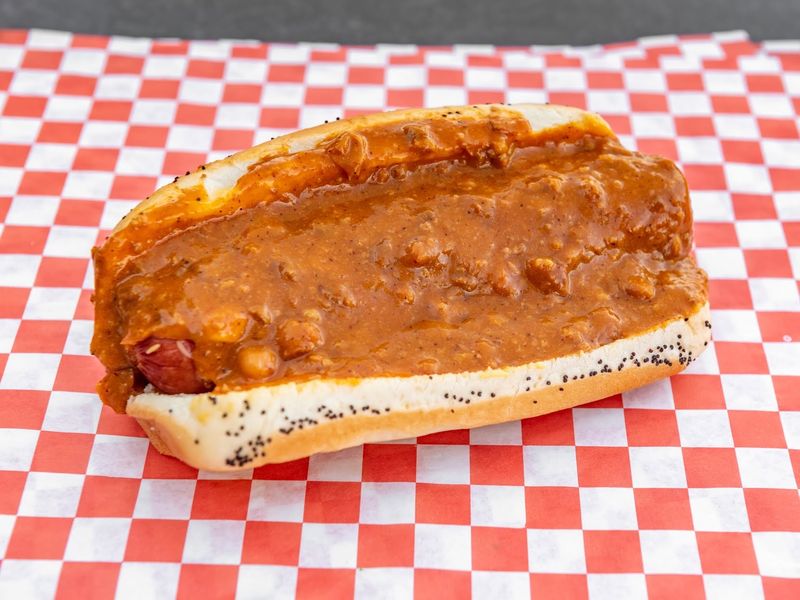
Three components establish the basic formula. A Chicago-style tamale goes into a hot dog bun, and chili goes over the tamale.
That’s the foundation of the Mother-in-Law, and understanding it helps explain everything else happening in the wrapper. The tamale occupies the space usually reserved for a frankfurter, making the sandwich look familiar even when its center comes as a surprise.
Fat Johnnie’s gives the combination the Chicago hot dog treatment, adding dressings that turn a simple arrangement into a considerably busier lunch. Food writer Michael Stern’s Roadfood account describes a poppy-seed bun with onions, hot sport peppers, and possible additions including tomato, cucumber, and relish.
Those details matter because they change both the flavor and the texture. The tamale and chili provide the substantial middle, while the vegetables and condiments bring crunch, freshness, sweetness, and heat.
It’s useful to keep the core ingredients separate from the extras when ordering. A Mother-in-Law doesn’t automatically contain a hot dog, despite the bun and the setting.
Cheese identifies a related variation, too, rather than being essential to the original sandwich. Anyone with firm opinions about onions or peppers should ask how the sandwich is being dressed.
The tamale itself also deserves attention. This is Chicago’s corn-roll style, a commercially produced variety associated with the city’s hot dog stands.
Its narrow shape makes sense inside a hot dog bun and gives the toppings room to settle around it. Expecting a large, hand-wrapped tamale from a Mexican restaurant would set up the wrong comparison.
The Mother-in-Law belongs to a particular street-food tradition, with ingredients suited to the counter where it’s sold. Once that’s clear, the combination becomes easy to understand.
The bun supplies the structure, the tamale supplies the center, and the chili ties them together.
How Tamales Became Part of Chicago’s Food Story
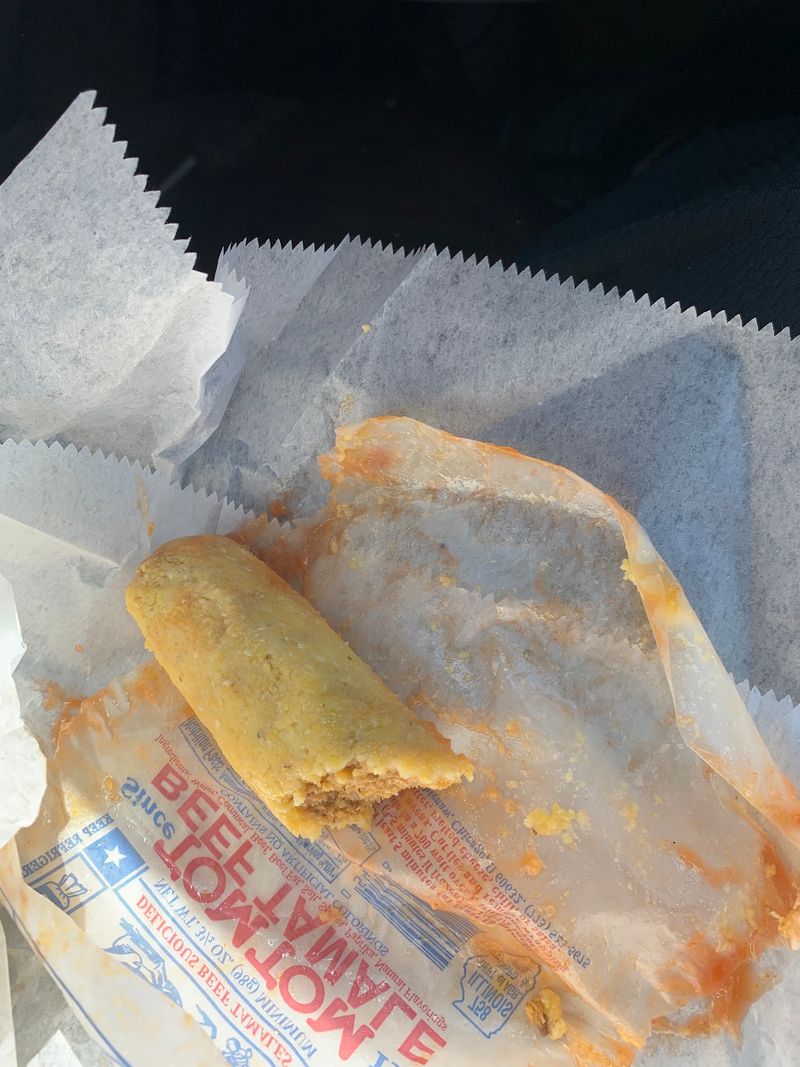
Chicago’s hot dog reputation can make its tamale tradition seem like an unexpected footnote. Yet the two foods have shared the city’s street-food landscape closely enough that putting one in the other’s bun became an established order.
The key distinction is the kind of tamale involved. Chicago’s corn-roll variety is commercially extruded, and familiar producers include Tom Tom Tamale and Supreme Tamale.
It has a local identity within the much broader world of tamales, shaped partly by the businesses that manufacture and sell it. Tracing its route into the Mother-in-Law requires some care.
The Southern Foodways Alliance discusses the longstanding theory that tamales traveled north from the Mississippi Delta during the Great Migration. Its research also emphasizes that Fat Johnnie’s serves a different style from Delta tamales, making a straightforward origin story difficult to establish.
Pawlikowski’s own account adds another layer. He was Polish American, the childhood vendor who introduced him to the sandwich was Lithuanian American, and the tamale supplier was Greek owned.
That history shows how food moves through neighborhoods, suppliers, and small businesses, acquiring a local form along the way. A bun offers a practical way to hold a tamale.
Chili already belongs in the hot dog stand’s repertoire. Bringing them together takes imagination, but it also makes use of ingredients already close at hand.
The sandwich’s name is harder to pin down. Smithsonian’s reporting gathered explanations involving heat, heartburn, and familiar mother-in-law jokes, while acknowledging that the truth remained uncertain.
Those stories belong to the sandwich’s folklore rather than a documented account of its naming. What survives more clearly is the food itself and the testimony of people who ate and sold it.
The Mother-in-Law has a recognizable place in Chicago’s eating history, even if nobody can supply its definitive birth certificate.
The Little Stand on Western Avenue Behind the Sandwich
Before the restaurant came a $100 pushcart. In a 2008 Southern Foodways Alliance interview, John Pawlikowski recalled buying it after a strike interrupted his work at Nabisco.
He began selling hot dogs in 1970, then opened Fat Johnnie’s with his brother Frank on May 12, 1972. Their grandmother supplied the lot beside her house on Western Avenue.
The building began as a trailer, placed on a foundation and connected to city utilities. Those details explain the business better than a polished origin legend could.
The stand grew out of family help, practical opportunity, and Pawlikowski’s experience selling food on the street. Its small scale remained part of its identity.
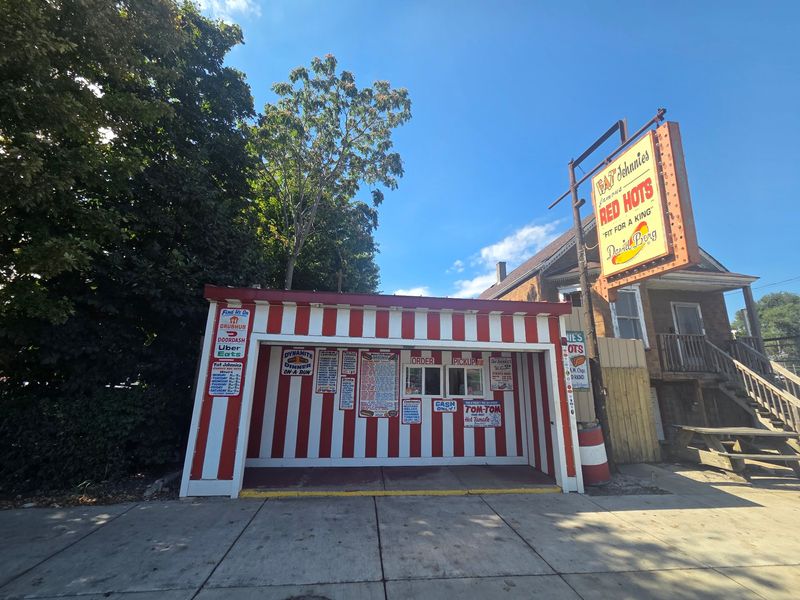
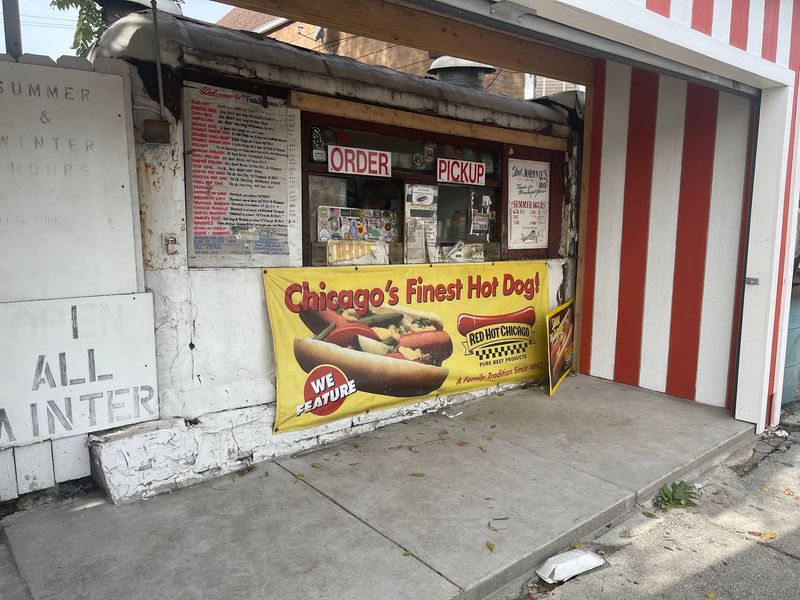
Located at 7242 South Western Avenue, between 72nd and 73rd Streets, Fat Johnnie’s offers the kind of setting where the food commands more attention than the furnishings. The Infatuation’s review describes a little shack with outdoor eating options rather than a conventional dining room.
That arrangement gives the menu a certain logic. Lunch needs to work in a wrapper, a bun, or a bowl, and familiar ingredients need to earn their space.
Tamales, hot dogs, chili, and cheese do exactly that, appearing in different combinations without requiring an enormous kitchen. Pawlikowski’s connection to the Mother-in-Law started well before the stand opened.
As a youngster, he bought a tamale on a bun from a neighborhood pushcart vendor and remembered the combination when developing his own menu. His account places him within an existing tradition, helping carry it forward.
That continuity is central to the stand’s appeal. A childhood food memory became part of a family business, and an unusual sandwich gained a dependable home.
The building may be modest, but the history attached to it reaches beyond its walls, back to the pushcarts that helped shape Pawlikowski’s idea of a good lunch.
Why Chili and a Tamale Work So Well Together
Cornmeal and chili already make sense together on a plate. Moving them into a bun changes the delivery more than the underlying flavor combination, which helps explain why the Mother-in-Law is less bewildering than its description first suggests.
The tamale supplies a substantial cornmeal base, while the chili brings sauce and seasoning. Bread gathers the components into something that can, with reasonable cooperation, be eaten by hand.
The textures distinguish it from a chili dog. A sausage usually gives that sandwich a firm center; a tamale creates a softer arrangement alongside the sauce and steamed bread.
That makes the toppings especially useful. Onion adds crunch and sharpness.
Cucumber offers a cooler bite. Tomato brings moisture and a little acidity, while relish contributes sweetness.
Sport peppers can shift the balance quickly, especially for anyone who mistakes them for harmless decoration. These are observations about how the ingredients interact, rather than a promise that every sandwich has identical seasoning or heat.
A detailed account by Chicago Tribune critic Louisa Chu illustrates the stand’s approach to building a related combination. Her Mighty Dog included a Tom Tom tamale, chili with beans, cheese, tomato, chopped white onion, cucumber, relish, and celery salt, with sport peppers available on request.
It was a specific reported preparation, but it shows how much can happen inside one bun. The Mother-in-Law draws on the same possibilities for contrast.
Richness benefits from something bright, and soft ingredients welcome something crisp. Each addition can change the next bite without requiring an unfamiliar ingredient.
There’s also a practical side to enjoying the assembly. Keeping the wrapper around the lower half helps support the bun as the chili settles into it.
Eating carefully beats attempting to rescue escaped toppings afterward. The sandwich’s construction may be unusual, but its flavor logic is comfortably familiar.
Meet the Father-in-Law and Other Menu Favorites
Cheese introduces another member of the family. The Father-in-Law follows the Mother-in-Law’s tamale, chili, and bun arrangement, with cheese providing the defining addition.
Pawlikowski explained the name with a joke in his oral history. Customers had asked where the Father-in-Law was, so he created one by adjusting the toppings.
The answer was playful, but it also made the menu easy to follow. Understand the original sandwich, and the variation needs very little explanation.
Other combinations make larger changes. The Mighty Dog puts a hot dog and a tamale together in a bun with chili and cheese.
For anyone intrigued by the Mother-in-Law but reluctant to pass up a frankfurter at a hot dog stand, that solves the dilemma neatly. It also makes for a more crowded sandwich, with two substantial fillings competing for space beneath the toppings.
The Super Sundae takes a different approach. As described by The Infatuation, it’s a tamale served in a bowl with chili and cheese.
The name borrows from the dessert counter, although the contents are firmly in lunch territory. A bowl changes the mechanics of eating the combination and gives anyone who prefers a fork an alternative to managing a loaded bun.
Taken together, these dishes offer a helpful way to read the menu. Cheese adds richness, a sausage changes the heft, and removing the bread changes the format.
The ingredients overlap, but each arrangement has a distinct purpose. There are regular red hots and Polish sausages as well, so a group doesn’t need unanimous enthusiasm for tamale sandwiches to order comfortably.
The unusual names may attract attention first, yet the choices become straightforward once their components are clear. A Mother-in-Law keeps the tamale at the center of the experience.
A Father-in-Law adds cheese, while a Mighty Dog makes room for the stand’s other main attraction.
What to Know Before Visiting Fat Johnnie’s
Lunch is the sensible time to plan around this address. Eater Chicago lists Fat Johnnie’s hours as 11 a.m. to 5 p.m., Monday through Saturday, with Sunday closed.
Uber Eats shows the same Monday-through-Saturday ordering window. Checking before a special trip is worthwhile because a small business’s schedule can change; Eater lists the phone number as 773-633-8196.
The destination is 7242 South Western Avenue, and the experience centers on food to eat outside or take away. Weather deserves a place in the plan.
A loaded sandwich is easier to manage when you’re comfortably settled than when you’re negotiating its wrapper in the rain. Cash is a sensible precaution, too.
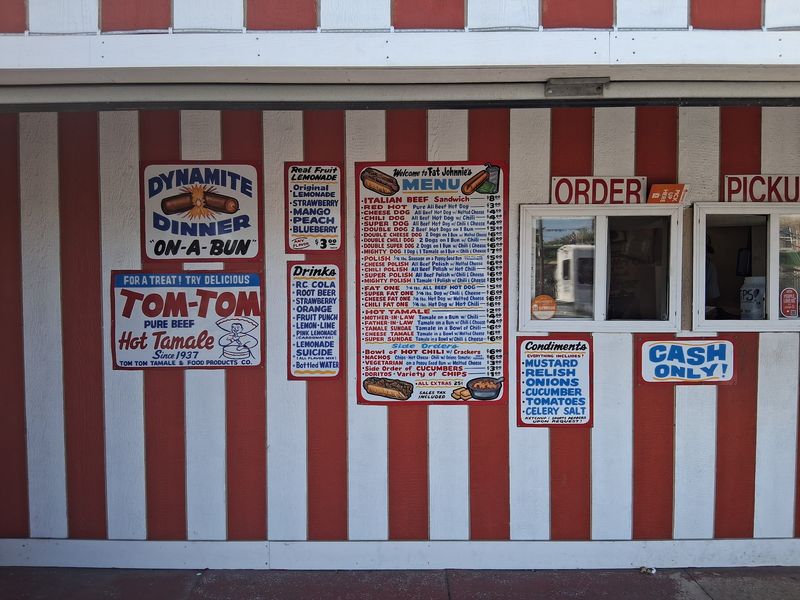
Both The Infatuation and Roadfood have described the stand as cash-only, although payment arrangements are worth confirming alongside the hours. At the window, a couple of specific questions can prevent confusion.
Confirm the current Mother-in-Law price, ask which dressings are included, and mention any preferences about peppers or onions. Someone avoiding meat should ask about both the tamale filling and the chili; the absence of a frankfurter doesn’t establish that the sandwich is vegetarian.
For a first order, the basic Mother-in-Law gives the clearest introduction to the combination. Adding cheese or choosing a larger variation changes the emphasis, so starting with the original makes the rest of the menu easier to understand.
Napkins are useful equipment rather than an afterthought. Between the chili, vegetables, and softened bun, this is food that rewards a little attention to where everything is going.
There’s no elaborate dining ritual to learn, just the practical business of keeping lunch together. Once the sandwich is in your hands, its curious name gives way to something more familiar: a warm bun, a tamale, a covering of chili, and a neighborhood food tradition that has endured for decades.
Share this story