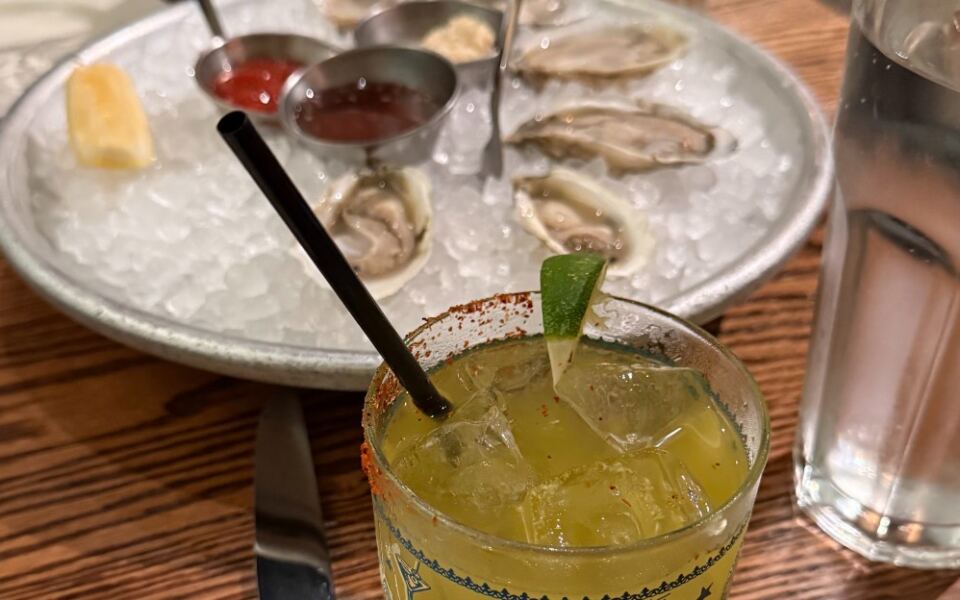
A hand-carved wooden oyster bar is a pretty convincing way to announce what’s for dinner. At Little Bird, it also introduces the restaurant’s personality, where Gulf Coast seafood shares space with Southern comfort food and cocktails that have a little fun with both.
Opened October 29 at 1815 North Durham Drive, the new Heights restaurant comes from chef-owner Graham Laborde, whose Houston résumé includes Bernadine’s and Winnie’s. Here, he’s bringing Louisiana roots and Houston experience together in a setting designed for neighborhood meals.
There’s crawfish bucatini alongside chicken and dumplings, a pastry program from Julia Doran, and two patios with different assignments—one for dining, another for drinks. The address has already lived several lives, including a turn as a filling station.
Its latest chapter puts oysters, hospitality, and a chef’s personal connection to the Heights at the center of the table.
Little Bird Brings Gulf Coast Cooking to the Heights
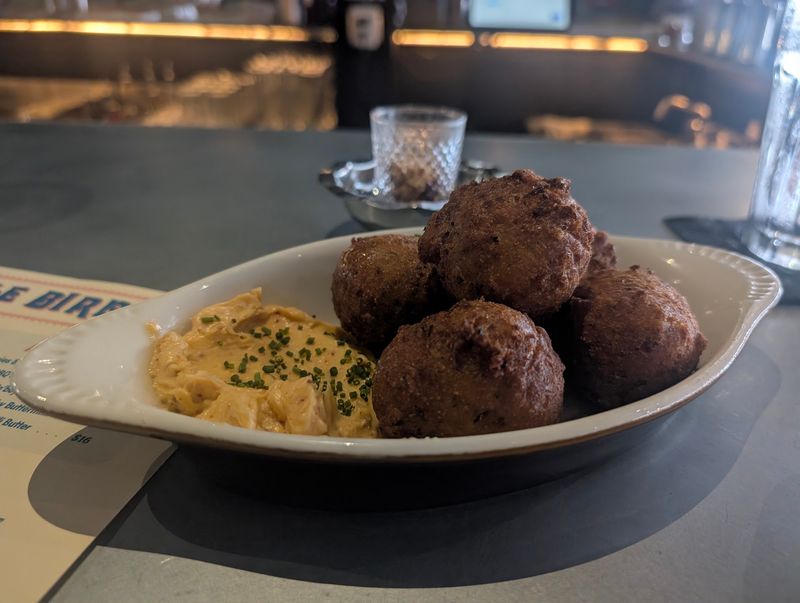
October 29 marked a fresh start for an address familiar to Heights diners. Previously home to Flying Fish and then The Kid, 1815 North Durham Drive now houses a restaurant with a personal connection to coastal cooking.
Laborde grew up in Lafayette, Louisiana, where his mother’s and grandmother’s cooking helped shape his approach to food. Those influences give Little Bird a clear starting point, with seafood, family traditions, and Southern hospitality informing the project.
The restaurant describes itself as a casual neighborhood spot, equally suited to a seat at the bar, a celebration, or drinks in the courtyard. That range matters.
A neighborhood restaurant needs room for different appetites and different occasions, including the evening when dinner plans extend no further than finding a comfortable chair and something good to eat. The oyster bar supplies one reason to settle in, while a full cocktail program and desserts from Doran give the meal several possible directions.
The interesting question is how those pieces work together. Seafood establishes the identity, but the broader ambition is a place people can use regularly, without having to manufacture a special occasion.
Laborde has said he wants guests to feel comfortable returning a couple of times a month, a useful statement of intent for a new restaurant. An oyster-focused spot can sound like a specific proposition; add Southern dishes, a proper bar, and spaces for both lingering and gathering, and the possibilities widen considerably.
Someone can build an evening around seafood, while another diner at the same table chooses chicken and dumplings. For the Heights, this opening introduces a restaurant whose chef already has a history with the neighborhood—and a clear idea of the hospitality he wants to offer there.
Chef Graham Laborde Returns to Familiar Ground
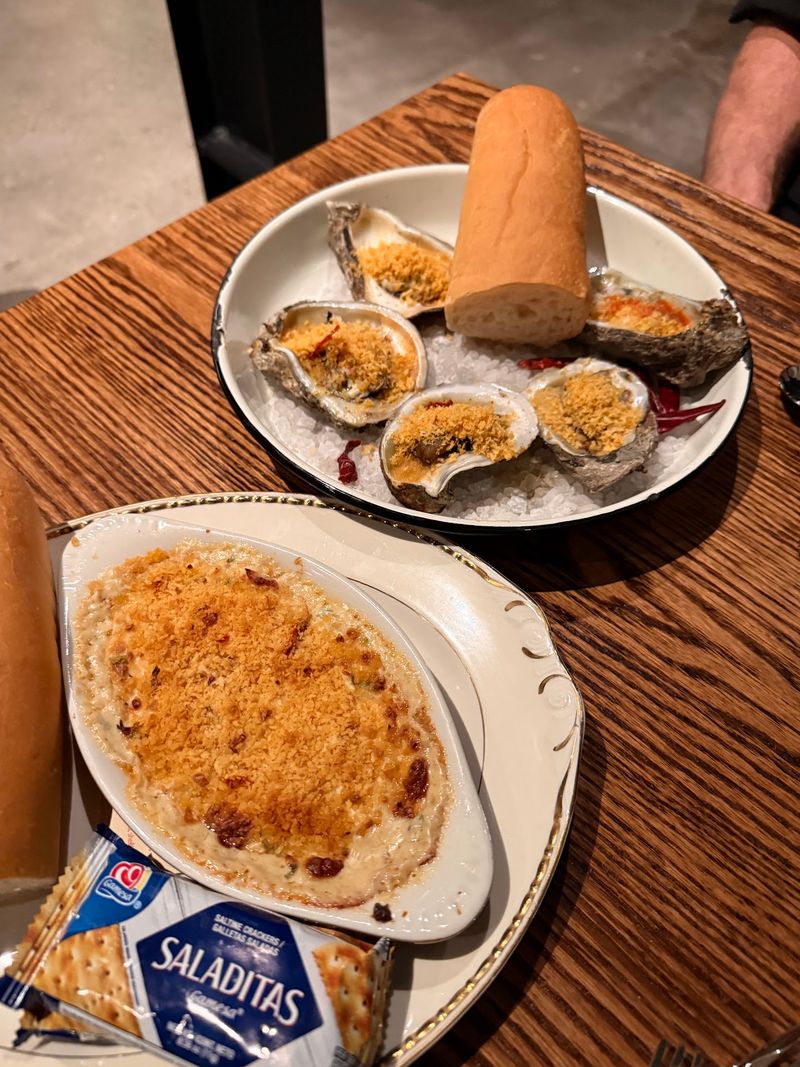
For Houstonians who remember Bernadine’s, the name behind Little Bird carries some history. Laborde’s earlier Gulf Coast restaurant closed in 2017, leaving a gap for diners who followed his cooking there.
His new venture brings him back to running a restaurant in the Heights, the neighborhood he has called home for 16 years. His professional story also reaches well beyond Houston.
Before building his local reputation, he worked in New Orleans kitchens including Commander’s Palace, Stella!, and Boucherie. In 2021, he partnered with Benjy Mason to open Winnie’s, the Midtown restaurant and bar known for sandwiches, Southern influences, and cocktails.
Those chapters help explain the appeal of this particular project. Running a lively sandwich-and-cocktail spot exercises one set of restaurant muscles.
Building a meal around a carefully cooked fish or pork chop offers another kind of satisfaction, an attraction Laborde discussed in his opening interview with CultureMap. There are direct links to Bernadine’s, too.
New Orleans barbecue shrimp toast and ribeye au poivre are the two dishes carried over from that menu. Most of the food, however, belongs to this new restaurant.
That balance gives returning diners something recognizable without making the entire experience depend on nostalgia. A familiar dish can reconnect a guest with an earlier restaurant, but it cannot do all the work of establishing a new one.
Little Bird has to earn its own place in the neighborhood. Laborde’s history gives it context; the current kitchen, service, and room will give it an identity.
General manager Chelsea Thomas, who also worked with him at Bernadine’s, brings another connection between the two projects. A chef returns to the neighborhood where he lives, reunites with a trusted colleague, brings along a few recipes with meaning, and leaves plenty of room for what he wants to cook now.
Louisiana Roots Meet Houston Influences on the Menu
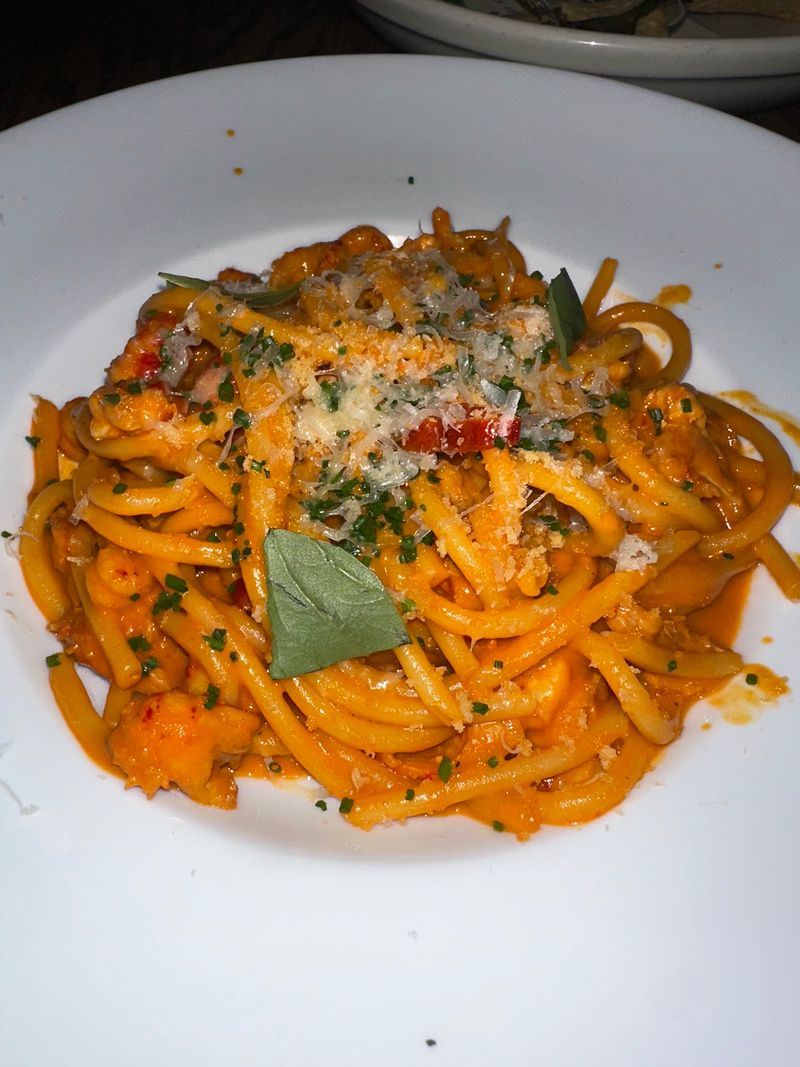
Crawfish, bucatini, Calabrian chilies, and vodka sauce make a useful introduction to the kitchen’s thinking. The ingredients point in several directions, yet the dish still starts with a recognizable Louisiana favorite.
Laborde developed the menu with chef de cuisine Matt Staph, whose experience includes One Fifth and Brennan’s of Houston. Together, they are working with Creole and Cajun flavors while allowing contemporary combinations into the conversation.
Chicken and dumplings, a pork chop, and a burger also appear among the choices, giving diners alternatives to a seafood-centered meal. The pasta is especially revealing on paper.
Crawfish gives it a regional connection, while the sauce and chilies suggest a kitchen willing to work outside a single culinary vocabulary. That is a useful way to understand the Houston influence: familiar ingredients can find a different setting without losing their connection to home.
Laborde has described Houston as a place that gives him room to play with traditions, an attitude reflected in these combinations. Dessert follows a similarly generous approach.
Julia Doran’s opening selections include triple-layer chocolate cake, an apple hand pie with cajeta and brown sugar ice cream, and a Hurricane Sno-ball. Doran previously led pastry at Bernadine’s and later worked at Tiny Champions and Nancy’s Hustle.
Those choices give three different endings to dinner. Cake offers the straightforward pleasure of a substantial slice.
The hand pie puts pastry, fruit, and ice cream together, with cajeta adding another element to the plate. The sno-ball brings a Louisiana reference into the final course through flavored shaved ice and ice cream.
Nobody needs a seminar to understand the appeal. Across savory dishes and sweets, the menu’s most interesting quality is its willingness to let regional roots coexist with curiosity.
There is room for a familiar comfort dish and something that prompts a second look at the ingredients.
Gulf Seafood Takes Center Stage
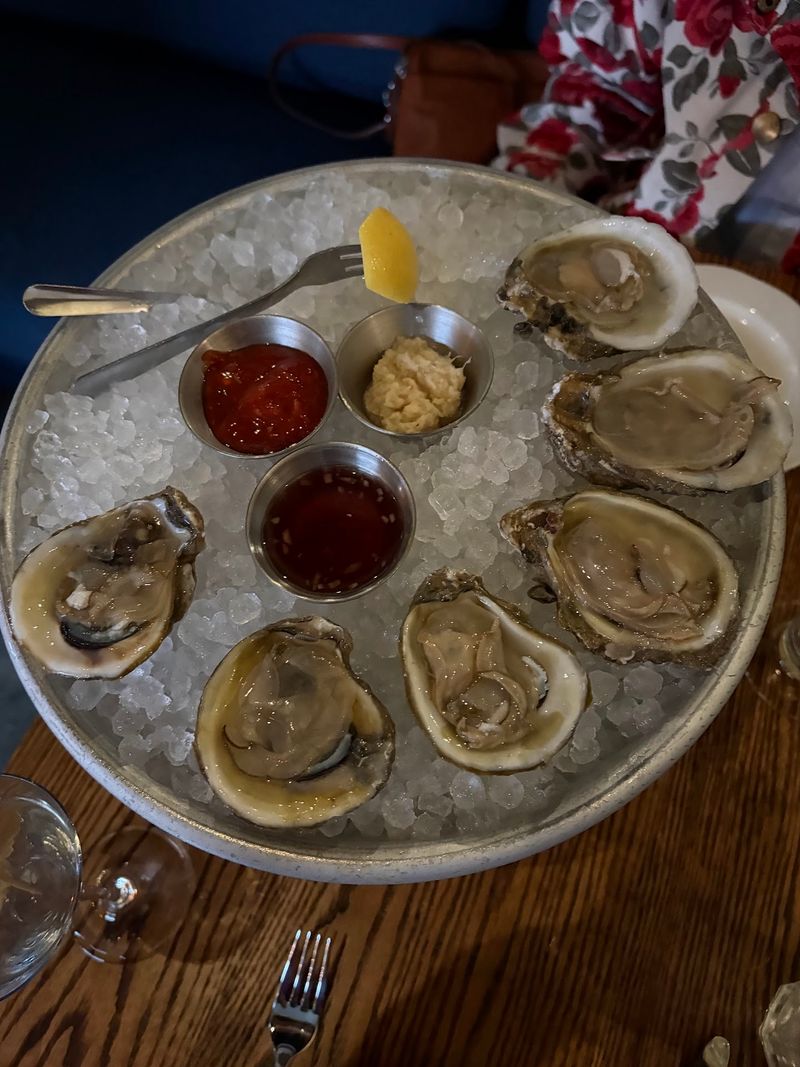
The oyster bar makes the restaurant’s coastal interests visible before a plate reaches the table. Carved from wood, it gives seafood a physical presence in the room as well as a prominent place on the menu.
Early plans for Little Bird consistently identified Gulf Coast ingredients and seafood as central to the concept, a direction that fits Laborde’s Louisiana upbringing and previous cooking in Houston. The opening dishes approach that brief from several angles.
Shrimp and grits offers a familiar Southern pairing. Roasted snapper comes with lemon velouté, herb oil, and charred okra.
The Breaux Bridge Platter takes a different route, combining fried catfish and fried shrimp sourced from a purveyor near the Louisiana town. Those preparations give seafood-loving diners a choice between distinct styles of meal, rather than a succession of nearly interchangeable fish entrées.
A platter of fried seafood and a composed snapper dish answer different cravings, and having both helps explain the neighborhood ambition. One evening might call for something crisp and casual; another might revolve around a fish preparation with sauce and vegetables.
Neither requires the restaurant to abandon its coastal focus. Sourcing is part of that identity, too.
In discussing the opening, Laborde emphasized relationships with regional suppliers and his interest in buying ingredients from Texas and the Gulf Coast. That gives the regional language something concrete to stand on. “Gulf Coast” can describe a mood, a decorating scheme, or a broad collection of recipes.
Here, it also describes decisions about what the kitchen buys and how those ingredients become dinner. The seafood selection offers several ways into that story: oysters to begin, shrimp served over grits, a roasted fish, or a platter that gives frying its proper place.
The common thread is a kitchen finding different expressions for the coastal ingredients that anchor its cooking.
Creative Cocktails Round Out the Experience
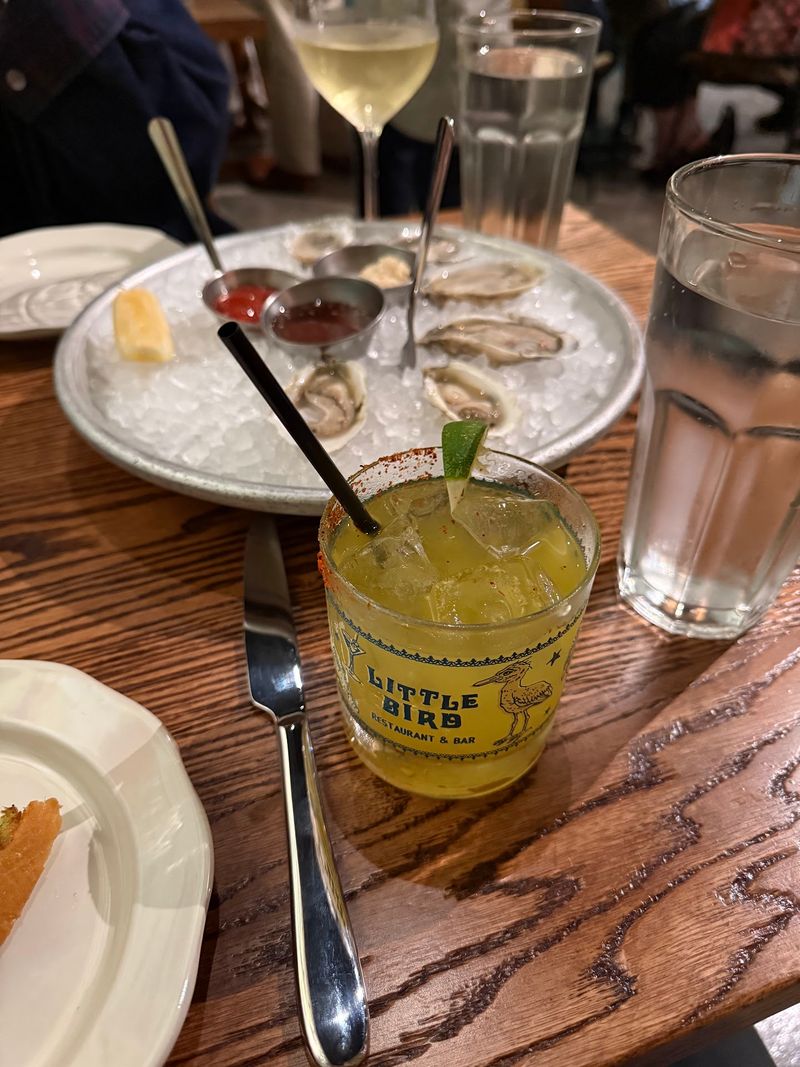
Peanuts and cola have found their way into the cocktail conversation. Little Bird’s frozen Salted Peanut draws on that Southern combination, making a familiar snack-and-soda pairing the starting point for a bar drink.
It is a telling choice for a restaurant that wants some playfulness alongside its culinary roots. The cocktail program comes from Justin Ware, whose Houston work includes Winnie’s, Johnny’s Gold Brick, and Starduster Lounge.
Other opening drinks include a Creole margarita, a freezer-pour martini, and Orange Marmalade, which combines gin, Madeira, orange marmalade, and lemon. The names suggest different levels of adventure.
A martini gives guests a recognizable point of entry. Orange Marmalade puts its fruit component right in the title.
The Salted Peanut invites a little curiosity before the first sip. Together, they give the list personality without requiring every guest to share the same appetite for experimentation.
Wine receives its own attention. General manager Chelsea Thomas worked with sommelier Mark Sayre of the Local Foods Group on a selection that leans toward French bottles in the $50–$70 range.
Opening coverage also identified sauvignon blanc, rosé, and tempranillo among the list’s directions. A stated bottle range is useful information: it gives diners a firmer sense of the evening than a vague promise of approachable pricing.
It also supports the idea that drinks should fit naturally into dinner. Some tables will want cocktails throughout; others will settle on a bottle and let the food guide the pace.
The courtyard reserved for drinks adds another option, allowing the bar program to have a setting of its own before or after a meal. At Little Bird, the beverage choices give guests several ways to spend an evening, from a familiar martini to a frozen drink with a Southern snack at its heart.
A Former Service Station Becomes a Welcoming Neighborhood Restaurant
An alligator wearing a flower crown is among the dining room’s more personal details. In the Louisiana bayou mural painted by Houston artists Whitney Garrett-Yarbrough and Dayle Booth, the headdress references the one Laborde’s wife, Paige, wore at their wedding.
A duck in a chef’s hat adds another family reference. The artists, known as The Paint It Ladies, have worked pieces of the owners’ lives into the scenery.
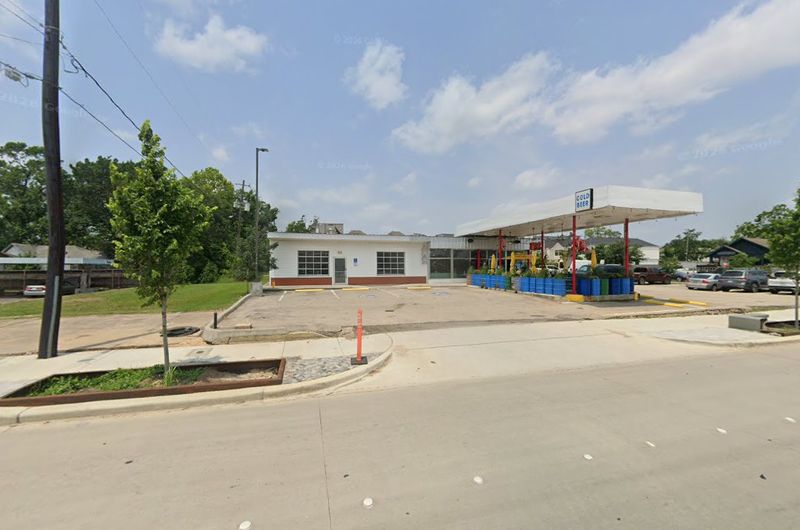
Laborde, Paige, and general manager Chelsea Thomas designed the restaurant together, incorporating draped windows and secondhand furnishings. The building’s earlier life as a filling station provides a different kind of character.
The team has adapted an address that neighborhood diners may already recognize, preserving major features while giving the rooms a new purpose. Outside, Thomas’s landscaping includes a fountain made from a converted sugar kettle, while a 60-foot pergola helps define the courtyard.
One patio is dedicated to dining and another to cocktails. Those separate spaces allow the restaurant to accommodate different moods without asking every guest to have the same evening.
Someone meeting a friend for a drink needs a different setting from a group settling into a full meal. Inside, the 18-seat bar welcomes walk-ins who can order from the full dinner menu, giving the restaurant another option for a less planned visit.
Private dining areas extend that flexibility to business meals and larger gatherings. The most memorable details remain the smaller ones, though.
Secondhand furniture introduces the feeling of a room collected over time. A repurposed sugar kettle gives the courtyard an object with a previous purpose.
And on the dining room wall, an alligator borrows a wedding-day accessory—a small family story painted into the place where dinner happens.
Share this story