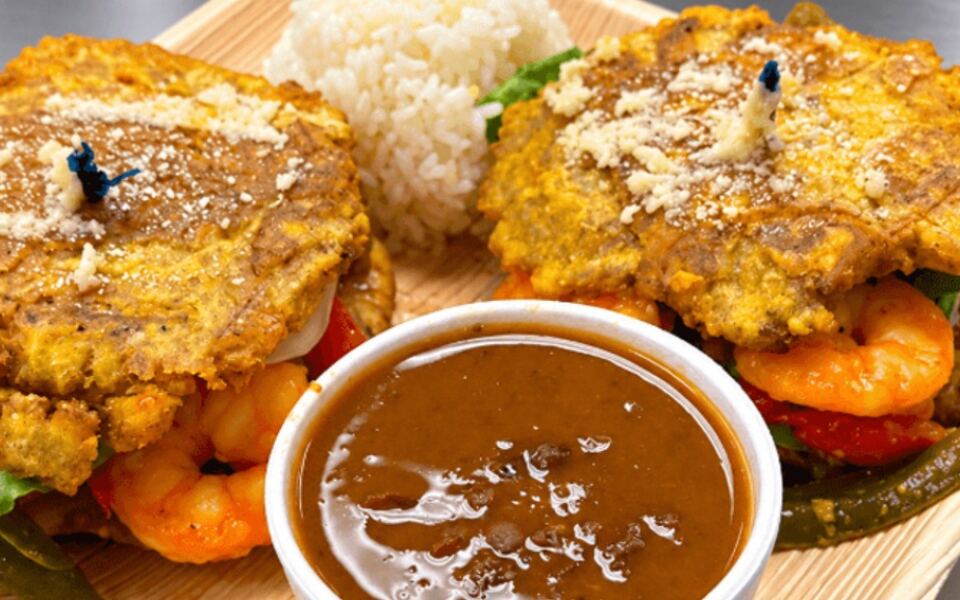
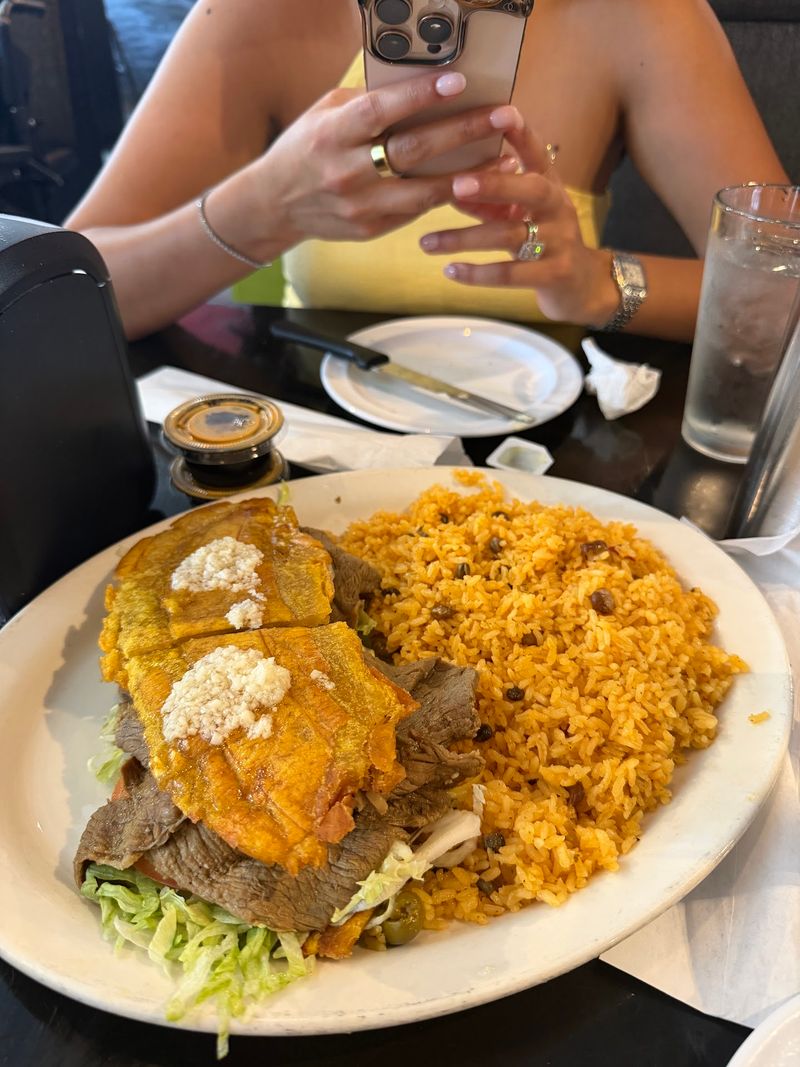
Two slabs of fried green plantain hold the steak in place. Garlic crowns the top.
Somewhere between the lettuce, tomato, and mayonnaise, the question of bread has been settled without a single slice. This is the jibarito, a sandwich with Puerto Rican roots and a Chicago identity, widely credited to restaurateur Juan “Peter” Figueroa at Borinquen in Humboldt Park during the 1990s.
Its history includes a newspaper discovery, a father’s enthusiastic appetite, and a neighborhood whose influence extends well beyond the lunch counter. The sandwich gets your attention first, understandably.
Those crisp edges have persuasive powers. But follow its story through Chicago, and other names come into focus, including the Venezuelan family behind Jibaritos y Más.
Together, they reveal how a local specialty takes shape through family kitchens, shared ingredients, and the people who make room for one another at the table, one satisfying lunch order at a time.
Meet the Jibarito and the Crispy Plantains That Take the Place of Bread
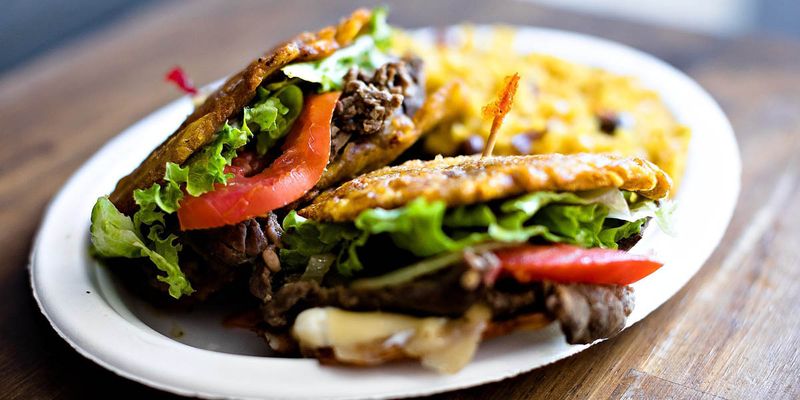
Forget the soft squeeze of a sandwich roll for a moment. A jibarito gives your teeth something else to work through, starting with a crisp plantain exterior before reaching the meat and cool vegetables inside.
The familiar Chicago construction brings together steak, lettuce, tomato, and mayonnaise, with garlic supplying a particularly assertive hello. Cheese and grilled onions also appear, although food writer Monica Eng noted in her 2003 Chicago Tribune account that their necessity was already up for debate.
Apparently, even a relatively young sandwich can develop constitutional questions. The foundation matters more than any argument about toppings.
Green plantains produce the savory, sturdy layers that make the sandwich recognizable. Anyone expecting the sweetness of ripe fried plantains should recalibrate before taking a bite.
A useful comparison sits on Jibaritos y Más’s own ordering menu, where tostones are listed as fried plantains topped with garlic, while maduros are identified as sweet plantains. Same ingredient family, different assignment.
That distinction explains why the plantain works so well here. It contributes substance and texture while leaving room for beef, mayonnaise, and vegetables to register individually.
The sandwich also accommodates changes without becoming difficult to identify. The restaurant’s Logan Square ordering menu includes roasted pork, chicken, shrimp, octopus, blood sausage, ham and cheese, and a vegetable version.
Steak may be the familiar introduction, but it has plenty of company. Think of the jibarito as a particular way of building a sandwich, with enough personality to survive a change of filling.
The plantain belongs in every bite, rather than sitting beside the meat as an optional accompaniment. That is what makes the experience so distinctive.
You get the crisp, starchy satisfaction of a fried side and the assembled pleasure of a sandwich in the same handful. A napkin remains an excellent supporting character.
How a Humboldt Park Restaurant Helped Make Chicago Food History
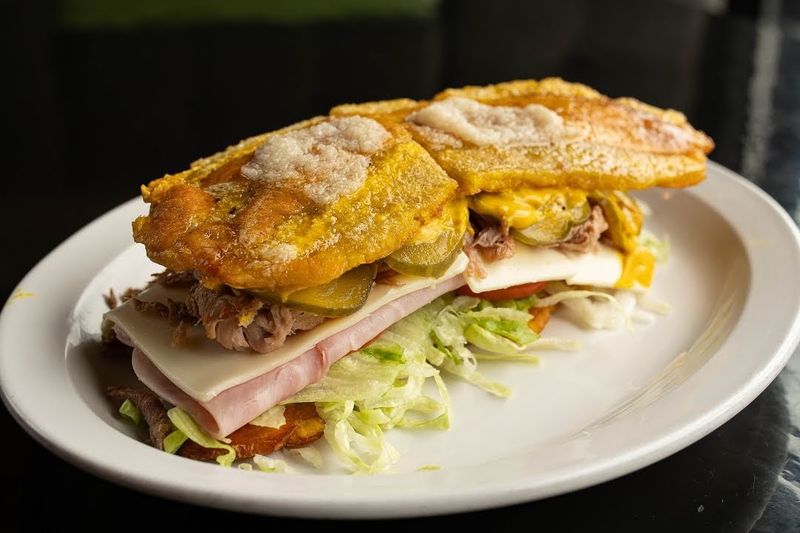
In 1996, according to the most widely repeated account, a restaurant on North California Avenue helped give Chicago a new signature sandwich. The man behind it was Juan “Peter” Figueroa, whose Borinquen restaurant operated at 1720 N.
California Ave. Yet the story becomes more interesting when the invention gets a little less tidy. Figueroa did not claim that the concept of putting food between plantains arrived fully formed in his imagination.
Speaking with Monica Eng for the Chicago Tribune in 2003, he described reading about a sandwich de plátano in the Puerto Rican newspaper El Vocero while waiting for customers. He made his own version for his father, who kept requesting it and encouraged him to sell it.
Within months, Eng reported, the restaurant was making about 100 a day. An earlier plantain sandwich associated with Plátano Loco in Aguada, Puerto Rico, belongs in this history, too.
The Humboldt Park Moon recounts Jorge Muñoz’s explanation that a late-night shortage of bread led him to experiment with plantains from his backyard. That account gives the Chicago sandwich an island precursor without diminishing what happened at Borinquen.
Figueroa’s contribution was a specific adaptation that found an audience here. WBEZ describes his version as adding seared steak, mayonnaise, American cheese, and garlic oil to the plantain sandwich idea he encountered in print.
That distinction still matters to the family. In reporting published in 2026, Borinquen co-owner Gabriela Figueroa emphasized that the family created its version of the plantain sandwich, the jibarito.
Food history rarely behaves like a patent application. Someone encounters an idea, changes the ingredients, feeds a relative, and discovers that the neighbors want it, too.
Giving Figueroa credit works best when the newspaper, his father, and the Puerto Rican connection stay in the picture.
The Puerto Rican Community at the Heart of the Sandwich
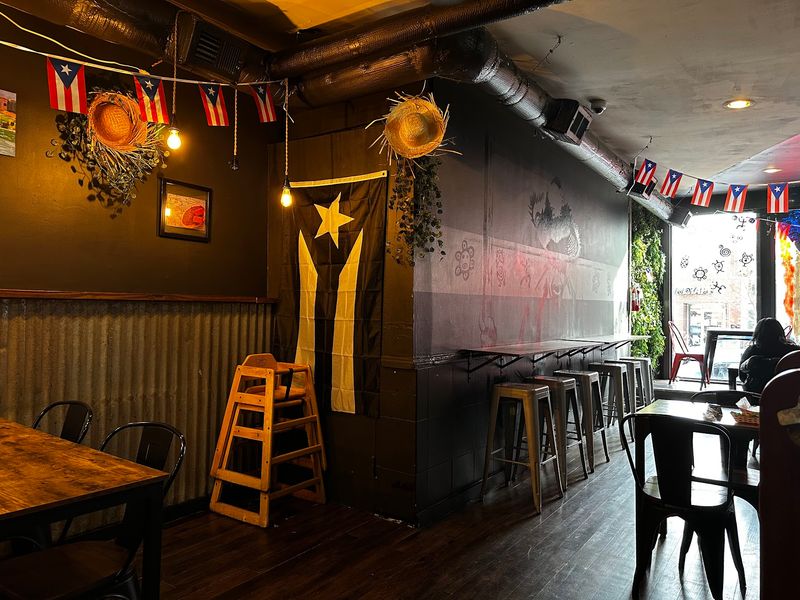
Along Division Street, two enormous steel Puerto Rican flags make the neighborhood’s identity visible above the roadway. Installed on January 6, 1995, Día de los Reyes, they mark Paseo Boricua, a six-block cultural and commercial corridor associated with Humboldt Park.
The National Museum of Puerto Rican Arts and Culture describes the flags and the neighborhood’s cultural institutions as closely connected expressions of community identity. Their scale makes a point that a small historical marker could never quite manage.
The people who built that community arrived long before the jibarito became a Chicago food story. By the 1960s, Puerto Rican residents were concentrated in Lincoln Park, West Town, and Humboldt Park, according to the Encyclopedia of Chicago.
These neighborhoods were shared with other communities, and Puerto Rican Chicago maintained cultural, political, and economic connections with the island. Movement across the city was not always voluntary.
Urban renewal and rising housing costs displaced Puerto Rican residents from Lincoln Park, helping make Humboldt Park a major community center in the second half of the 20th century. Against that background, a restaurant becomes more than somewhere to buy lunch.
It is a business rooted in a place where people have worked to sustain their presence. The Puerto Rican Cultural Center, founded in 1972, has been central to that broader effort.
Its work spans education, health, and cultural services, connecting the celebration of identity with practical community needs. The jibarito belongs within this larger neighborhood life.
Its fame offers an approachable introduction, but the community’s story extends through organizing, institutions, family histories, and businesses. There is pleasure in knowing that while eating something so immediately enjoyable.
The sandwich needs no history lesson to taste good. Knowing whose neighborhood helped make it famous gives the meal a more precise sense of place.
Why Twice-Fried Plantains and Garlic Make Every Bite Count
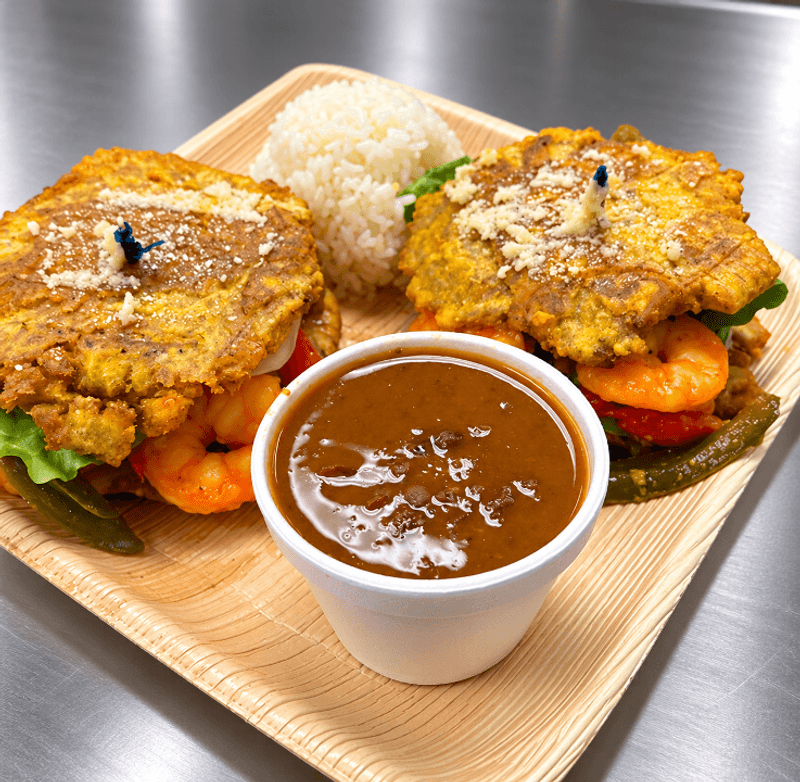
The second trip through the fryer earns its keep. To form the jibarito’s distinctive exterior, green plantains are cooked, flattened, and fried again, producing the crisp surfaces that have to do the work of bread.
Eater’s photographic account of Jibaritos y Más documents that process and notes the importance of selecting plantains large enough to make sandwich-size pieces when pressed. It also identifies minced garlic on top as one of Jesus Arrieta’s finishing touches.
There is a practical challenge hiding beneath that appealingly simple construction. The plantain needs to be broad enough to hold the filling and thin enough to bite through comfortably.
Flattening creates the shape; the final frying delivers the texture. Too much attention to the steak alone misses the part of the sandwich responsible for making the whole arrangement work.
Home cook Michelle Ezratty Murphy’s version for Familia Kitchen illustrates how much room remains for interpretation within that framework. She uses marinated skirt steak and adds crisp onions, lettuce, tomato, and garlic mayonnaise.
Her recipe treats the meat with the care of a steak dish while preserving the plantain sandwich’s essential structure. Garlic can arrive through different routes, including oil, mayonnaise, or a topping, depending on the kitchen.
Its presence links the components aromatically, while mayonnaise supplies a creamy texture against the fried exterior. Lettuce and tomato introduce cooler, fresher bites between the richer mouthfuls.
These details explain why a jibarito can feel substantial without every ingredient tasting heavy. There is also a useful comparison on the Jibaritos y Más menu, which offers breaded steak and breaded chicken versions.
Those fillings add another crisp element inside an already crisp sandwich. The variations can be playful, but the basic arrangement is exacting.
Every layer has a job, and the plantain has the busiest shift of all.
The Family Behind Jibaritos y Más and Its Venezuelan Connection
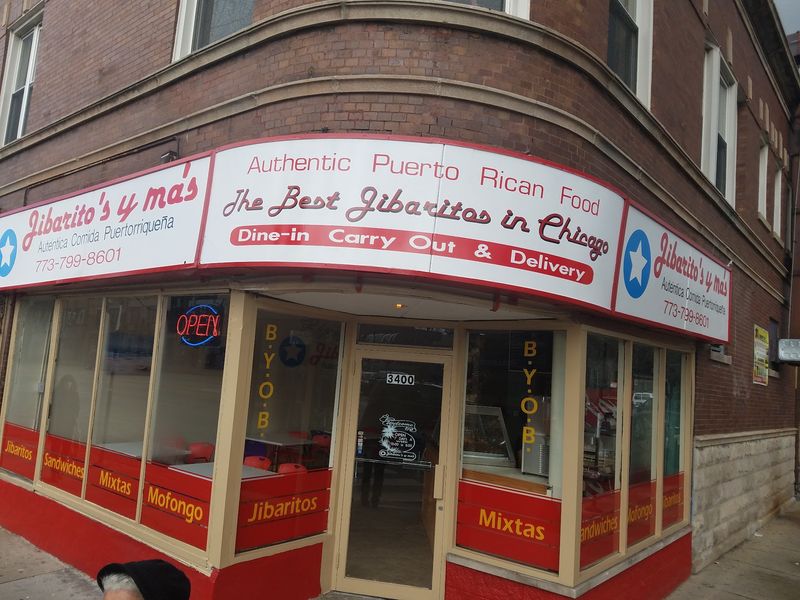
Yelitza Rivera spent years working in Puerto Rican restaurants before opening one of her own. In 2016, she launched the first Jibaritos y Más, establishing the business at Fullerton and Kimball in Logan Square.
The restaurant lists its address as 3400 W. Fullerton Ave., placing the family’s ambition at a very specific Chicago intersection.
Rivera’s family is Venezuelan, a detail that adds another connection to the sandwich’s story. Her son, Jesus Arrieta, told Eater that the jibarito appealed to his mother partly because it resembled the patacón, a green plantain sandwich associated with Maracaibo, Venezuela.
The familiarity of the ingredient offered a point of connection, while her years in Puerto Rican kitchens supplied experience with the cuisine she would serve. Arrieta and his wife, Tatianny Urdaneta, became part of the restaurant’s growth.
That background helps explain the range suggested by the restaurant’s name. The “y Más” has plenty to do: the Logan Square ordering menu also lists dishes such as bistec encebollado, beefsteak with grilled onions; carne guisada, a beef stew; lechón, roasted pork; and bacalaítos, codfish fritters.
The kitchen’s identity extends across a meal, beyond its headline sandwich. A family business can make the exchange between food traditions feel very tangible.
Here, a Venezuelan mother’s working life in Chicago’s Puerto Rican restaurants helped lead to a restaurant of her own, serving a sandwich already woven into the city’s eating habits. Each part of that history deserves its place.
Calling the jibarito a Chicago classic can sometimes make its development sound finished, as though the important work ended when someone named it. Rivera, Arrieta, and Urdaneta belong to the next part of the story: the cooks and owners who keep preparing it, building businesses around it, and introducing their version to another table.
How the Jibarito Became a Chicago Classic With Fans Far Beyond the City
A Puerto Rican food truck in Arizona gave Michelle Ezratty Murphy her first taste of a jibarito. Despite having grown up in Puerto Rico, she had never encountered the sandwich there as a child.
She told Familia Kitchen that she and her Puerto Rican-born husband discovered it after moving to Arizona, when they visited a truck whose owners came from Ponce. That small encounter captures how the dish travels, carried by people whose connections to Puerto Rican cooking reach across several places at once.
Its reach was already becoming apparent in 2015, when WBEZ included the jibarito in a survey of Chicago food inventions and noted its presence at dozens of restaurants around the country. Yet wider recognition gives the original family a particular responsibility.
In 2026 reporting, Gabriela Figueroa described Borinquen at 3811 N. Western Ave. as the family’s remaining restaurant after the Humboldt Park and Belmont Cragin locations closed.
She spoke about preserving its history, while the kitchen continued serving familiar steak and baked pork jibaritos alongside other fillings. The name carries history as well.
Jíbaro refers to a rural Puerto Rican person, often a farmer, and Figueroa embraced that identity. In an account included in Made in Chicago, he described himself proudly as a man from Puerto Rico’s mountains.
The diminutive jibarito carries that personal connection into the sandwich’s name. Its place among Chicago foods rests on that combination of recognizable flavor and identifiable people.
There is a particular restaurant family to remember, a Puerto Rican neighborhood to locate, and another family whose Venezuelan background helped shape a newer chapter. Far from Chicago, the sandwich can introduce those connections to someone encountering them for the first time.
Back on Western Avenue, they remain part of the daily work of serving lunch.
Share this story