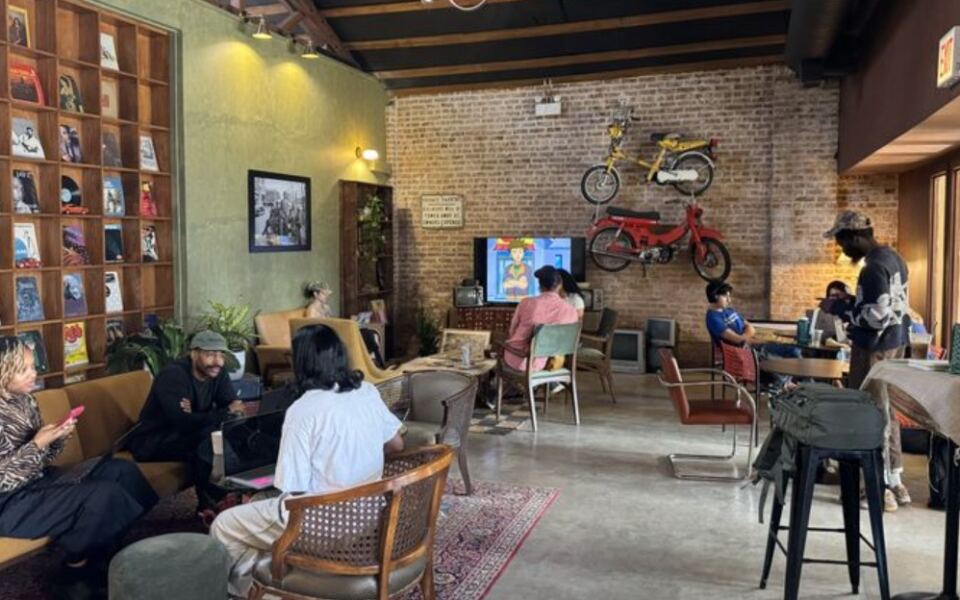
A former auto repair shop in Chicago now has a coffee bar, a contemporary art gallery, and a vintage car engine serving as a table. That’s quite a transformation for a building that spent three decades devoted to fixing vehicles.
The new destination opened in September 2026, bringing together local entrepreneurship, artistic expression, and carefully prepared coffee. Its design even preserves pieces of the building’s automotive past, including old license plates and a scooter mounted on the wall.
I particularly like how the concept celebrates the building’s history rather than erasing it. There’s something appealing about enjoying a coffee in a space where the original character still matters.
And in a city filled with interesting cafes, this one has a particularly unusual story to tell. The combination of Chicago memorabilia, locally connected coffee, and creative programming makes it worth a closer look.
1. This Former Auto Shop Has A Completely New Identity
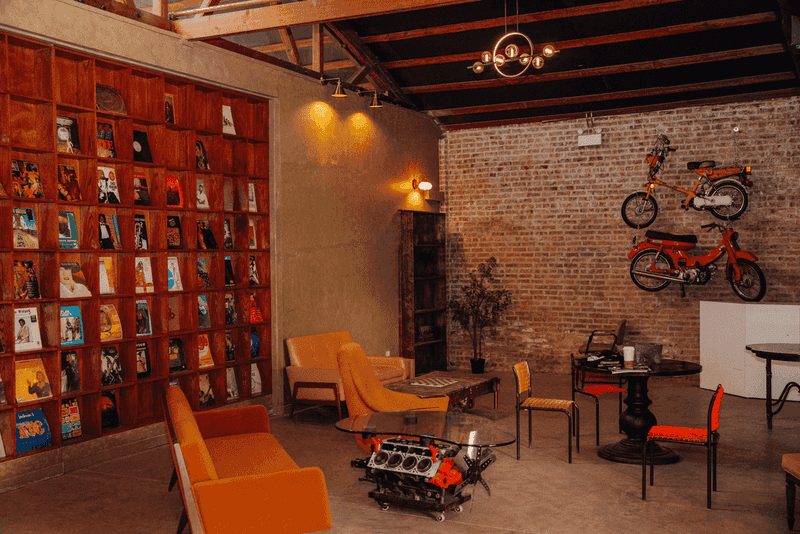
A coffee shop inside a former auto repair garage sounds like an ambitious renovation project. Café Jon & Galleria has turned that idea into a distinctive destination in Chicago’s Pilsen neighborhood.
The business occupies a 6,000-square-foot property that previously housed Ruben’s Auto Service. For approximately 30 years, the building served a very different purpose under longtime neighborhood resident Ruben Mandujano.
Mandujano operated his repair business before eventually closing the shop and becoming involved in its transformation. Today, he’s a partner in the cafe alongside entrepreneurs Uduimoh Umolu and Belall Taher.
The new concept officially opened on September 6, 2026, following a period of limited weekend service. Its arrival introduced a combination of coffee, contemporary art, and community-oriented activities to the property.
Rather than creating a conventional coffee shop, the owners developed a space with several different functions. The building now accommodates daytime cafe service, creative work, art exhibitions, and private gatherings.
That variety is an important part of its identity. You can appreciate the building’s design while also discovering how its owners have adapted the former industrial space.
I like that the transformation maintains a visible connection to the original business. Repurposing an existing building becomes more interesting when the design preserves recognizable pieces of its earlier life.
The project also reflects a collaboration between people with different professional backgrounds. Mandujano brings his experience as a neighborhood business owner and artist, while his partners contribute their entrepreneurial perspective.
The result is a cafe with a story that extends well beyond the coffee counter. Its former life remains part of the experience, giving the building a personality that a completely new interior might struggle to recreate.
For visitors interested in unusual Chicago spaces, Café Jon & Galleria offers a particularly compelling example of adaptive reuse.
2. The Coffee Menu Has A Few Clever Flavor Combinations
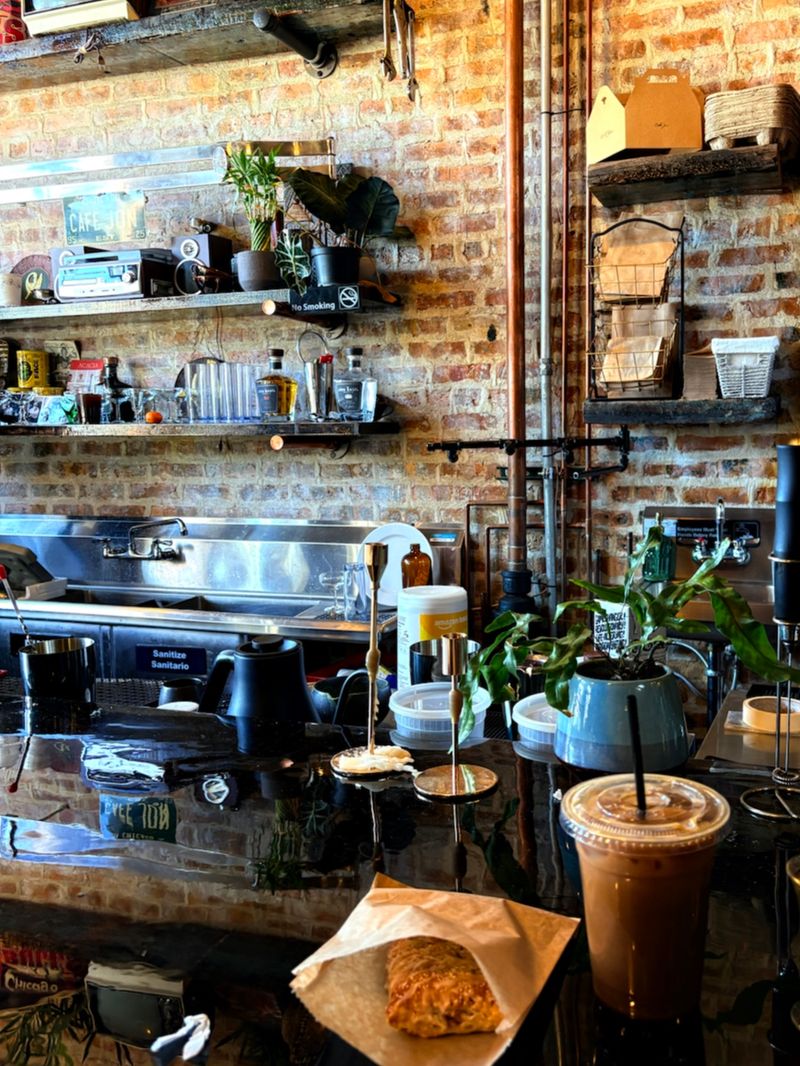
A coffee drink flavored with honey and rosemary is an interesting departure from the usual cafe routine. At Café Jon, creative syrups help give the beverage program its own personality.
The cafe works with Chicago-based Monday Coffee Company, which supplies its coffee. Monday co-founder Felton Kizer was responsible for developing the drink menu at the new location.
That collaboration brings an established local coffee business into the project. It’s another example of how Café Jon connects different Chicago entrepreneurs through one shared space.
Among the specialty flavors reported at the opening were honey-rosemary and brown sugar vanilla. Both offer alternatives to more conventional sweetened coffee drinks.
Honey and rosemary make a particularly interesting pairing because they bring together sweetness and an aromatic herb. Brown sugar and vanilla provide another approach built around familiar dessert flavors.
The menu’s specialty syrups give visitors a reason to explore beyond their usual coffee order. They also demonstrate how a relatively small ingredient change can create a distinct beverage.
I like that the cafe’s drink program has a recognizable identity rather than relying entirely on standard offerings. Creative combinations can make a new coffee shop more memorable without requiring an enormous menu.
The official cafe website also describes its food and drink selection as rotating. That means individual offerings may change as the business develops its culinary program.
Coffee remains the central attraction during daytime service, but the concept extends beyond simply preparing drinks. The cafe is designed as a place where people can spend time working, meeting, and exploring art.
For someone who enjoys discovering independent coffee concepts, the partnership with Monday Coffee Company is worth knowing about. It connects the new venue with an established part of Chicago’s specialty coffee community.
And if honey-rosemary happens to be on the menu during your visit, it offers an appealing reason to try something different
3. The Pastries Come From A Bakery Working Right Inside The Cafe
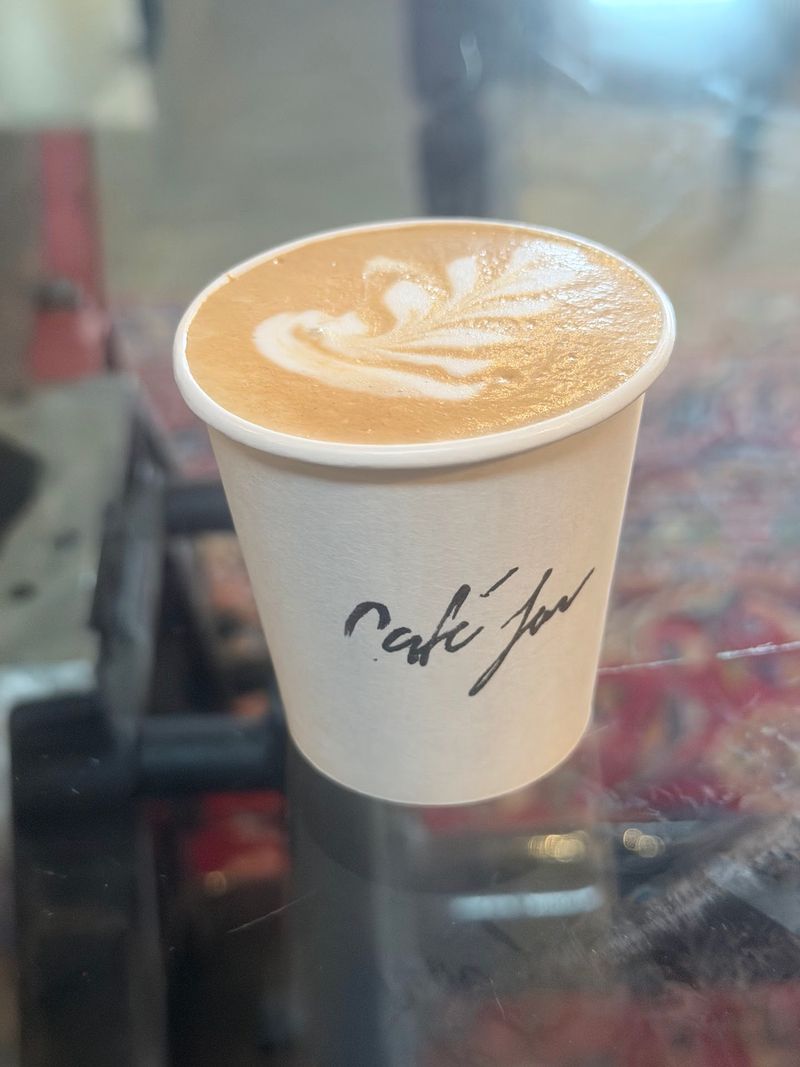
Coffee and freshly prepared pastries are a familiar combination, but Café Jon has given its baking program an interesting arrangement. Instead of relying entirely on outside deliveries, the cafe hosts a bakery residency.
Saints Bakery operates within the space and prepares pastries in-house. The arrangement was part of Café Jon’s opening concept, according to local reporting.
This adds another culinary business to the collaboration behind the cafe. The coffee comes from Monday Coffee Company, while Saints Bakery contributes the baked goods.
That separation of specialties makes the food program particularly interesting. Each participating business brings its own area of expertise to the overall experience.
The official cafe website describes a rotating menu featuring its culinary residents. As a result, the pastry selection shouldn’t be treated as a permanently fixed collection of items.
I appreciate that flexibility because it allows the cafe’s offerings to evolve. It also gives the bakery room to develop its own identity within the larger venue.
The arrangement fits the broader philosophy of Café Jon & Galleria. Rather than operating as a single-purpose business, the property brings different creative and entrepreneurial activities together.
Pastries also make practical sense for a daytime coffee shop. They provide a food option for visitors who want something alongside their drink without planning a full restaurant meal.
The cafe’s opening coverage specifically confirms in-house pastry production, although it doesn’t establish a permanent list of individual pastries. That makes the day’s selection the most reliable guide when ordering.
For anyone interested in Chicago’s independent baking scene, the Saints Bakery residency adds another reason to visit. It’s an opportunity to discover a bakery operating within an unconventional setting.
And with coffee and pastries sharing the same space, the building’s transformation feels even more complete. A former repair shop has become a place devoted to a very different kind of craftsmanship.
4. A Vintage Scooter On The Wall Is Just The Beginning Of The Decor
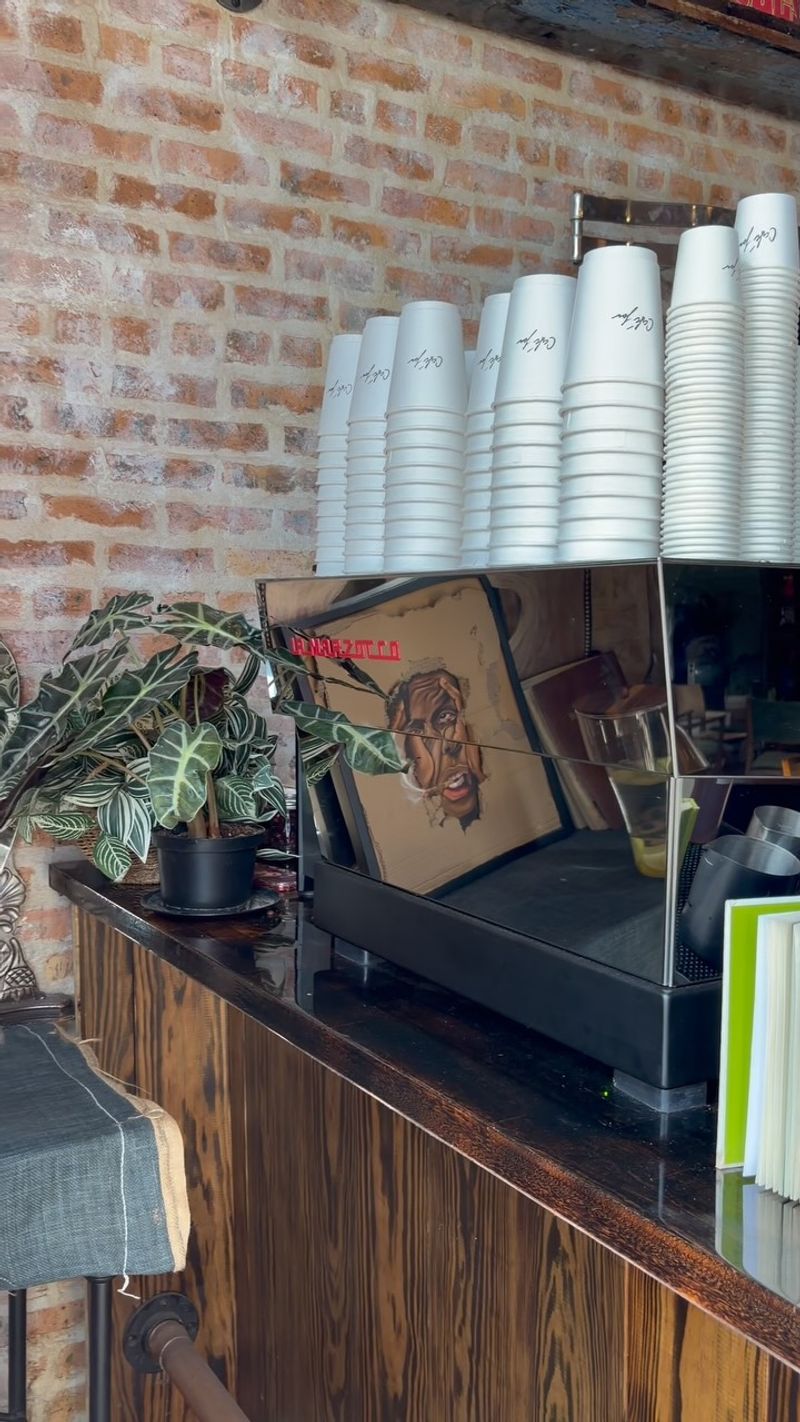
A Yamaha scooter mounted on the wall isn’t exactly standard coffee shop decoration. At Café Jon, however, it fits perfectly with the building’s former identity.
The owners incorporated memorabilia from Ruben’s Auto Service into the redesigned interior. Vintage parking signs, license plates, and other automotive objects help preserve the property’s history.
One of the most unusual pieces is an old car engine repurposed as a coffee table. It’s a practical example of how the renovation transforms industrial objects into furnishings.
The scooter adds another distinctive visual element, connecting the cafe’s present appearance to the repair shop that once occupied the building. Together, these details give the interior a recognizable automotive theme.
But the decor isn’t limited to cars and mechanical equipment. Chicago Bulls memorabilia from the 1990s also appears throughout the communal space.
That collection brings another layer of local identity into the design. It’s a reminder of an especially memorable period in Chicago’s sporting history.
A towering vinyl wall contributes to the interior’s character as well. The combination of records, automotive memorabilia, and basketball references creates an unusually varied decorative collection.
I particularly like how these objects serve a purpose beyond simply filling empty walls. They connect the new business to its neighborhood, its former use, and recognizable pieces of Chicago culture.
The cafe’s approximately 6,000 square feet provide substantial room for these different design elements. Its scale also distinguishes it from smaller coffee shops organized around a compact counter and limited seating.
The overall effect is a space that celebrates several aspects of the city’s personality. Industrial history, music, sports, and contemporary design all contribute to the concept.
For visitors who enjoy distinctive interiors, these details provide plenty to appreciate alongside the coffee. Café Jon demonstrates that a memorable cafe can tell a story through the objects it chooses to preserve.
5. The Story Behind The Building Is Just As Interesting As Its New Look
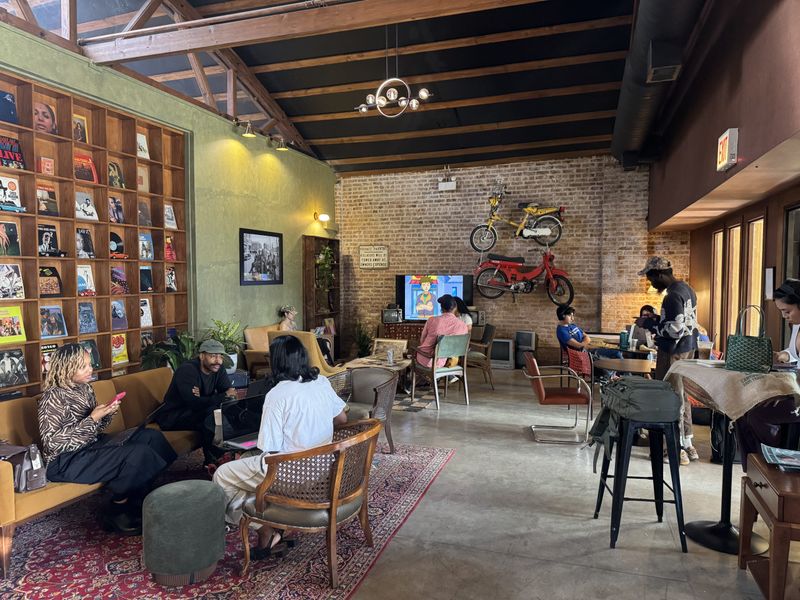
Thirty years is a long time to operate an auto repair business in one neighborhood. Ruben Mandujano’s connection to this Pilsen property gives Café Jon a history that most newly opened coffee shops simply don’t have.
Mandujano was born in Mexico and has lived in Pilsen for approximately four decades. His former business, Ruben’s Auto Service, occupied the building that now houses the cafe.
After closing the repair shop, he became a partner in its new chapter. That decision allowed him to remain connected to the property while exploring a different business concept.
The transformation involved Uduimoh Umolu and Belall Taher, entrepreneurs whose professional backgrounds brought another perspective to the project. Their collaboration with Mandujano helped establish the new cafe and gallery.
The partnership is particularly meaningful in the context of Pilsen’s changing commercial landscape. The neighborhood has experienced significant redevelopment pressures and rising costs over recent decades.
Local reporting has documented how Mandujano received offers from developers interested in purchasing his property. Instead, he chose a partnership that would keep him involved in the building’s future.
That distinction gives the cafe’s story a dimension beyond renovation and interior design. The project represents a decision about how an established neighborhood property could evolve.
I like how the collaboration connects different generations and professional experiences. An artist and former mechanic now shares a business venture with entrepreneurs developing a new cultural space.
Mandujano also owns the nearby Xoco House Gallery, reflecting his longstanding interest in art. His involvement helps explain why a contemporary gallery became part of the new cafe concept.
The transformation doesn’t erase the building’s past, either. Its automotive memorabilia keeps visible reminders of the business that occupied the property for decades.
For visitors interested in neighborhood history, this background adds meaning to the experience. The cafe isn’t simply an attractive renovation, but the latest chapter in a much longer local story.
That continuity is one of Café Jon’s most distinctive qualities.
6. This Coffee Shop Has A Gallery That Can Transform For Different Events
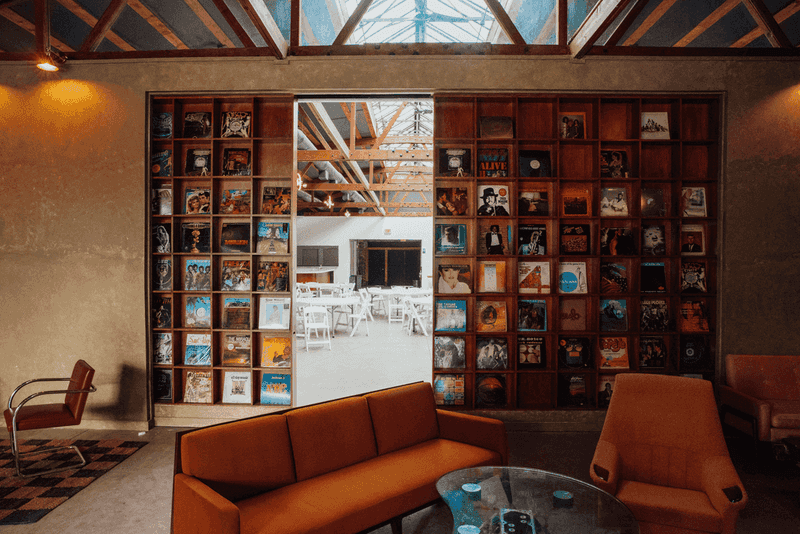
A 4,000-square-foot gallery is an unusually ambitious addition to a neighborhood coffee shop. Café Jon & Galleria makes that space a central part of its concept.
The gallery is designed to accommodate exhibitions, creative programming, and private gatherings. Its layout can be adapted depending on the type and scale of an event.
According to the business’s official website, resident artists contribute exhibitions that provide a backdrop for different activities. The venue also offers specially curated experiences connected to its membership community.
That makes the gallery more than a decorative extension of the coffee area. It serves as a dedicated space for creative expression and organized gatherings.
The owners developed the property with the intention of supporting local artists and cultural programming. This approach connects naturally with Pilsen’s longstanding artistic identity.
I particularly appreciate how the concept brings art into a space that people can also visit for everyday activities. It creates an opportunity for cultural programming to coexist with a familiar neighborhood service.
The building’s flexible design is important because different events require different arrangements. A private gathering, for example, may use the gallery differently from an exhibition.
The cafe’s website specifically identifies event reservations as part of its services. It also describes the gallery as adaptable to the needs of individual gatherings.
Not every event is necessarily open to the general public, however. Some experiences are organized for members or reserved for private use.
That distinction matters when planning a visit around a particular exhibition. Checking the current programming is the best way to understand which activities are accessible.
The gallery also reinforces the collaboration behind the business. Mandujano’s artistic background becomes part of the property’s present identity, rather than remaining separate from the coffee shop.
For people interested in contemporary art, Café Jon offers a reason to explore beyond the coffee counter. Its combination of gallery space and daytime cafe service makes it a distinctive addition to Chicago’s creative landscape.
7. Pilsen’s Creative Personality Makes This Location Especially Fitting
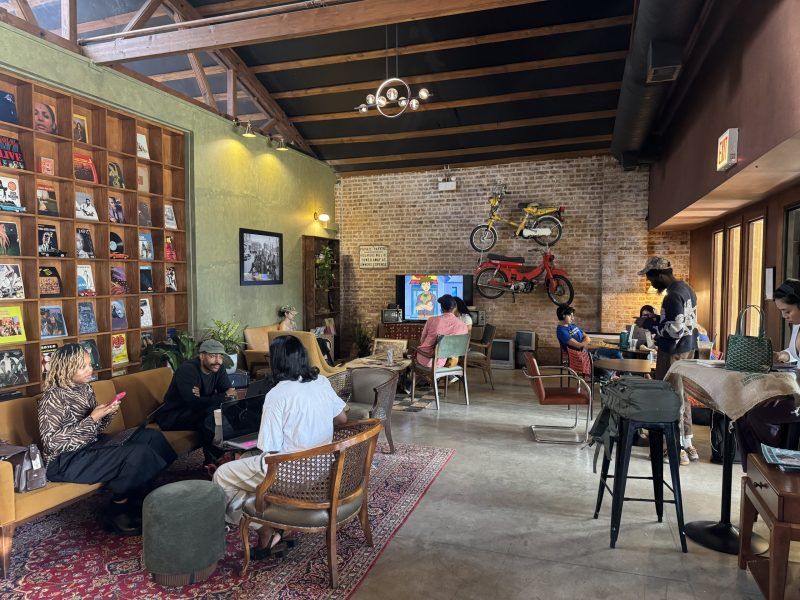
Pilsen is one of Chicago’s most culturally distinctive neighborhoods, and its artistic identity makes Café Jon’s concept particularly appropriate. The area has longstanding connections to Mexican American culture, community organizations, and visual art.
The neighborhood’s 18th Street corridor is especially important to its commercial and cultural life. Restaurants, independent businesses, galleries, and other establishments contribute to its identity.
Café Jon adds another creative destination to that landscape. Its combination of coffee, exhibitions, and gathering space reflects activities already associated with the surrounding community.
The business also occupies a building with its own neighborhood history. That connection distinguishes it from a development created without any previous relationship to the area.
Pilsen’s artistic heritage includes public murals and established cultural institutions. The National Museum of Mexican Art is among the neighborhood’s best-known destinations.
That broader cultural environment gives visitors several reasons to explore the area beyond a single coffee shop. A visit to Café Jon can become part of a longer outing centered on art and local businesses.
I like how the cafe’s concept fits into the neighborhood without requiring Pilsen’s identity to become a decorative theme. Its connection to Mandujano provides a genuine link to the community.
The building’s automotive past also reflects the area’s working commercial history. Its transformation brings another type of business into a space previously devoted to a practical neighborhood service.
Pilsen continues to face conversations about development, affordability, and cultural preservation. Those issues make the relationship between new businesses and longtime residents particularly significant.
Café Jon’s partnership model provides one example of how an established property owner can participate in redevelopment. It doesn’t resolve broader neighborhood challenges, but it offers an interesting local story.
For travelers exploring Chicago beyond its downtown attractions, Pilsen deserves consideration. The neighborhood’s combination of art, food, and independent businesses gives a coffee stop plenty of surrounding context.
And Café Jon’s location makes it a natural addition to that exploration.
8. You Can Visit For Coffee Or Make The Space Part Of Your Workday
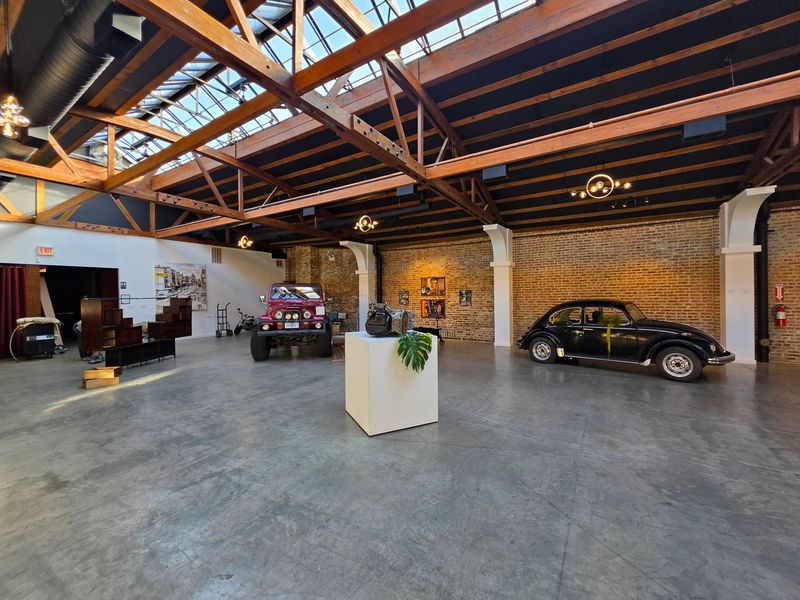
A coffee shop that doubles as a creative workspace offers more possibilities than a conventional takeaway counter. Café Jon was designed to accommodate both casual visits and people seeking a place to work.
The official website describes the daytime operation as a coffee house, creative workspace, and community gathering place. That combination is central to how the business presents itself.
Its large interior provides room for different activities within the same property. The communal areas and separate gallery space contribute to that flexible arrangement.
The cafe also offers a membership program called Friends of Jon Basíl. Membership is described as a local, invitation-only community for people involved in creative and entrepreneurial pursuits.
Special programming and private experiences form part of that membership concept. However, the daytime coffee shop also welcomes the surrounding neighborhood.
I like that distinction because it gives the property more than one purpose. Someone can visit for coffee without necessarily participating in the private programming.
The business lists its address as 2002 West 18th Street, Chicago, Illinois 60608. Its location places it near the intersection of 18th Street and Damen Avenue in Pilsen.
According to its official website, regular operating hours are Tuesday through Sunday, from 8 a.m. to 6 p.m. Monday is not included in the published schedule.
Those daytime hours make the cafe suitable for a morning stop or an afternoon visit. They also align with its identity as a place for coffee and creative work.
Visitors planning to use the space for an extended work session should confirm any specific workspace policies beforehand. The available information doesn’t establish every detail concerning laptops, reservations, or access to individual areas.
Private events may also affect how parts of the property are used. The gallery’s flexible design means its layout can change according to scheduled activities.
For anyone interested in an alternative to a conventional coffee shop, Café Jon offers an appealing combination. Its emphasis on creative work and community gathering gives the former auto shop a new everyday purpose.
9. Here’s Why This New Chicago Cafe Deserves A Place On Your Radar
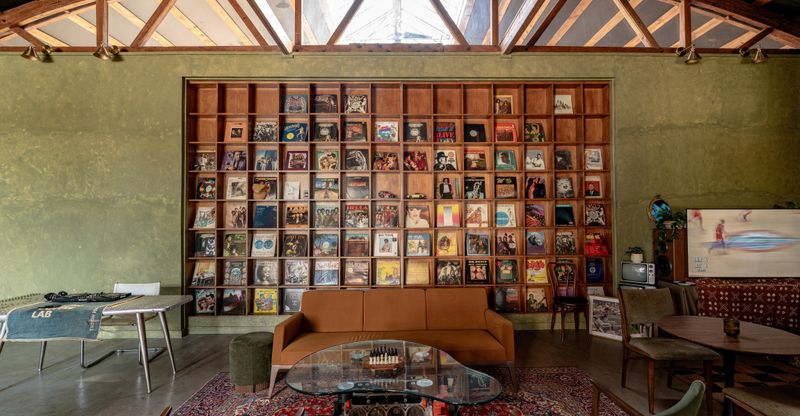
Chicago has plenty of coffee shops, but relatively few occupy a former auto garage filled with pieces of the building’s original history. That alone makes Café Jon an interesting addition to the city’s cafe scene.
Its appeal becomes clearer when you consider the different elements behind the project. Coffee, baking, contemporary art, and neighborhood entrepreneurship all contribute to the business.
Monday Coffee Company brings an established local connection to the beverage program. Saints Bakery adds another culinary element through its in-house pastry residency.
The gallery creates opportunities for exhibitions and organized events. Meanwhile, the cafe’s design preserves objects that connect the property to its decades as an automotive repair business.
Those features give visitors several reasons to appreciate the space. You might be most interested in the coffee, the interior design, or the building’s unusual history.
I particularly like how the concept avoids separating those interests into completely different destinations. The same property accommodates them through a shared creative identity.
The involvement of Ruben Mandujano also makes the story more meaningful. His connection to Pilsen and the former repair shop provides continuity between the building’s past and present.
That’s an important distinction for a business opening in a neighborhood with such a strong cultural identity. The project has a direct relationship with the property’s earlier life.
The cafe’s September 2026 opening also makes it a relatively recent addition to Chicago’s coffee landscape. Its combination of daytime service and event programming leaves room for the concept to develop further.
For a first visit, exploring the interior and ordering coffee would be a straightforward introduction. The automotive memorabilia and vinyl collection provide plenty of details worth noticing.
Anyone particularly interested in the gallery should check the current exhibition and event schedule. Some activities may require reservations or membership access.
Café Jon & Galleria offers something more interesting than another stylish place to purchase coffee. It’s a former neighborhood workshop finding a new purpose while keeping its history in view.
And that vintage car engine turned coffee table? It might be the most fitting symbol of the whole transformation.
Share this story