A really good croissant can make an ordinary bakery stop feel like the highlight of your day. The best ones combine carefully laminated dough, generous buttery flavor, and the kind of craftsmanship that takes considerably longer than eating the finished pastry.
Across America, bakers are putting their own personalities into this French classic. Some remain devoted to traditional butter croissants, while others experiment with chocolate, pistachio, savory fillings, and ingredients inspired by their hometowns.
I particularly like how different these bakeries are. A Scandinavian-inspired shop in Chicago, a Mexican American bakery in Austin, and a Japanese-influenced bakery in Seattle can all approach laminated pastry from completely different directions.
These 14 bakeries offer an entertaining look at just how creative America’s croissant scene has become. Each brings its own baking philosophy, regional influences, and reasons to make a pastry stop part of your next trip.
1. Friends & Family
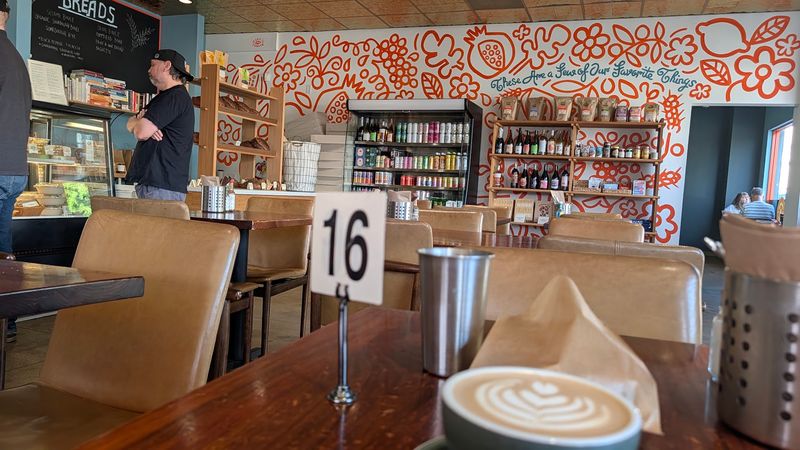
A croissant made with Sonora wheat is a pretty good reason to rethink your usual bakery order. At Friends & Family in Los Angeles, the choice of grain is an essential part of the baking philosophy.
Pastry chef Roxana Jullapat and chef Daniel Mattern founded the bakery around seasonal ingredients and carefully sourced grains. Their approach brings a distinctly California perspective to traditional European-style baking.
The original East Hollywood location operates at 5150 Hollywood Boulevard, while a Silver Lake outpost is at 2388 Glendale Boulevard. Both offer opportunities to explore the bakery’s pastry selection.
The Sonora wheat croissant is especially interesting because Sonora is a heritage wheat variety with a long history in the American Southwest. Using distinctive grains gives bakers another way to explore flavor beyond the usual butter-and-flour formula.
Friends & Family also offers chocolate croissants, pistachio almond croissants, and savory options such as ham and cheese. Its Silver Lake ordering menu has additionally featured a halva croissant.
That last creation is particularly intriguing because halva introduces a different culinary influence to a French pastry. It shows how laminated dough can become a starting point for creative combinations.
Jullapat’s interest in grains extends beyond the bakery counter. Her cookbook, Mother Grains, explores baking with grains including barley, buckwheat, corn, rye, and sorghum.
I like how this philosophy makes the ingredients themselves worth discussing. The flour isn’t simply a background component when a baker deliberately chooses it for its characteristics.
The bakery also serves breakfast and lunch, with seasonal dishes and freshly prepared breads. That makes it possible to build a longer visit around more than one pastry.
Still, the croissants provide an accessible introduction to the bakery’s distinctive approach. You can start with the Sonora wheat version before exploring its more elaborate creations.
Friends & Family demonstrates how a familiar French pastry can reflect California’s agricultural traditions. Sometimes the most interesting innovation begins with the grain itself.
2. Simple Loaf Bakehouse
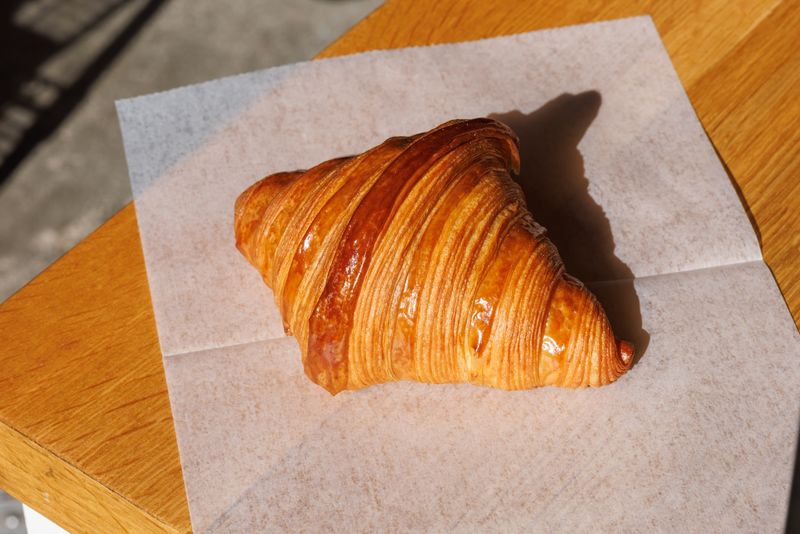
A classic butter croissant is wonderful, but having chocolate, almond, and savory alternatives makes choosing considerably more interesting. Simple Loaf Bakehouse in Brooklyn gives pastry lovers exactly that kind of selection.
Located at 310 Fifth Avenue in Park Slope, the bakery specializes in handcrafted croissants, sourdough bread, sandwiches, and seasonal salads. Its menu emphasizes traditional baking alongside practical breakfast and lunch options.
The classic croissant provides the foundation for understanding the bakery’s approach. Laminated dough relies on carefully folded layers of dough and butter, creating the distinctive structure associated with this French pastry.
Simple Loaf also offers chocolate croissants and almond croissants. Those familiar variations give visitors different ways to enjoy the same fundamental baking technique.
For something richer, the chocolate almond croissant combines two popular pastry traditions. The bakery’s menu also includes a vegan croissant and a vegan chocolate croissant.
That selection is especially useful for diners who avoid dairy or other animal-derived ingredients. Traditional croissants depend heavily on butter, making plant-based versions a distinct technical challenge.
Savory choices include ham and cheese croissants and a turkey, jalapeño, and cheddar version. These combinations turn a bakery pastry into a more substantial breakfast or lunch option.
I particularly appreciate that Simple Loaf doesn’t limit itself to one kind of pastry lover. Its menu accommodates people seeking something traditional, sweet, savory, or plant-based.
The bakery also prepares other European-inspired pastries, including kouign-amann, Danish pastries, and Portuguese custard tarts. These additions make the pastry case an opportunity to explore several baking traditions.
Simple Loaf operates Tuesday through Sunday, with breakfast and lunch service throughout the day. Its Park Slope location places it within one of Brooklyn’s established neighborhood dining districts.
For a first visit, the classic croissant makes an excellent starting point. After that, the almond and chocolate versions provide plenty of reasons to return.
The bakery’s appeal comes from its balance of traditional technique and menu variety. In a city with no shortage of pastry options, that’s a combination worth appreciating.
3. Butter & Crumble
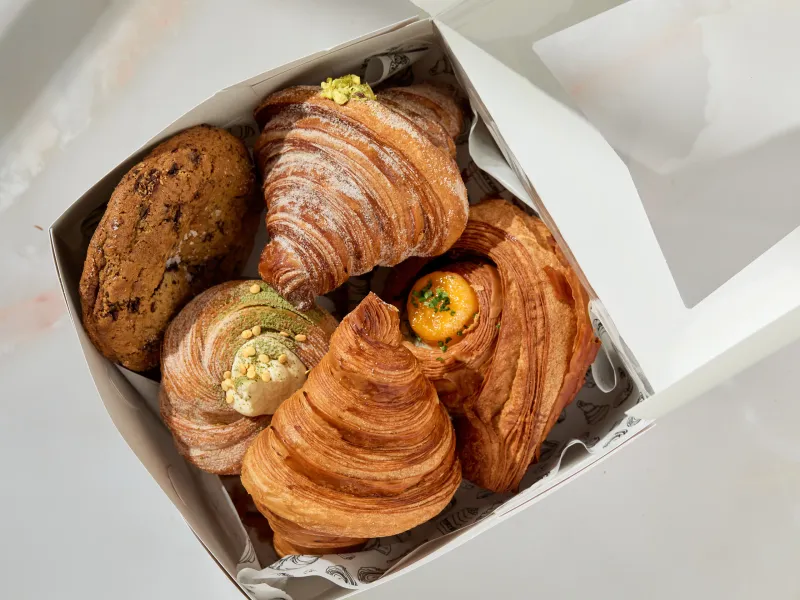
A croissant filled with corn custard and cornmeal almond cream isn’t something you encounter at every neighborhood bakery. At Butter & Crumble, unusual flavor combinations are part of the attraction.
Located at 271 Francisco Street in San Francisco’s North Beach neighborhood, the bakery specializes in laminated pastries and layered cakes. Founder Sophie Smith has built the concept around playful creativity and careful pastry craftsmanship.
The bakery’s filled croissants demonstrate how traditional techniques can support inventive flavors. Rather than treating the classic croissant as untouchable, the kitchen explores what happens when familiar pastry methods meet unexpected ingredients.
One particularly interesting creation featured corn custard, cornmeal frangipane, and salted caramel. The combination was highlighted by the San Francisco Chronicle in September 2026.
Corn is an unusual choice for a sweet croissant filling, but it has a natural sweetness that works in desserts. Paired with almond cream and caramel, it creates a different approach to a familiar pastry.
Butter & Crumble also produces layered crumble cakes, expanding its baking philosophy beyond croissants. The bakery’s menu changes, so individual creations shouldn’t be assumed to remain available indefinitely.
Its operating schedule is relatively focused, with service Thursday through Sunday. The bakery also publishes guidance about sellouts and limits on certain pastry purchases.
That makes checking the day’s availability especially worthwhile before planning a visit. Specific pastries may change, and the selection can become limited as the day progresses.
I like the bakery’s willingness to experiment without abandoning the fundamentals of pastry-making. Laminated dough requires precision, even when the fillings become more adventurous.
The combination of technical baking and unusual flavor ideas gives Butter & Crumble a distinctive identity. It’s a useful reminder that creativity works best when supported by solid craftsmanship.
For anyone exploring San Francisco’s pastry scene, this North Beach bakery deserves consideration. Its inventive croissants make the familiar French classic feel open to new possibilities.
4. Machine Shop Boulangerie
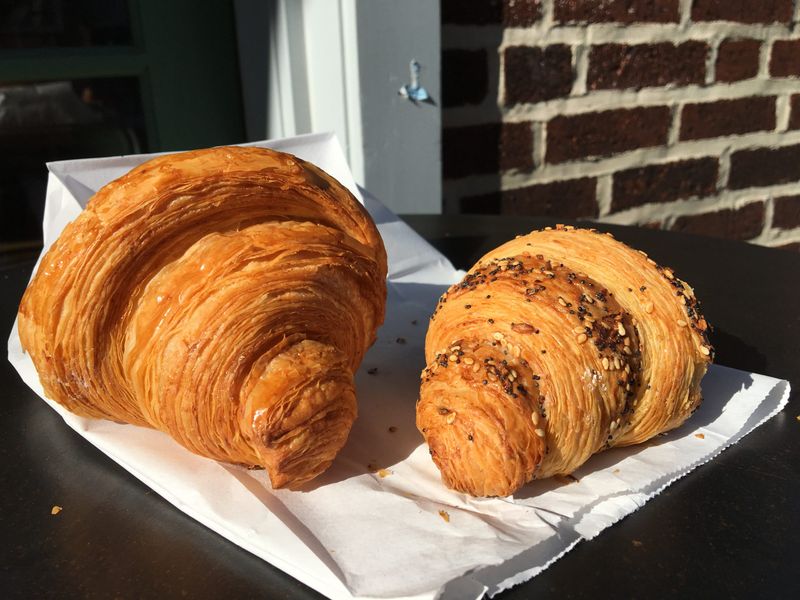
A French croissant made with ingredients connected to Pennsylvania farms is an appealing combination of tradition and regional identity. Machine Shop Boulangerie in Philadelphia has made that approach central to its work.
The bakery operates at 1901 South Ninth Street inside the Bok Building. Its entrance is on Dudley Street, a useful detail when planning a visit.
Pastry chef and owner Emily Riddell leads a team dedicated to French baking techniques and regional ingredients. The bakery sources produce, fruit, and grains from farms and mills throughout the Mid-Atlantic.
Its traditional croissant is an excellent introduction to the bakery’s philosophy. The pastry depends on precise lamination and careful handling, allowing the quality of the ingredients to take center stage.
Machine Shop also offers double chocolate pain au chocolat and twice-baked almond croissants. Both demonstrate different ways of building on traditional laminated pastry.
The almond croissant is particularly interesting because twice-baking introduces an additional preparation stage. It’s a familiar French bakery technique that transforms a croissant into a more elaborate pastry.
For something savory, the bakery’s sample menu has included an everything croissant. Other laminated creations have incorporated ingredients such as tomatoes, summer squash, and seasonal fruit.
Those selections reflect the bakery’s interest in local agriculture. Seasonal ingredients influence the pastry case rather than remaining confined to savory restaurant menus.
Riddell received national recognition from Food & Wine in 2022 and was subsequently nominated for a James Beard Award. Those achievements helped bring wider attention to the bakery’s work.
I particularly like how Machine Shop connects French technique with Pennsylvania’s agricultural landscape. The bakery isn’t simply reproducing traditional pastries without considering its surroundings.
The business began as a wholesale operation in 2016 before developing into a retail bakery. Today, it offers breads, pastries, and other handmade products.
Machine Shop’s croissants demonstrate how regional ingredients can give classic European baking a distinctly American identity. Philadelphia pastry lovers have a compelling reason to explore the Bok Building.
5. Love Croissants
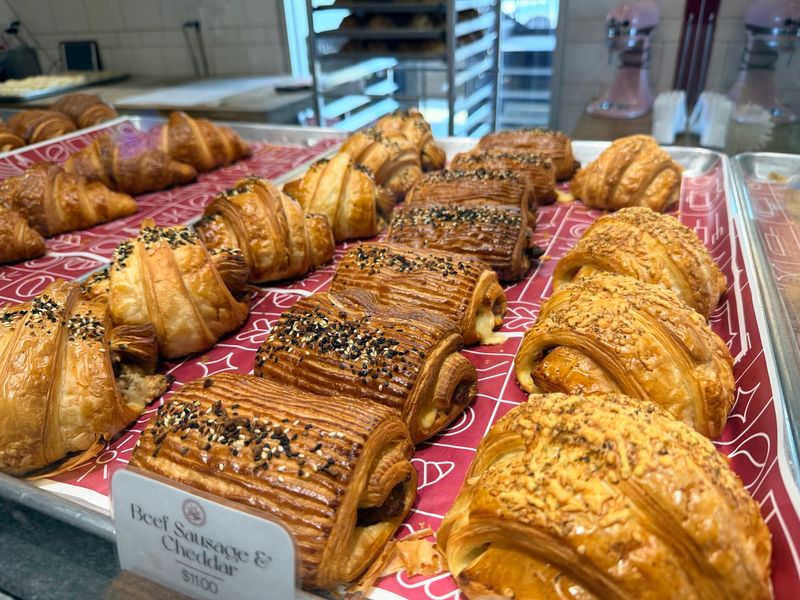
Three days of preparation for a single croissant recipe? Love Croissants in Houston takes the slow approach seriously, and its baking process is central to the business.
The bakery uses Beurremont butter from Normandy, France, with an 82 percent butterfat content. That ingredient choice reflects its emphasis on traditional French pastry techniques.
Love Croissants operates locations at 2808 Caroline Street and 801 West 16th Street in Houston. The business began at farmers markets before expanding into permanent bakery spaces.
Its signature butter croissant is the obvious place to start. The bakery’s own description emphasizes a three-day preparation process involving carefully laminated dough.
That commitment to preparation makes the classic croissant more interesting than its short ingredient list might suggest. Flour, butter, and fermentation become the foundation for a surprisingly technical baking project.
The menu also includes pain au chocolat, made with Valrhona dark chocolate batons. It’s a familiar French pastry that combines laminated dough with chocolate.
Another option is the twice-baked almond croissant, which introduces a richer variation on the original. The bakery has also featured pistachio-inspired pastries and croissant-based tarts.
I like how the menu gives traditional croissants equal attention alongside more elaborate creations. There’s no requirement to choose the most complicated pastry to appreciate the bakery’s craftsmanship.
Love Croissants also emphasizes freshness in its operating philosophy. The company says it prefers not to serve croissants once they’ve been out of the oven for more than four hours.
That policy reflects how seriously the bakery treats the finished product. Its approach recognizes that pastry quality depends on more than the recipe alone.
The Houston Heights location offers both classic and filled croissants, along with coffee and other drinks. The broader selection makes it a convenient stop for a pastry-focused breakfast.
Love Croissants demonstrates how much work can go into something that disappears from a plate in minutes. The three-day process gives this Houston bakery a particularly memorable identity.
6. Momo Cafe
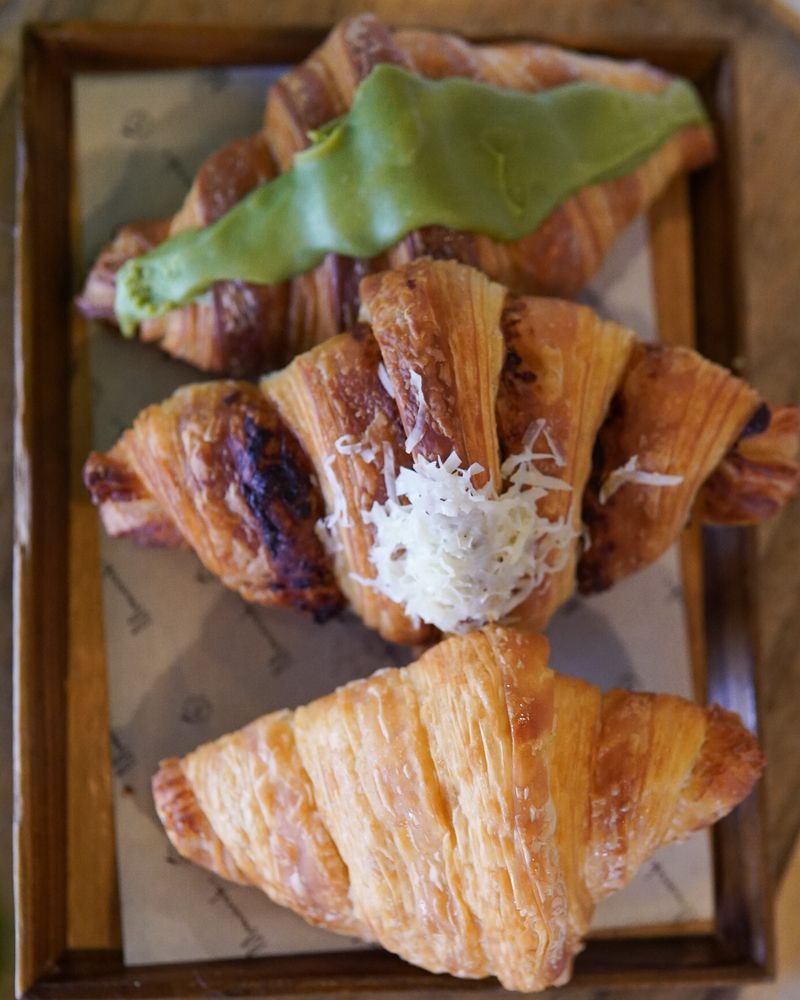
A croissant flavored with onion, Gruyère, and rosemary offers a very different experience from the usual chocolate-filled pastry. Momo Cafe in Atlanta has explored exactly that kind of savory combination.
The cafe is connected to Momonoki, a Japanese restaurant in Midtown Atlanta. Located at 95 Eighth Street NW, the business combines Japanese-inspired drinks, coffee, and pastries.
Momo Cafe’s approach reflects the broader culinary philosophy of Momonoki. Japanese techniques and ingredients influence the menu while leaving room for familiar European-style pastries.
The savory onion, Gruyère, and rosemary croissant was highlighted in earlier coverage of the cafe. Its combination of cheese, herbs, and onion illustrates the kitchen’s interest in savory pastry flavors.
Because pastry selections can change, that specific croissant shouldn’t be assumed to be available every day. However, the cafe continues to identify house-made pastries as part of its offering.
The wider pastry selection has included mochi doughnuts and other sweets. These creations reflect the cafe’s willingness to work across different baking traditions.
Coffee and matcha drinks are also important parts of the concept. The combination makes Momo Cafe suitable for a quick pastry stop or a longer daytime break.
I particularly like the connection between the cafe and its Japanese restaurant counterpart. The two concepts provide different ways to explore the same culinary influences.
Momonoki’s name translates to “peach tree” in Japanese, a deliberate reference to Atlanta’s identity. That connection gives the business a small but meaningful local touch.
The cafe also offers a mezzanine seating area overlooking the restaurant and nearby surroundings. It’s a distinctive feature for visitors who prefer to enjoy their pastries on-site.
For someone interested in croissants with less conventional flavor combinations, Momo Cafe is an appealing destination. Its savory creations show how versatile laminated dough can become.
Atlanta’s food scene embraces many culinary traditions, and Momo Cafe reflects that diversity through its pastry program. A French-inspired croissant with Japanese-influenced creativity makes an interesting addition to any bakery itinerary.
7. Lost Larson
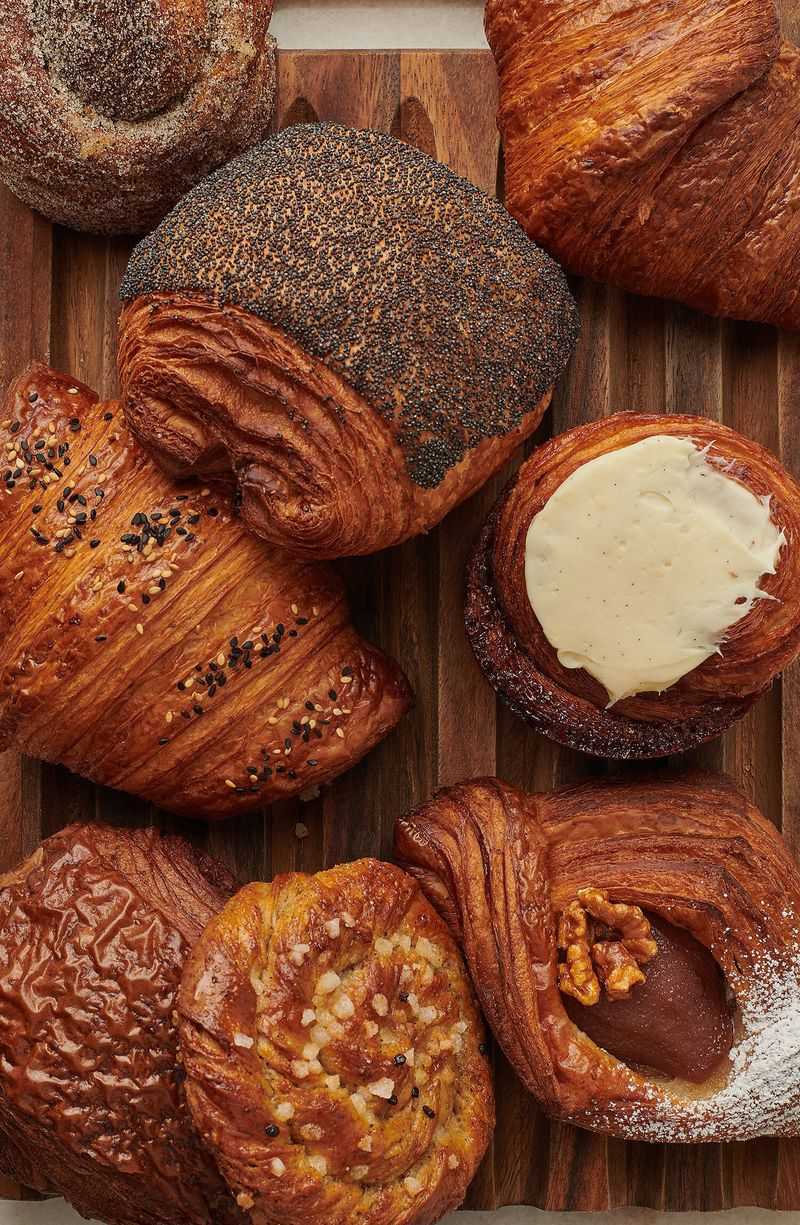
A croissant made with whole wheat and a chocolate version featuring cardamom? Lost Larson brings Scandinavian influences into Chicago’s bakery scene in a particularly interesting way.
The bakery operates locations in Andersonville and Wicker Park. Its Andersonville address is 5318 North Clark Street, while the Wicker Park shop is at 2140 West Division Street.
Lost Larson combines traditional European baking with flavors associated with Scandinavian pastry culture. The menu includes croissants, cardamom buns, cakes, and other baked goods.
Its classic croissant is made with whole wheat, according to current ordering descriptions. That choice distinguishes it from versions relying entirely on conventional white flour.
The chocolate croissant introduces another distinctive ingredient: cardamom. This aromatic spice is especially prominent in Scandinavian baking, where it appears in sweet breads and pastries.
Lost Larson’s almond croissant offers a more traditional variation. It’s filled with almond cream and topped with sliced almonds, creating a familiar combination for pastry enthusiasts.
The bakery also prepares tebirkes, a Danish pastry featuring almond cream and poppy seeds. Although not identical to a classic croissant, it provides another way to explore laminated dough.
Other selections include cardamom buns and a pastry made with croissant dough, orange zest, and Earl Grey tea sugar. These creations demonstrate the bakery’s interest in aromatic ingredients.
I particularly appreciate how the menu gives individual spices meaningful roles. Cardamom and citrus can transform a familiar pastry without requiring an entirely new format.
Lost Larson also offers cakes, savory baked goods, and coffee. Its broader selection makes the bakery suitable for more than a quick croissant purchase.
The two Chicago locations provide convenient options for exploring different neighborhoods. Both reflect the same Scandinavian-inspired baking identity.
For a first visit, the whole-wheat croissant offers a useful introduction to the bakery’s approach. The chocolate-cardamom version is an appealing next choice.
Lost Larson demonstrates how a French classic can fit naturally into a Scandinavian-inspired bakery. The result is a distinctive contribution to Chicago’s pastry culture.
8. Casa Bake
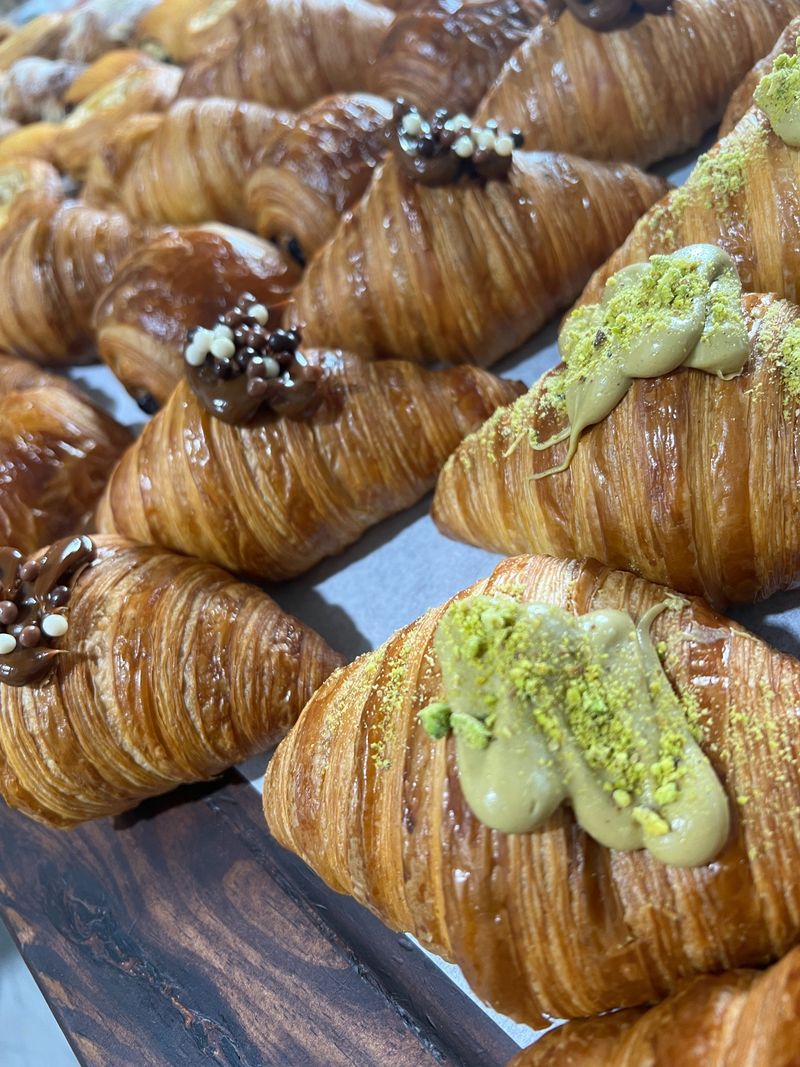
A traditional French croissant might seem like an obvious bakery staple, but making one properly requires considerable patience. Casa Bake in Miami has built its reputation around that commitment to careful preparation.
Located at 7165 Southwest 47th Street, Suite 316, the bakery specializes in French pastries and artisan breads. Its founder, pastry chef Benoît Pagliardini, brings a professional French baking background to the business.
Casa Bake emphasizes handmade pastries prepared from scratch. The process involves fermentation and lamination, both essential components of traditional croissant-making.
The plain croissant is an excellent starting point because it allows the baking technique to take center stage. Without elaborate fillings, the pastry depends on the quality of its dough and butter.
The bakery also produces chocolate croissants, almond croissants, and pistachio-filled variations. Those options give visitors several ways to explore the same fundamental pastry.
Chocolate introduces a familiar richness, while almond cream provides a different style of filling. Pistachio offers another flavor direction that has become increasingly popular in contemporary pastry shops.
I like how Casa Bake combines traditional French techniques with a selection that appeals to different tastes. The classic croissant remains central, even as more elaborate variations expand the menu.
The bakery also makes artisan breads, cakes, tarts, and other French-inspired desserts. Its pastry selection demonstrates a broader commitment to traditional baking skills.
Another distinctive feature is its educational program. Casa Bake offers baking classes, giving interested participants an opportunity to learn more about pastry preparation.
That educational component is particularly appealing because croissant-making involves techniques that aren’t immediately obvious from the finished product. Understanding lamination can change how you appreciate an everyday bakery pastry.
Casa Bake operates primarily as a takeaway bakery, making it suitable for a planned pastry pickup. Its location in Miami’s Bird Road area is somewhat different from the city’s more familiar beachfront dining districts.
For anyone exploring South Florida’s French baking scene, Casa Bake deserves consideration. Its focus on traditional craftsmanship gives the classic croissant plenty of room to shine.
9. The Butter Milk Ranch
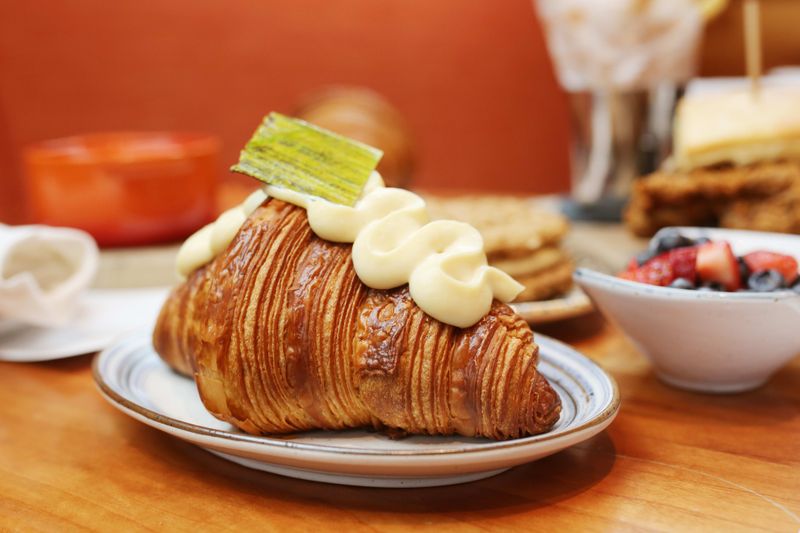
A croissant with 140 laminated layers is already an ambitious pastry, but The Butter Milk Ranch doesn’t stop there. This Nashville bakery turns traditional croissant-making into an entire collection of imaginative creations.
Located at 2407 12th Avenue South, The Butter Milk Ranch combines a small-batch bakery with a full-service daytime restaurant. Its menu includes breakfast dishes, sandwiches, pastries, and an extensive selection of croissants.
The classic croissant provides the foundation for the bakery’s more elaborate offerings. Its menu specifically describes the traditional version as having 140 layers.
One particularly interesting variation is the salted honey butter croissant. It combines the classic pastry with salted honey butter and Maldon sea salt.
The chocolate babka croissant takes inspiration from another established baking tradition. It features dark chocolate, hazelnut filling, and roasted hazelnuts.
For pistachio enthusiasts, the bakery offers a two-colored laminated croissant filled with chocolate-pistachio and salted caramel cream. The combination brings several dessert flavors into one pastry.
Another creative option is the blueberry coffee cake croissant. It incorporates cream cheese filling, fresh blueberries, and a streusel topping.
I particularly like how the bakery uses croissants as a starting point for different dessert concepts. The menu demonstrates that laminated dough can accommodate much more than conventional fillings.
The Butter Milk Ranch also offers savory croissant sandwiches, including Tennessee ham and cheese. Its breakfast menu features croissant-based creations with eggs, cheese, and other ingredients.
The restaurant’s broader menu includes Southern-inspired breakfast dishes, biscuits, and brunch specialties. That variety makes it possible to combine a pastry purchase with a substantial meal.
The bakery operates Tuesday through Sunday, with counter service and dining-room options. Its location in Nashville’s 12 South neighborhood adds another reason to explore the area.
For croissant enthusiasts who enjoy creative flavor combinations, The Butter Milk Ranch offers an unusually extensive selection. Its pastry case demonstrates just how far a classic French technique can travel.
10. Comadre Panaderia
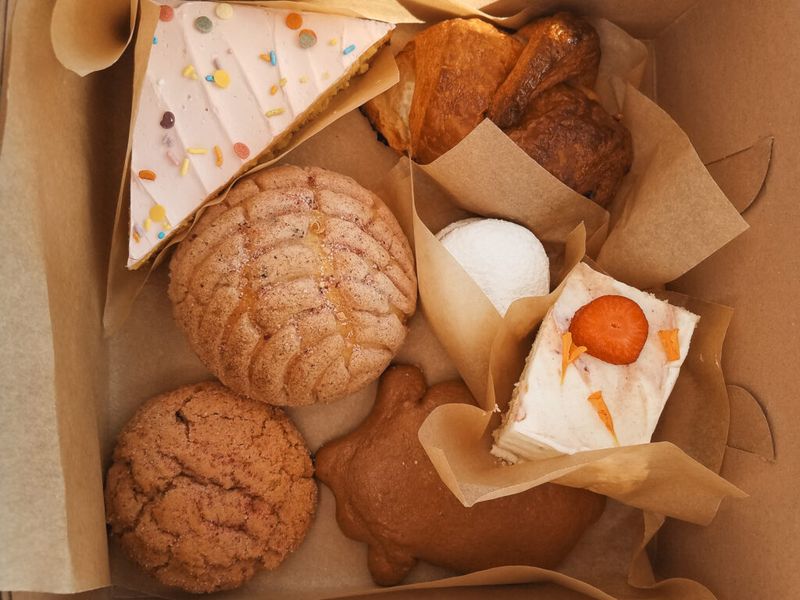
A croissant filled with oyster mushrooms and mole rojo is certainly a departure from the traditional French bakery formula. At Comadre Panadería in Austin, that creativity reflects a deeply personal approach to baking.
Founder Mariela Camacho established the bakery to celebrate Mexican American food traditions through carefully sourced ingredients. Her work draws inspiration from family recipes, ancestral knowledge, and regional agricultural products.
Located at 1204 Cedar Avenue, Comadre Panadería operates in Austin’s Chestnut neighborhood. The bakery opened its permanent location in 2023 after developing through earlier pop-ups.
Camacho’s croissants are particularly interesting because they bring Mexican flavors into traditional laminated pastry. Previous creations have included guajillo chile croissants and versions featuring mole.
One celebrated preparation combined oyster mushrooms with mole rojo inspired by Camacho’s mother. That pairing illustrates how a familiar French pastry can become a vehicle for Mexican culinary traditions.
The bakery also uses masa madre, or sourdough fermentation, in some of its laminated creations. This approach adds another dimension to the baking process.
Seasonal ingredients influence the menu, so individual croissant varieties change. A recent offering featured Texas pear with hoja santa pastry cream, demonstrating another unusual flavor combination.
Hoja santa is an aromatic herb used in Mexican cooking. Its inclusion in a sweet pastry reflects the bakery’s willingness to explore ingredients outside conventional dessert expectations.
I particularly appreciate how Camacho’s creations connect innovation with cultural heritage. The unusual combinations have a purpose beyond simply attracting attention.
Comadre Panadería also produces conchas, cookies, cakes, and other Mexican-inspired baked goods. Many feature heirloom grains and ingredients selected with an emphasis on responsible sourcing.
Camacho was named one of Food & Wine’s Best New Chefs in 2025, bringing national recognition to her work. The distinction reflects the growing attention given to her inventive baking style.
For visitors to Austin, Comadre offers a different perspective on croissant-making. Its pastries demonstrate how traditional European techniques can become part of a distinctly Mexican American culinary expression.
11. Ayu Bakehouse
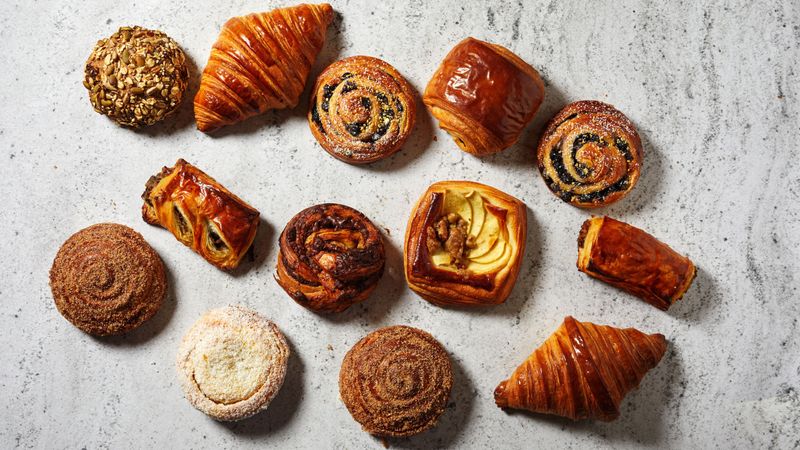
A croissant filled with blueberry-lavender jam and almond cream sounds like a particularly interesting way to begin a New Orleans morning. At Ayu Bakehouse, unusual flavor combinations are part of the bakery’s personality.
Located at 801 Frenchmen Street, Ayu combines traditional pastry techniques with ingredients and influences associated with Louisiana. The bakery describes its approach as celebrating both local and international flavors.
Its classic French butter croissant provides a traditional starting point. The menu also includes pain au chocolat made with Valrhona chocolate.
For something more elaborate, the blueberry lavender almond croissant is a particularly appealing choice. This twice-baked pastry combines house-made blueberry-lavender jam with almond cream.
The bakery notes that availability varies, making it a seasonal or rotating option rather than a guaranteed everyday selection. That flexibility is part of Ayu’s broader approach to its pastry menu.
Another distinctive creation is the Boudin Boy, which wraps Louisiana boudin sausage and a boiled egg in croissant dough. It’s a particularly clear example of the bakery’s regional influences.
Boudin is a traditional Louisiana sausage preparation, making its appearance in laminated pastry especially interesting. The combination brings a local culinary staple into a French-inspired baking format.
Ayu also offers the Shroom Boom, featuring mushrooms, caramelized onions, and Gruyère inside croissant dough. It’s a savory alternative that demonstrates the pastry’s versatility.
I like how these creations connect New Orleans food traditions with contemporary baking. The menu offers more than familiar French pastries, even though classical techniques remain important.
The bakery’s open kitchen also allows the production process to become part of the experience. That detail fits naturally with Frenchmen Street’s lively creative identity.
Other offerings include laminated cinnamon rolls, chocolate babka knots, and seasonal pastries. The selection provides several ways to explore the bakery’s approach.
Ayu Bakehouse demonstrates that croissants can carry a strong sense of place. Its combination of Louisiana ingredients and international pastry traditions makes it a distinctive New Orleans destination.
12. Yellow
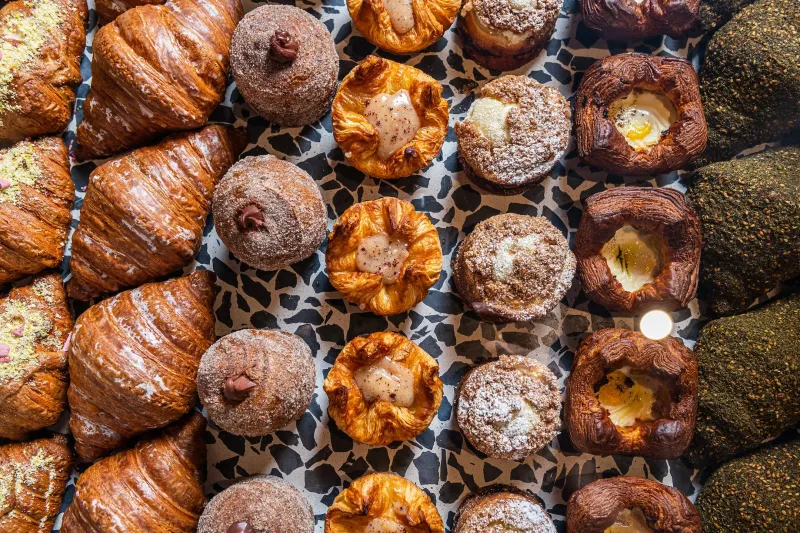
Za’atar and labneh inside a croissant? Yellow in Washington, D.C., makes that combination sound entirely natural through its Levantine-inspired pastry program.
The cafe was created by chef Michael Rafidi, whose culinary work draws on flavors associated with the eastern Mediterranean. Yellow combines those influences with traditional French baking techniques.
The business first opened in Navy Yard in 2020 before expanding to Georgetown and Union Market. Its current locations include 1524 Wisconsin Avenue NW and 417 Morse Street NE.
Executive pastry chef Alicia Wang leads a program that incorporates Levantine ingredients into familiar European pastry formats. The za’atar and labneh croissant is among the cafe’s signature creations.
Za’atar is a seasoning blend commonly associated with Middle Eastern cooking. Labneh is a strained yogurt preparation that brings a different character to the pastry.
Together, these ingredients create a savory alternative to the conventional butter croissant. The combination illustrates how French lamination can support flavors from another culinary tradition.
Yellow also produces chocolate seven-spice cruffins and baklava-inspired kouign-amann. These creations extend the same philosophy across several different pastry formats.
A cruffin combines elements of a croissant and muffin, while kouign-amann is a laminated pastry traditionally associated with Brittany. Both provide opportunities for creative flavor combinations.
I particularly like how Yellow’s pastry menu reflects the cafe’s broader culinary identity. The Levantine influences aren’t limited to one novelty item.
The savory menu includes hummus, mezze, and freshly prepared pita sandwiches. That makes Yellow suitable for a pastry-focused breakfast or a more substantial meal.
The cafe also emphasizes Arabic coffee traditions through a distinctive beverage program. Its offerings include drinks featuring cardamom and other ingredients associated with the region.
For anyone interested in croissants beyond the familiar chocolate-and-almond selection, Yellow offers a compelling alternative. Its pastries demonstrate how traditional French techniques can take on a new identity through Levantine flavors.
13. Fuji Bakery
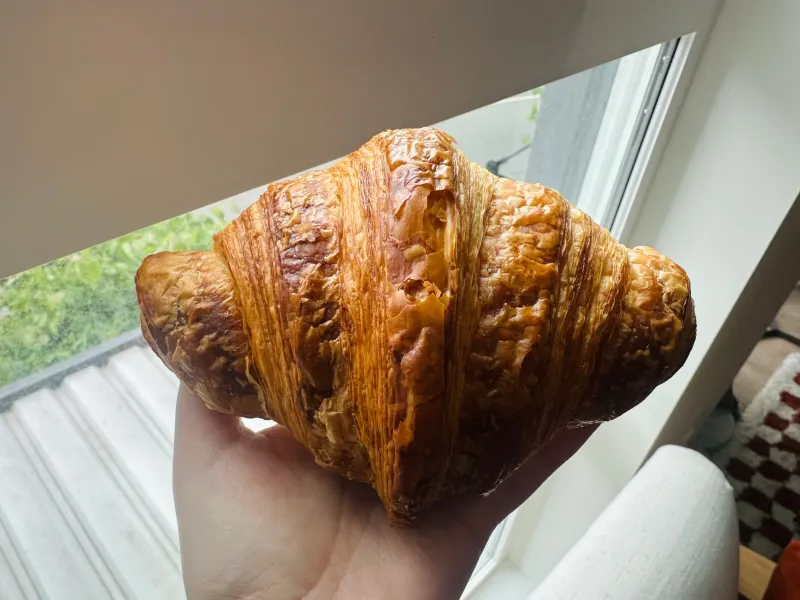
A classic butter croissant and Japanese-style pastries might seem like an unusual combination, but Fuji Bakery brings them together naturally. This Seattle bakery specializes in creations influenced by both Japanese and French baking traditions.
The business identifies itself as a Japanese-French artisan bakery, with several locations in the Seattle area. Its menu includes croissants, breads, cakes, and Japanese-inspired savory selections.
The classic butter croissant is made with European-style cultured butter. That ingredient provides the foundation for the bakery’s traditional laminated pastry.
Fuji also offers a twice-baked almond croissant filled with house-made almond cream. Additional almond cream and sliced almonds complete the preparation.
The chocolate croissant provides another familiar option, while seasonal variations introduce different flavors. The bakery’s online selection has featured apple pie and pumpkin pie croissants.
Those combinations illustrate how a traditional French pastry can accommodate flavors associated with American desserts. The bakery’s broader identity, however, remains closely connected to Japanese baking.
One distinctive savory option is the ham and cheese croissant. Its filling includes mozzarella, Parmesan, and cheddar, seasoned with smoked paprika and black pepper.
I like how Fuji Bakery balances familiar croissant varieties with a wider selection of Japanese-inspired foods. Visitors can explore different baking traditions without needing to choose between them.
The menu also includes shokupan, a Japanese milk bread known for its distinctive preparation. Fuji offers varieties made using the tangzhong technique, which involves preparing part of the flour with liquid before incorporating it into the dough.
Another specialty is kare-pan, a Japanese curry bread with a savory filling. These items demonstrate how broad the bakery’s selection extends beyond laminated pastry.
For a first visit, the butter croissant provides a useful introduction to Fuji’s French baking techniques. The almond version offers a more elaborate alternative.
Fuji Bakery is an appealing destination for anyone interested in the relationship between Japanese and European baking. Its menu demonstrates how different pastry traditions can coexist within one bakery.
14. Izola Bakery
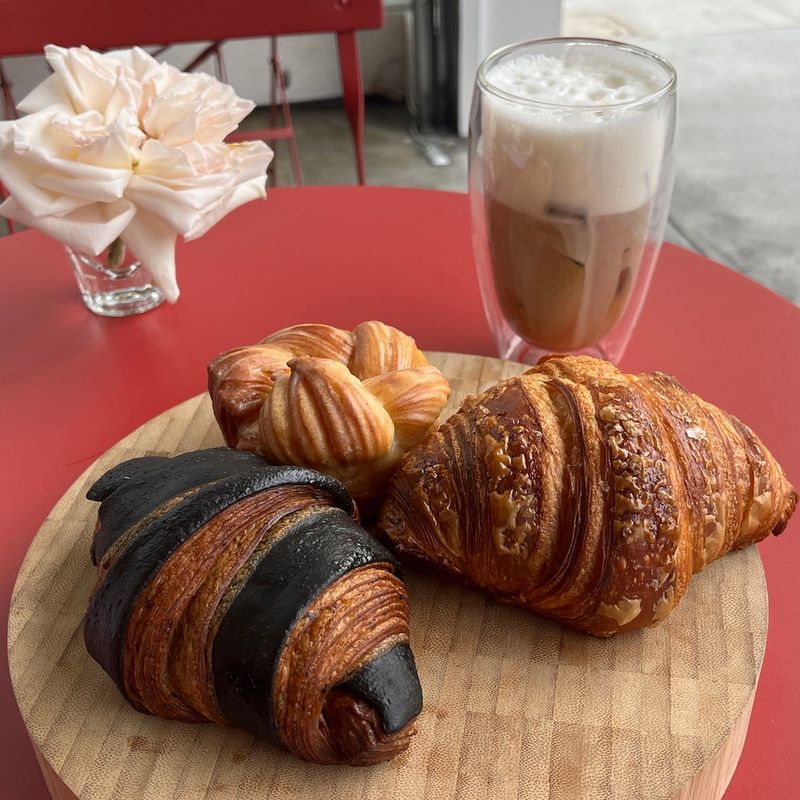
Four days of preparation and 96 layers of butter go into Izola Bakery’s croissants. That’s a remarkable amount of work for a pastry most people can finish during a coffee break.
Located at 1429 Island Avenue in San Diego’s East Village, Izola specializes in croissants and naturally fermented sourdough bread. The bakery has developed its identity around serving pastries fresh from the oven.
Its croissant-making process takes four days, according to the bakery’s official description. The extended preparation reflects its commitment to fermentation and careful lamination.
Izola uses ingredients including butter from Normandy, California milk, and free-range eggs. Those choices support its emphasis on traditional pastry craftsmanship.
One particularly distinctive feature is the bakery’s approach to baking throughout the day. Rather than completing all production before opening, the team continues baking during service hours.
That means the bakery can serve croissants shortly after they leave the oven. It’s an important part of the experience Izola wants to create.
I especially like how this approach draws attention to freshness as a component of pastry quality. Even a carefully prepared croissant changes as it cools and sits.
The bakery also produces sourdough bread using slow fermentation. This gives visitors another opportunity to explore its bread-making philosophy beyond laminated pastry.
Izola’s current location is near Fault Line Park, providing a different setting from its former bakery space. The business offers dine-in service, takeaway orders, and online preordering.
Preordering is a useful option for anyone planning a specific visit. The bakery’s ordering system allows customers to arrange pickup rather than relying entirely on the selection available upon arrival.
The company also emphasizes hospitality and creating an enjoyable bakery environment. Its approach treats the experience surrounding the food as part of the business.
For croissant enthusiasts, the four-day preparation process is reason enough to appreciate the craftsmanship involved. Izola demonstrates how patience, careful ingredients, and repeated baking throughout the day can define a bakery’s identity.
It’s a fitting conclusion to a journey through America’s croissant scene. From traditional French techniques to inventive regional flavors, these bakeries show just how much personality can fit inside a laminated pastry.
Share this story