Mustard’s familiar yellow color can come from turmeric, not just the seeds that give the condiment its bite. That small detail helps explain why a smooth yellow squeeze and a spoonful of whole grain mustard can bring such different personalities to the same hot dog, even before you add another topping.
Texture matters alongside flavor, especially when your bun already holds crunchy onions, soft relish, or a generous pile of cabbage. I’m intrigued by how changing just one condiment can shift the whole bite without asking you to rethink lunch or crowd the bun with extra ingredients.
The title promises chef favorites, but I can’t confirm specific chef endorsements or present availability for these exact products here. Rather than invent those connections, I’ll separate established product information from my own serving ideas, leaving you with useful distinctions and a little room to play.
French’s Classic Yellow Mustard
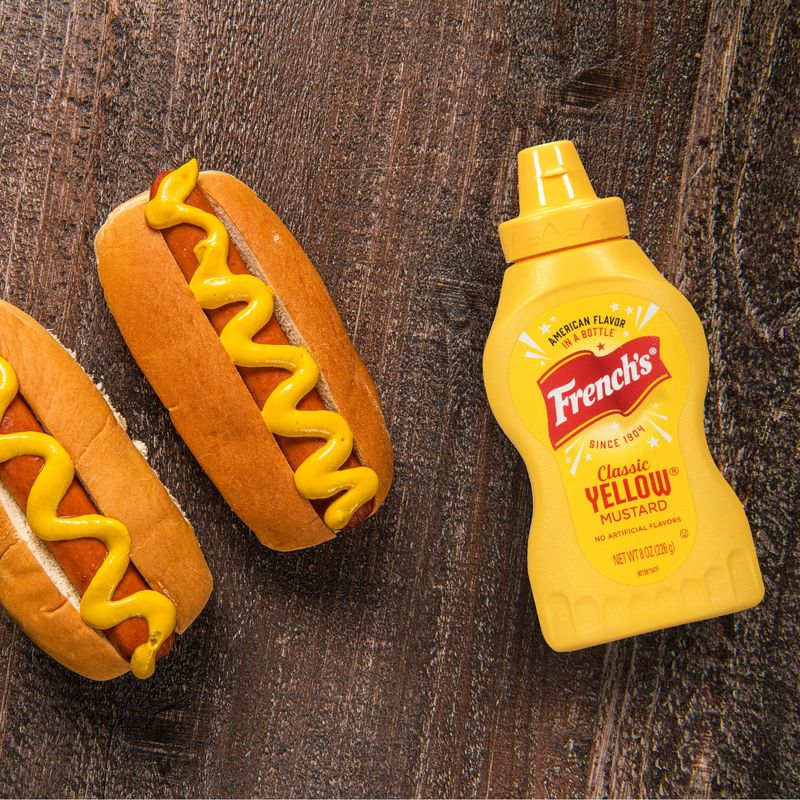
That bright yellow stripe gets some of its sunshine from turmeric, an ingredient in French’s Classic Yellow Mustard. The smooth condiment offers a familiar starting point when you want mustard flavor without whole seeds changing the texture of your hot dog.
French’s identifies this product as a yellow mustard made with mustard seed, distilled vinegar, water, salt, turmeric, paprika, and other flavorings. Check the package you have for its full ingredient statement, since labels remain the best guide for dietary needs.
Its smooth consistency makes a narrow line easy to spread across the sausage instead of collecting in separate spoonfuls. You can begin with a small amount, take a bite, and decide whether your next mouthful needs a little more mustard.
For an original topping idea, pair it with finely chopped white onion and a modest spoonful of sweet pickle relish. The onion supplies crunch, while the relish adds sweetness without requiring you to pile several competing toppings into the bun.
A plain beef hot dog gives you a straightforward way to judge that combination against your own taste preferences. Keep the first serving simple rather than adding cheese, chili, and several sauces before you know how much mustard you want.
The useful distinction here is texture: you get an even coating rather than the visible seeds found in whole grain mustard. Choose it when you want the hot dog and toppings to provide the chew, with mustard playing a supporting role.
My serving suggestion is practical, not a documented chef recommendation: apply the mustard directly to the sausage before adding loose toppings. That approach lets you control its placement and keeps chopped onions from becoming an unexpected obstacle course for the bottle’s tip during a hurried lunch assembly at your own kitchen counter.
Arnaud’s Creole Mustard
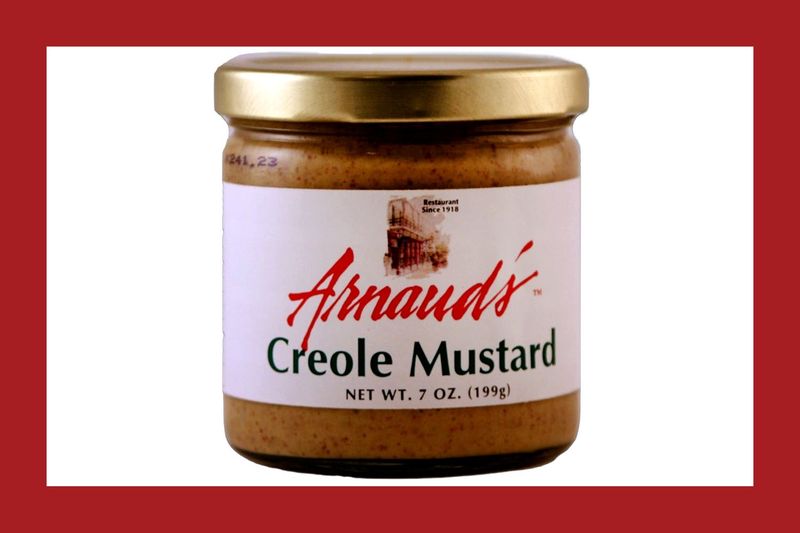
A mustard connected to a New Orleans restaurant brings a different backstory to your hot dog than a standard squeeze bottle. Arnaud’s Creole Mustard carries the name of Arnaud’s, the French Quarter restaurant associated with the city’s Creole dining traditions.
Creole mustard belongs to a coarser mustard tradition, so texture is part of its appeal rather than something to overlook. With this product, think about how a spooned condiment will share space with your sausage and other toppings before serving.
A small spoon gives you better control than trying to spread a large mound across a narrow hot dog. Place a little along the sausage, then distribute it with the spoon’s back so one bite doesn’t receive the entire portion.
For my own pairing idea, use sliced pickles and a light scattering of chopped scallions alongside the mustard. Those toppings bring crispness and fresh onion flavor while leaving enough room for you to notice the condiment rather than burying it.
Choose a sturdy bun if you plan to add juicy toppings, and drain the pickles before putting them on. That advice concerns the whole hot dog’s structure, not a special property of this mustard, but your lunch will appreciate the attention.
The restaurant connection offers context, not proof that a particular chef recommends this jar on hot dogs or serves it that way. Without an identifiable source establishing that preference, the pairing here should remain a reader suggestion rather than a borrowed professional endorsement.
Before serving, consult the actual jar for ingredients, storage directions, and any dietary information that matters to your household. You can enjoy exploring a restaurant branded condiment without turning the meal into a history lesson; give the mustard room on the bun and let your preferred toppings fill in the remaining space.
Maille Whole Grain Old Style Mustard
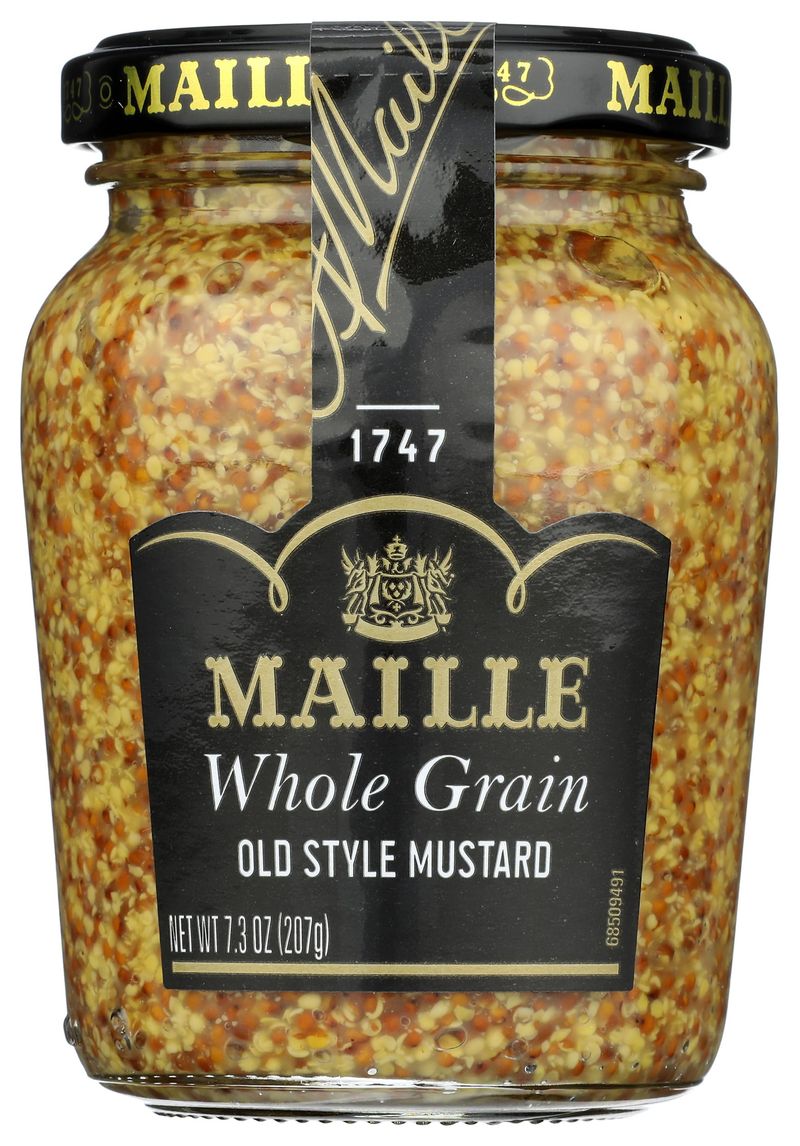
Visible mustard seeds make this jar’s texture part of the topping, not merely something hiding behind its flavor. Maille Whole Grain Old Style Mustard offers a clear departure from smooth yellow mustard when you want more texture in each mouthful.
Maille describes its Old Style mustard as a whole grain preparation, with seeds remaining visible in the finished condiment. That matters on a hot dog because a spoonful forms a textured layer instead of the uniform stripe a smooth mustard provides.
Spread a thin amount inside the bun before adding the sausage if you want the seeds distributed across several bites. Alternatively, spoon it along the top where you can see the coverage and adjust the portion before adding anything else.
My suggested pairing is finely shredded cabbage with a small amount of chopped onion, keeping the vegetables plain at first. You’ll get a useful contrast between the cabbage’s crisp strands and the mustard’s grainy texture without introducing another sauce right away.
Consider the sausage’s texture as well, especially if you enjoy a hot dog with a firm casing and noticeable snap. A softer bun can provide contrast, while heavy layers of crunchy toppings may make the whole bite busier than you intended.
The practical reason to choose this product is its visible grain, rather than an assumption that a French name guarantees sophistication. You don’t need a complicated topping plan to make that feature noticeable, and a modest serving leaves room for adjustment.
Check the label for ingredients and dietary suitability rather than treating whole grain as a promise about what the recipe excludes. These serving ideas are editorial suggestions, not attributed chef preferences; start with a light spread and decide whether you want the next bite to carry more seeds or simply more sausage flavor.
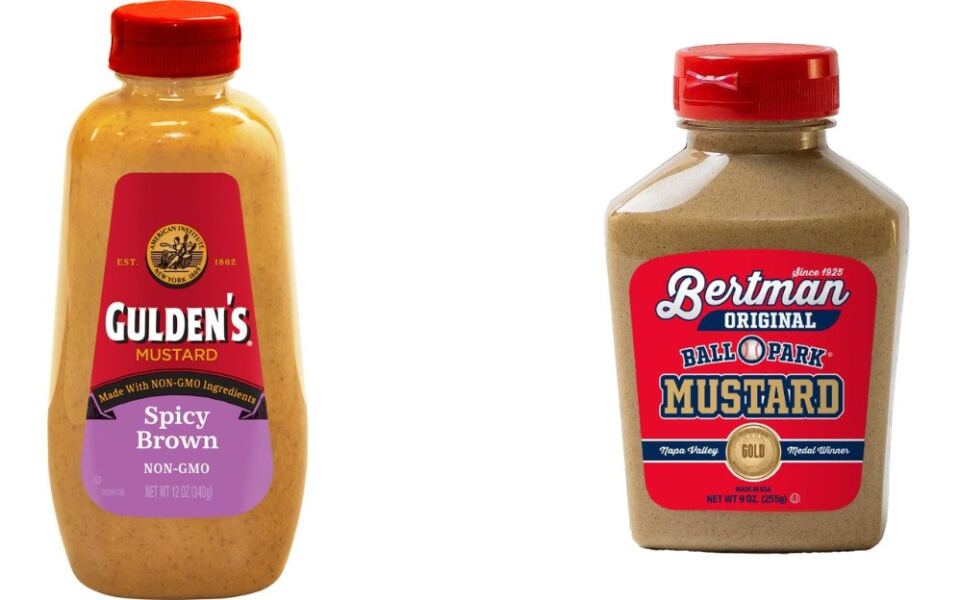
Gulden’s Spicy Brown Mustard
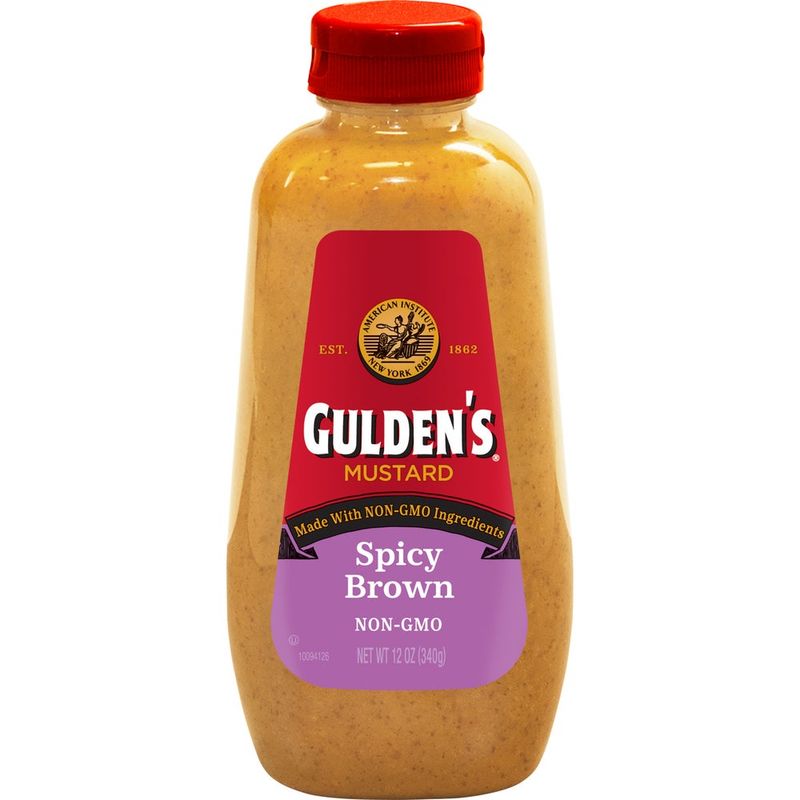
Brown mustard gives your hot dog a different starting point before the first onion lands on the bun. Gulden’s Spicy Brown Mustard belongs to that familiar deli style, with a brown mustard identity rather than the bright appearance of yellow mustard.
The brand traces its roots to Charles Gulden and nineteenth century New York, a useful connection to its deli character. That history provides background, but your choice should still come down to the kind of mustard you enjoy eating today.
Spicy appears in the product’s name, so don’t treat it as interchangeable with a mild yellow mustard when planning portions. Start with a short stripe and adjust after tasting the assembled hot dog, since personal comfort with mustard sharpness can vary.
For a suggested serving combination, put a modest amount of drained sauerkraut over a beef hot dog and add the mustard. Keep the cabbage layer loose enough that you can bite through it without pulling most of the topping from the bun.
You could also use cooked onions instead, especially when you prefer soft toppings to the crunch of raw onion pieces. Let excess cooking liquid drain away first, because a wet bun can become the main event for entirely the wrong reason.
Compared with a whole grain mustard, the point here is less about visible seeds and more about choosing a brown style. Avoid assuming its name tells you the full ingredient list or predicts exactly how strong you’ll find a particular serving.
Read the bottle for the recipe and storage instructions, and keep any dietary decisions tied to that label rather than general mustard lore. No chef preference is established here; this pairing simply gives you a clear way to explore brown mustard while keeping the hot dog recognizable beneath its toppings and comfortably manageable in your hands.
Bertman Original Ball Park Mustard
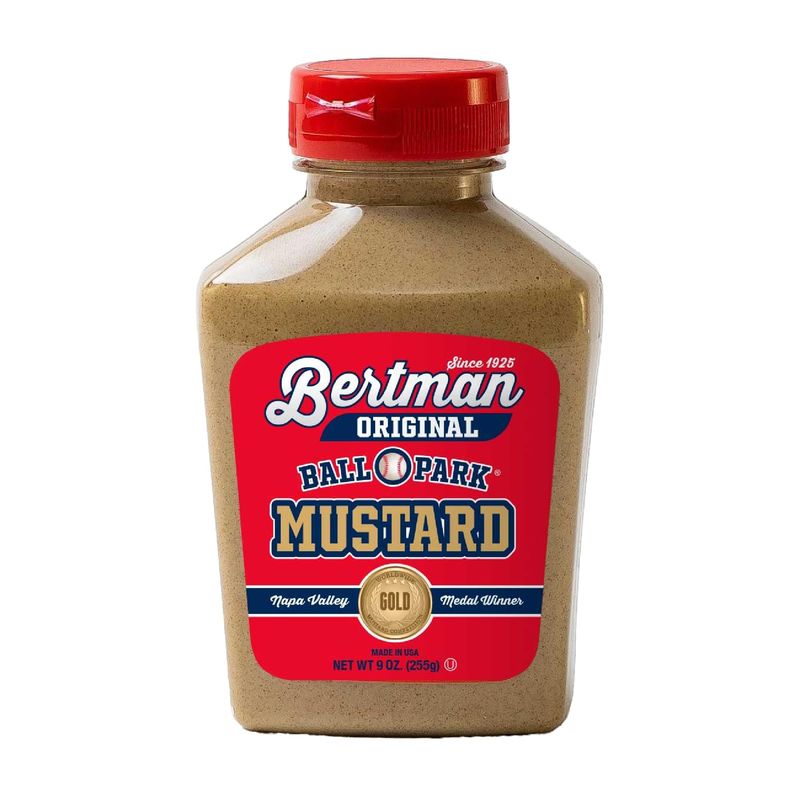
Ball Park is more than a serving suggestion here; it belongs to the actual name of this Cleveland linked mustard. Bertman Original Ball Park Mustard brings a regional baseball connection to a condiment that already feels comfortable beside a hot dog.
Bertman dates its beginnings to 1925 and identifies the mustard closely with Cleveland’s food culture and baseball tradition. That connection gives the product a specific setting, although it doesn’t establish a chef endorsement or tell you how much to squeeze.
Keep the exact name in mind when identifying the product, because similar ballpark wording doesn’t necessarily indicate the same mustard. The required choice here is Bertman Original Ball Park Mustard, not another condiment with a broadly similar name or label.
For my suggested hot dog, begin with the mustard and finely chopped onion, leaving the rest of the bun uncluttered. Small onion pieces make it easier to distribute the topping, so you can compare bites without encountering one oversized chunk halfway through.
A lightly toasted bun is another optional choice if you want a little firmness around the soft bread interior. Toast only until it holds its shape comfortably, rather than making the bread so crisp that it breaks when you fold it.
Its brown mustard identity sets it apart from the smooth yellow option, while the Cleveland connection supplies its own story. Choose it because that style interests you, not because a baseball association can guarantee the exact flavor experience you prefer personally.
Consult the package for ingredients and storage guidance, and confirm availability with the maker before planning around a particular container size. The serving combination here is an editorial idea rather than a documented chef favorite; leave enough space for the sausage, keep a napkin nearby, and let the mustard earn its place one bite at a time.
Share this story