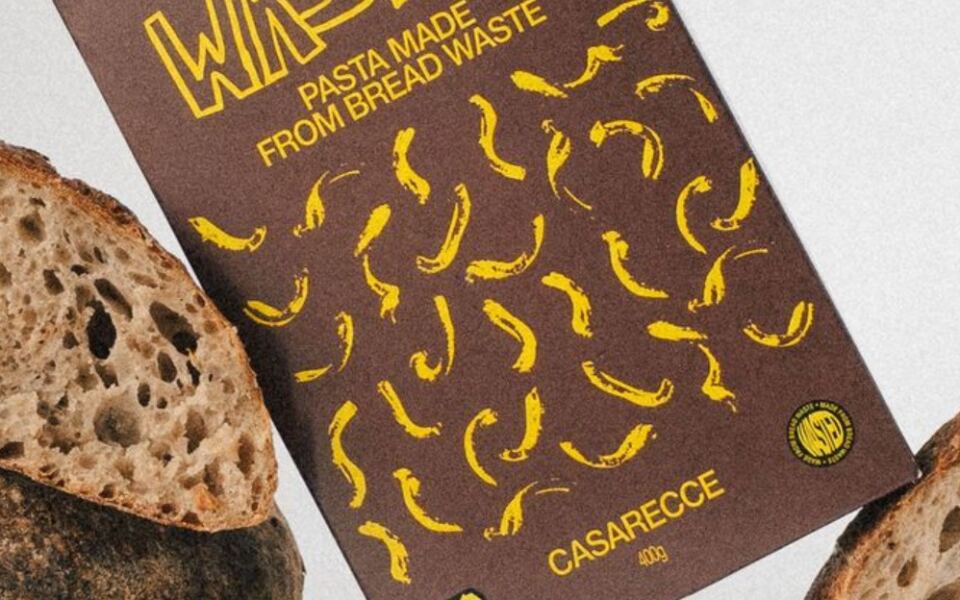
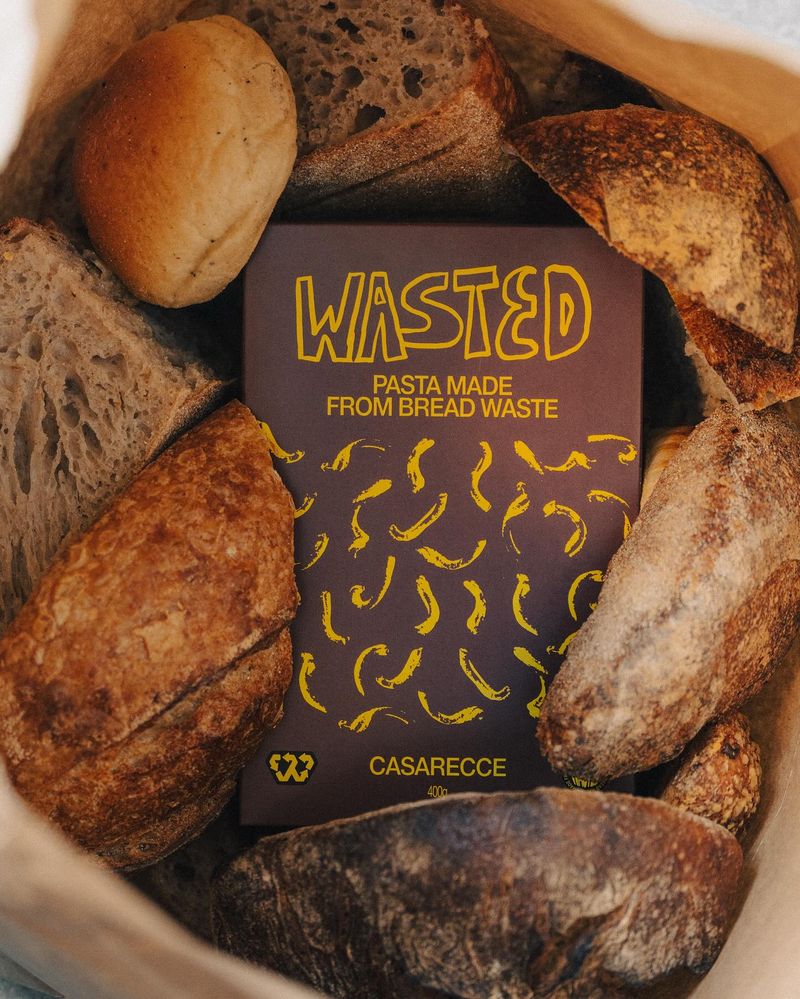
A misshapen bakery loaf can have a surprisingly good second career as a bowl of penne. Wasted, a food brand founded in Copenhagen, turns surplus bread into flour, then uses it to make dried pasta.
The result has reached American grocery shelves, including Whole Foods Market, bringing an unexpected ingredient into a very familiar dinner. Bread becoming pasta sounds like a kitchen experiment with an uncertain ending.
Will it taste like toast? Fall apart in boiling water?
Require a heroic amount of sauce? Those are fair questions, especially when the box is competing with a dependable pantry favorite.
What makes this story interesting is how ordinary the finished meal promises to be. Behind the unusual ingredient are recognizable shapes, straightforward cooking instructions, and a business built around keeping edible food in circulation.
Here’s how those leftover loaves become dinner, what reviewers found, and what shoppers should know before choosing a box.
Meet Wasted, the Brand Giving Leftover Bread a Second Life
Copenhagen courtyard dinners provided an early testing ground for an idea that eventually crossed the Atlantic. Co-founders Leif Friedmann and Jorge Aguilar began sharing pasta with five friends, according to the company’s account of its beginnings.
Those small gatherings grew into larger events, giving the project something a packaging pitch never could: people actually sitting down and eating the product. By its August 2026 U.S. launch announcement, Wasted reported hosting more than 10,000 guests across its events worldwide.
Its American introduction followed the same approach, with community dinners in New York City preceding a broader retail rollout. That dinner-first approach helps explain the brand’s appeal.
An unfamiliar ingredient becomes less intimidating when it arrives under tomato sauce, passed across a table. There’s room for curiosity, but also for the practical questions that matter to cooks.
Does it hold its shape? Is the texture pleasant?
Would anyone want seconds? The founders brought different experiences to those questions.
Reporting from Fi Global Insights traces Aguilar’s interest in upcycling to his work at Copenhagen spirits company Empirical, where production byproducts caught his attention. Friedmann contributed culinary experience.
Their early pasta needed improvement, and feedback from friends, chefs, and scientists helped them refine it over six months. It’s a useful detail in a story that could otherwise sound suspiciously effortless.
Turning surplus ingredients into a reliable grocery product takes more than an appealing mission. A disappointing dinner won’t earn a permanent pantry spot simply because the packaging tells a good story.
Wasted’s challenge was to make the rescued ingredient work well enough that shoppers could focus on dinner. The community meals gave that ambition a tangible test, one forkful at a time, before the pasta had to compete for attention on a supermarket shelf.
How Surplus Bakery Loaves Become Pasta
Twenty-five percent rescued bread is the key figure behind the product. Wasted describes a formulation combining bread flour with traditional semolina, giving the familiar wheat ingredient a substantial role alongside the surplus material.
That balance matters: this isn’t simply a dried loaf pressed into noodle shapes. First, the company sources bread that bakeries can’t sell for reasons such as overproduction, irregular shapes, or packaging changes.
Its FAQ says the bread is collected while suitable for people to eat, then inspected, dried, and milled. Spoiled or moldy loaves are excluded.
The resulting flour is blended with Italian durum wheat. Drying and milling give the bakery surplus a new role as a manufacturing ingredient.
Instead of requiring every loaf to look attractive in a display case, the process makes use of bread’s substance. Its original silhouette stops mattering once it becomes flour.
Getting consistency from that supply was one of the founders’ early hurdles. Fi Global Insights reported that Wasted concentrated on white breads and moved toward larger bakery suppliers to obtain a more reliable input.
The company also shifted from smaller production in Copenhagen to a facility in Alba, Italy, as it expanded. The finished product still belongs firmly in the wheat-pasta category.
The U.S. ingredient list reported by Good Housekeeping includes durum wheat semolina, bread waste flour, and vital wheat gluten. Anyone expecting a gluten-free alternative should keep that distinction in mind.
What changes is the route some of the wheat takes to reach the pot. Part of it has already been baked into bread before being processed into pasta flour.
That extra chapter is the unusual bit. By the time the noodles reach your kitchen, the work of turning a varied bakery surplus into something predictable has already happened.
What Upcycled Food Really Means
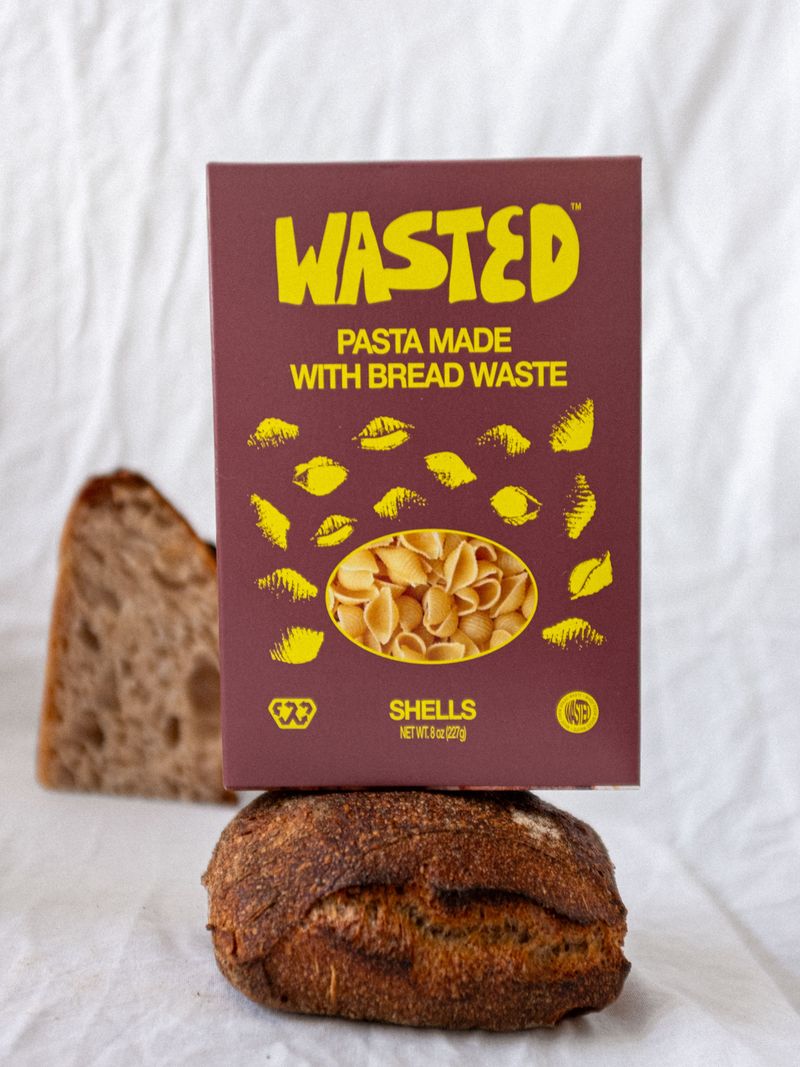
“Leftover” can suggest the heel languishing in a kitchen bread bag. Here, it refers to edible surplus intercepted within the commercial food supply.
Wasted’s explanation centers on bread that loses its sales opportunity before it loses its usefulness. Upcycling gives that ingredient another food application rather than letting its original commercial fate decide whether people can eat it.
The distinction is practical. A loaf might be unsuitable for a particular order because too many were baked, yet remain useful as an ingredient.
Converting it into flour opens another route to the table. Think of the underlying kitchen logic behind breadcrumbs: a food’s usefulness can outlast the purpose for which it was first prepared.
Commercial upcycling applies that resourcefulness through sourcing, processing, and a product shoppers can purchase. There’s also more than one possible destination for surplus bread.
Good Housekeeping reports that Wasted says bread from its supply sources previously went to outlets including animal feed and biogas production, as well as disposal. Keeping it available for human consumption is the specific change the brand is pursuing.
That’s a clearer claim than treating every box as a complete environmental scorecard. Collecting ingredients, drying them, manufacturing pasta, and moving the finished product all remain parts of the process.
The word “upcycled” tells shoppers something meaningful about ingredient sourcing; it doesn’t provide a complete accounting of every resource involved. Wasted pairs that sourcing model with another commitment, stating that it donates one pasta portion for every ten sold.
For shoppers, the most useful question is straightforward: what ingredient is being recovered, and what is being made from it? In this case, the answer is refreshingly concrete.
Bread that missed its first chance to become someone’s meal gets another opportunity in a form that fits neatly into an ordinary pantry.
What to Expect From the Taste and Texture
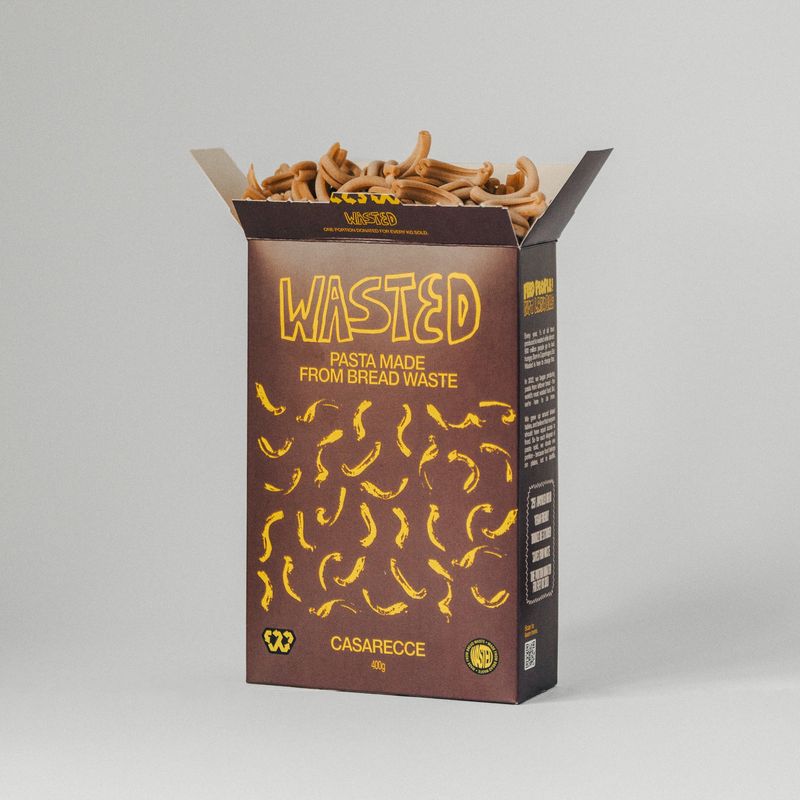
Would a bowl of this pasta announce its bakery origins? Alexandra Foster’s review for The Kitchn suggests the surprise is how familiar it tastes.
After cooking Wasted, she described a pleasantly chewy texture, a successful al dente result, and sauce that stayed on the noodles. She also reported that the flavor didn’t distinguish itself from conventional boxed pasta in the way she had expected.
That’s a useful counterpoint to the brand’s own description, which emphasizes a gently toasted, nutty bread flavor. Both accounts can help set expectations without promising that every diner will perceive the same thing.
A subtle flavor can be easier to notice in plain pasta than beneath a lively sauce. Someone hoping for the unmistakable taste of a sourdough crust may be imagining a much louder ingredient than the reviews describe.
The texture question is equally important. A pasta swap has to survive the basic journey from pot to colander to plate.
Firmness, chew, and the ability to carry sauce affect the meal more directly than the story printed on the carton. Foster’s experience is encouraging on those everyday measures, although it remains one reviewer’s assessment rather than a guarantee for every preparation.
There’s also a distinction between an interesting ingredient and an entirely different eating experience. Wasted retains a wheat-based formulation, so expecting something recognizably close to standard pasta makes sense.
The rescued bread changes the ingredient story without requiring the finished dinner to become unfamiliar. That familiarity may be its strongest practical asset.
A household can disagree about sauces, cheese quantities, and whether there should be more garlic without needing to debate the pasta itself. Based on the published tasting account, bread flour doesn’t demand the spotlight.
It seems content to do the quieter work expected of a good noodle: hold together, offer a satisfying bite, and bring the sauce along.
How to Cook It and Choose the Right Sauce
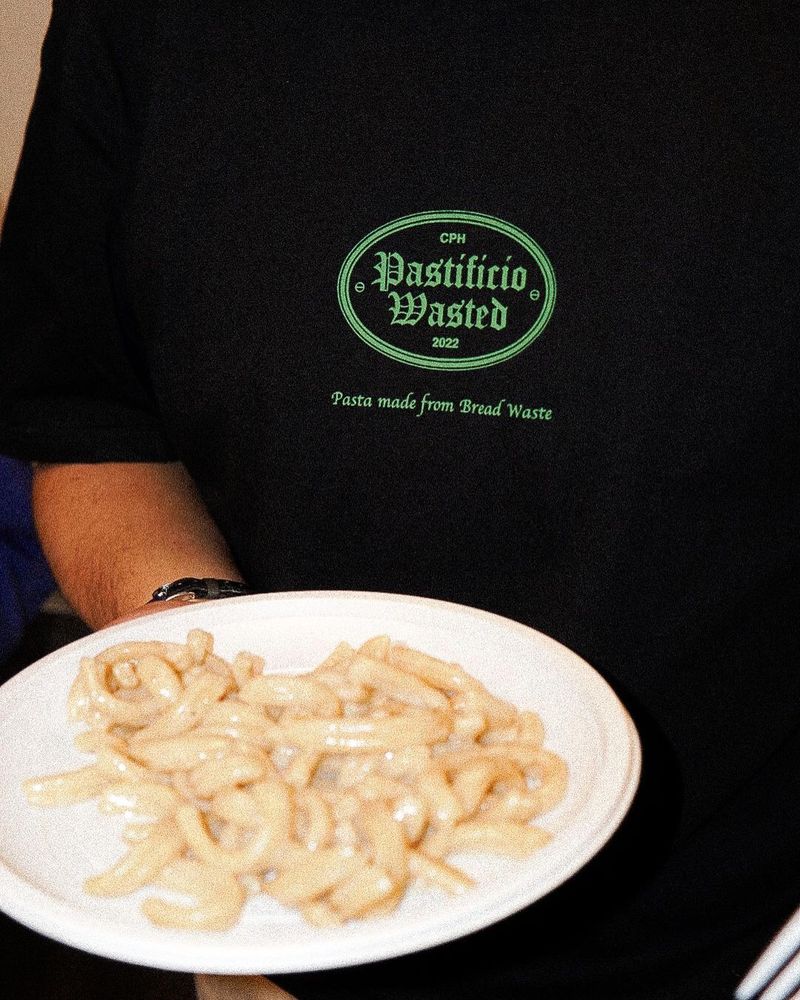
Put the water on before overthinking the bread. The Kitchn’s preparation was reassuringly routine: Foster boiled salted water, cooked the pasta for about eight minutes following the box instructions, drained it, and added sauce.
Her choice was Sauz Wild Rosemary Marinara, a useful real-world example of the pasta working with a ready-made pantry companion. For your own pot, follow the timing on the particular package and taste a piece as it approaches readiness.
If you plan to finish the pasta in a skillet of hot sauce, allow for that additional cooking when deciding when to drain. The goal is a pleasing bite on the plate.
A splash of reserved cooking water can help loosen a thick sauce as you toss everything together. There’s no need to build a special recipe around the rescued bread.
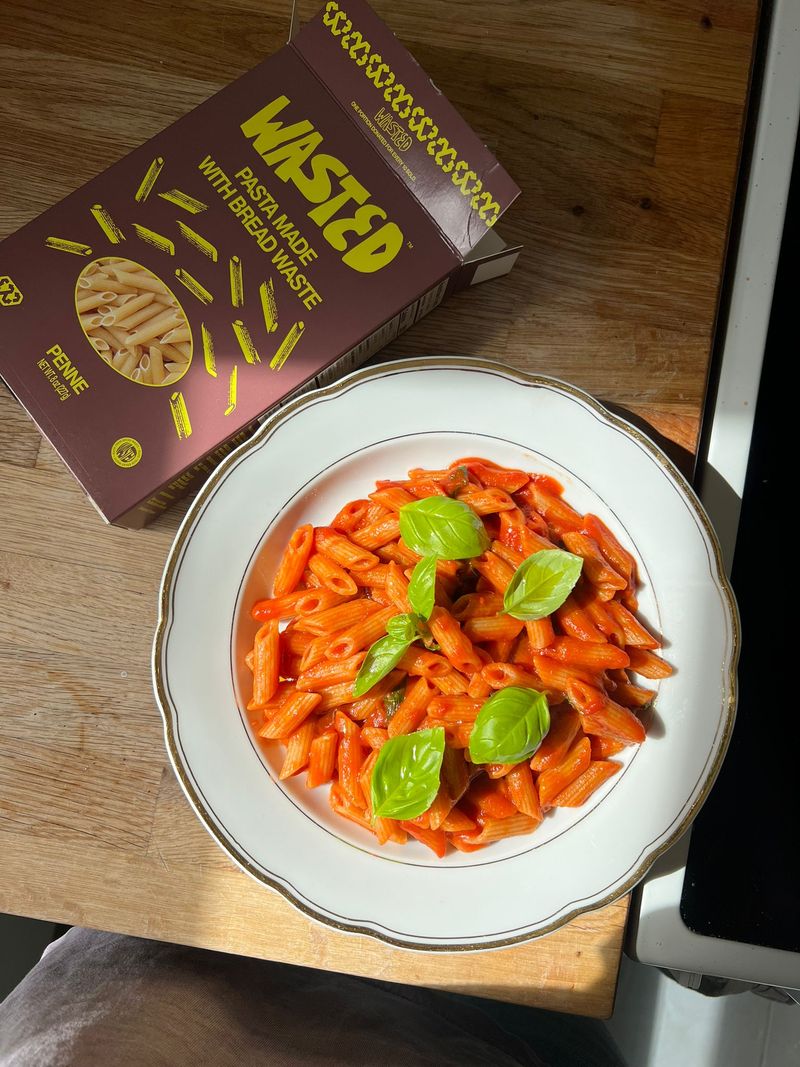
For a first serving, a simple tomato sauce provides an easy point of comparison with the pasta you usually buy. Olive oil, garlic, and a little grated cheese offer another uncomplicated option, particularly if you’re curious about the brand’s toasted-flavor description.
Those are serving suggestions, rather than combinations tested for this article. Shape can guide the next dinner.
The U.S. range includes rotini, shells, and penne. Consider rotini with basil pesto and peas, shells with a tomato-and-white-bean sauce, or penne with sautéed mushrooms and parsley.
Each gives the pasta a familiar job without making dinner feel like a product demonstration. A baking dish is another possibility, though the same timing principle applies: pasta that will spend more time in a hot sauce needs attention before it leaves the boiling water.
Start simply, taste as you cook, and let the sauce determine the finishing touches. The unusual ingredient has already undergone its transformation at the factory; there’s no extra bread-related technique to master at the stove.
Where to Find Wasted Pasta and Try It Yourself
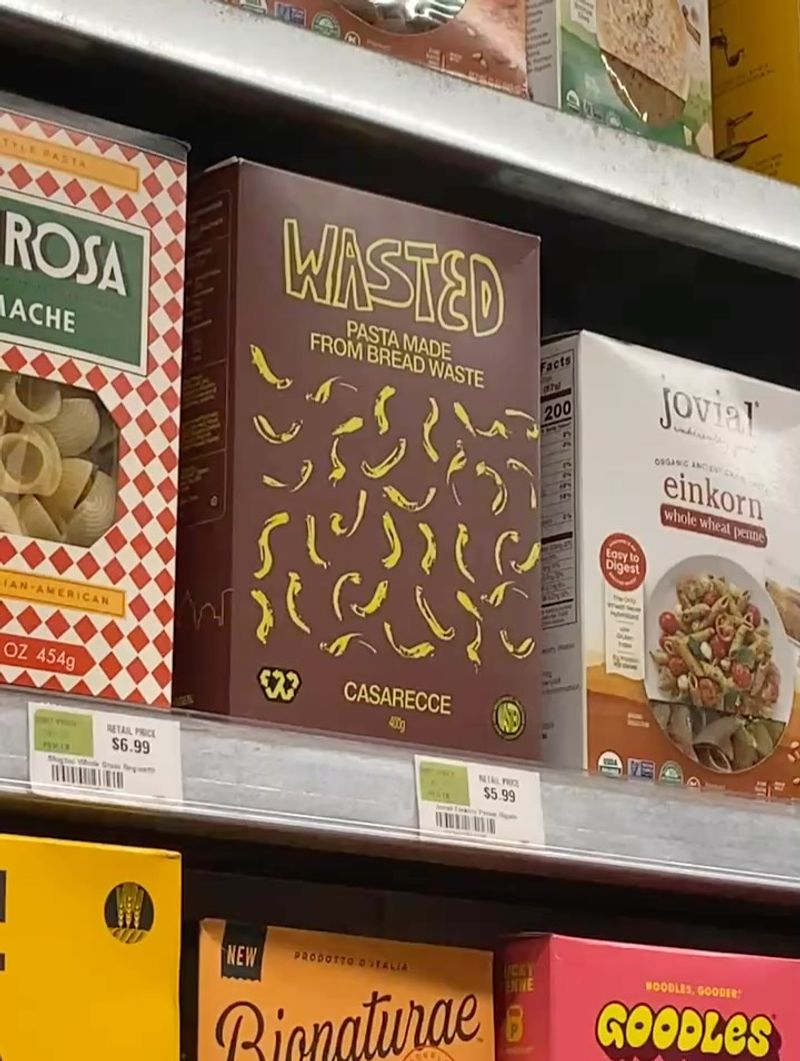
At a suggested $3.99 for an eight-ounce box, this purchase deserves a quick look at the package size. Progressive Grocer reported that price for Wasted’s U.S. range of rotini, penne, and shells in August 2026.
Eight ounces is half a pound, so the equivalent cost for a full pound would be $7.98 at that suggested price. That calculation makes comparisons easier when nearby pasta comes in a larger carton.
The number on the shelf tag matters, but so does the amount going into the pot. For a household accustomed to cooking a pound at once, two of these boxes would supply the same dry weight.
Actual checkout prices can differ from the suggested retail figure. Whole Foods Market is an established retail outlet for the brand, and Wasted’s website currently highlights that availability.
Misfits Market was also named in the company’s U.S. launch announcement. Those names establish where the rollout has landed, though a national retail presence doesn’t mean every shape will be sitting in every store on a particular afternoon.
Local stock remains the detail that determines whether a planned penne dinner actually becomes penne. For shoppers comparing options, the decision comes down to familiar considerations: package size, cost, ingredients, and whether the pasta suits the meal.
The recovered bread adds another reason someone might choose it, but it doesn’t erase those ordinary grocery calculations. That’s also what makes the move onto mainstream shelves interesting.
Upcycled food becomes easier to understand when it appears in a recognizable format alongside products people already know how to use. A Copenhagen project built around shared dinners has reached the point where someone can encounter it while shopping for tomato sauce.
The loaf’s second career ends somewhere comfortably familiar: in a bowl, with a fork beside it.
Share this story