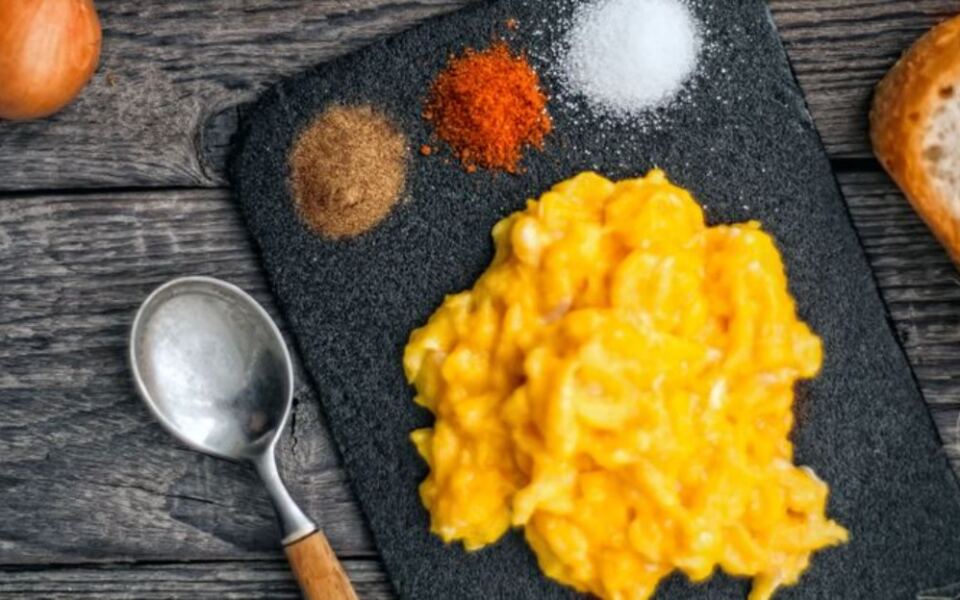
A single spoonful of sour cream can turn plain scrambled eggs into something soft, rich, and almost silky. That’s the trick, and it lives in your fridge right now.
Chefs like Anthony Bourdain and Bobby Flay have used tangy dairy to make their eggs better. Below, you’ll learn why it works, how much to add, and a few smart backup ingredients for mornings when the tub is empty.
Meet the Star: A Spoonful of Sour Cream
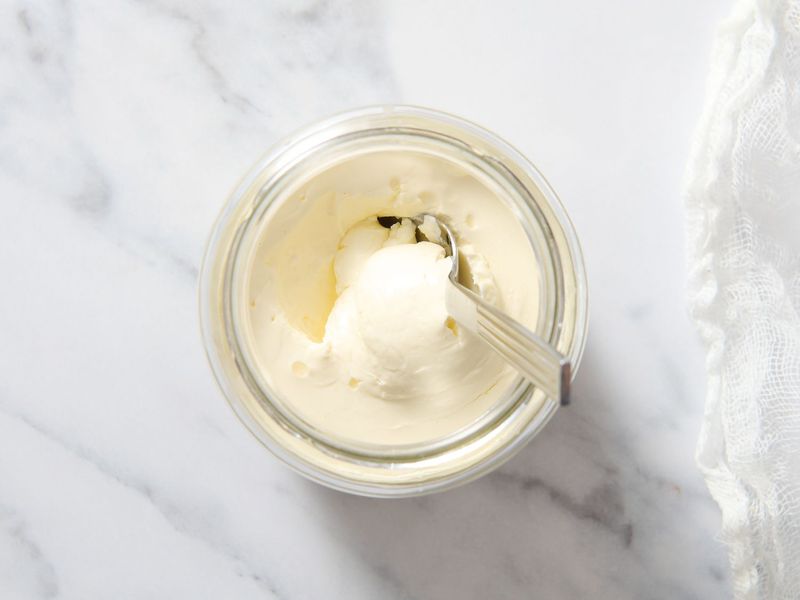
Sour cream is the quiet hero of the breakfast table. Most people save it for tacos or baked potatoes.
Stirred into eggs, though, it does something pretty magical.
When you add sour cream, your scramble turns out softer, creamier, and a little more tender. You also get a gentle tang that wakes up the flavor without tasting sour.
It’s a lot like how a squeeze of lemon brightens soup. You notice the difference, but nothing feels out of place.
The best part is how easy it is. You don’t need fancy tools or chef training.
You just need a tub you probably already own and about thirty extra seconds.
Plenty of food writers and cooks point to sour cream as a top choice for creamier eggs. That kind of agreement is rare in the kitchen, where people argue about everything from salt to spatulas.
So next time you crack eggs into a bowl, reach past the milk. Grab the sour cream instead.
Your plain old breakfast might suddenly feel like something from a cozy diner, and you made it in your pajamas.
Why Your Eggs Get So Soft and Tender
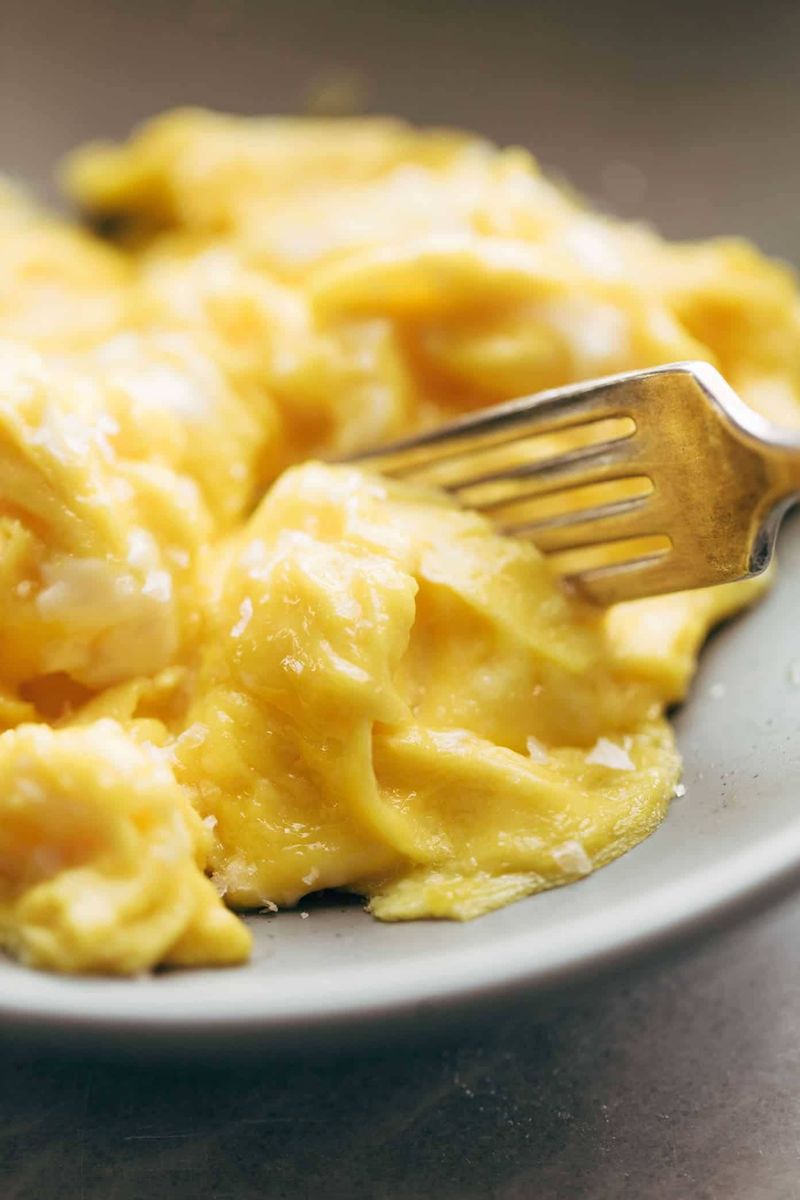
A little kitchen science explains the whole trick. Eggs are packed with proteins.
When they heat up, those proteins tighten and squeeze out water, which is why overcooked eggs turn dry and rubbery.
Sour cream works against that in two ways. First, its fat coats the proteins and keeps them from clumping too tightly.
Think of it like putting a soft blanket between tiny pieces of a puzzle so they can’t snap together too hard.
Second, sour cream is slightly acidic. That acid helps break down egg proteins a little, which leads to a more tender bite.
The result is a scramble that feels smooth instead of squeaky.
Fun fact: this is the same reason buttermilk makes pancakes and fried chicken so tender. Acid and dairy are a powerful team in many recipes.
Knowing the why makes you a smarter cook. Once you understand that fat and acid protect your eggs, you can start spotting other ingredients that do the same job.
You’ll never look at your fridge the same way again, and honestly, that’s a fun superpower to have before 8 a.m.
Get the Amount Just Right
Here’s an easy rule to remember: one tablespoon of sour cream for every two eggs. Making four eggs?
Use two tablespoons. Feeding the whole family with a dozen?
That’s six tablespoons.
Why not just dump in a big scoop? Too much sour cream can make eggs heavy or a bit too tangy.
You want it to support the eggs, not take over the plate. A tablespoon per two eggs hits that sweet spot of creamy and balanced.
If you like a bolder tang, you can nudge it up slightly next time. Cooking is a little like tuning a guitar.
You adjust until it sounds right to you.
A regular measuring spoon works great here. After a few tries, you’ll probably be able to eyeball it with a normal kitchen spoon.
Many home cooks end up doing that anyway.
One more tip: full-fat sour cream gives the richest result. Since fat is a big part of the magic, the light versions may not deliver the same silky texture.
Save the low-fat tub for dips and give your eggs the good stuff.
Before the Pan or at the Finish Line?
Good news for indecisive cooks: both ways work. You can whisk the sour cream into raw eggs, or fold it in near the end of cooking.
Each method gives a slightly different result.
Whisking it in first spreads the creaminess evenly through every bite. Beat the eggs and sour cream together until smooth with no white streaks.
Then pour the mix into your pan and cook as usual.
Folding it in at the end gives you little pockets of cool, creamy richness. Add it when the eggs look almost done but still glossy.
Give a few gentle stirs, then take the pan off the heat.
Which one should you choose? Try both on different mornings and see which you like more.
Some people love the smooth, even style. Others enjoy the contrast of warm eggs and creamy swirls.
Either way, the extra step takes seconds. There’s no wrong answer here, which is refreshing for a breakfast food that so many people stress about.
Think of it as choosing between two great songs. Whichever plays, you’re still having a good time.
The Fancy Cousin: Crème Fraîche
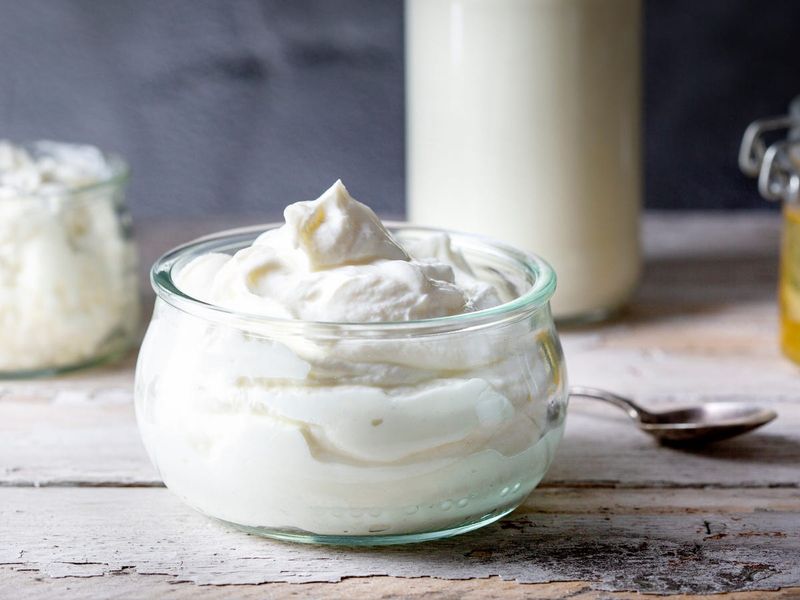
Crème fraîche is often called French sour cream, and it’s the dressed-up version of our star ingredient. It has a higher fat content and a thicker texture than regular sour cream.
That extra richness makes eggs even silkier.
Chef Bobby Flay is known for using crème fraîche in his creamy scrambled eggs. He’s even been noted for starting them in a cold pan.
That way, the eggs heat up slowly and stay tender.
The flavor of crème fraîche is milder and less sharp than sour cream. It tastes rich and buttery with just a hint of tang.
If sour cream feels a bit too bold for you, this could be your perfect match.
You’ll usually find it near the specialty cheeses or cream in the grocery store. It does cost more, so many people save it for weekend brunch or special mornings.
Try folding a spoonful into eggs right before they finish. Top with chopped chives and serve on warm toast.
Suddenly your kitchen feels like a little café, and nobody needs to know it took ten minutes.
Out of Sour Cream? Try Mayo
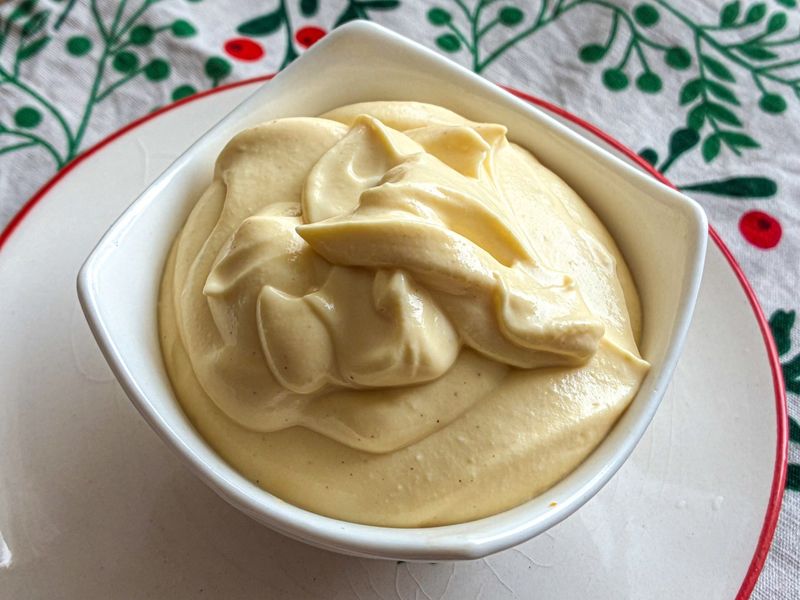
Mayonnaise in eggs sounds strange at first. Stick with it, though.
Food expert Alton Brown recommends it, and the logic is surprisingly simple.
Mayo is basically an emulsion of eggs, oil, and acid. So you’re really adding more egg, plus fat and a splash of tang.
Those emulsifiers help create softer, smoother curds that slide around the pan nicely.
Use about half a teaspoon to one teaspoon of mayo per egg. Whisk it into the beaten eggs before cooking until it fully blends.
Small amounts like this won’t make your breakfast taste like a sandwich spread.
This swap is great for anyone who keeps mayo around but rarely buys sour cream. It’s also handy on busy school mornings when the fridge looks a little empty.
Curious kids might enjoy testing it as a mini science experiment. Cook one batch plain and one with mayo, then compare.
Which one feels softer? Which one tastes better?
It’s a tasty way to learn how ingredients change food, and you get breakfast at the end of the lesson.
Cheesy Swaps With a Silky Payoff
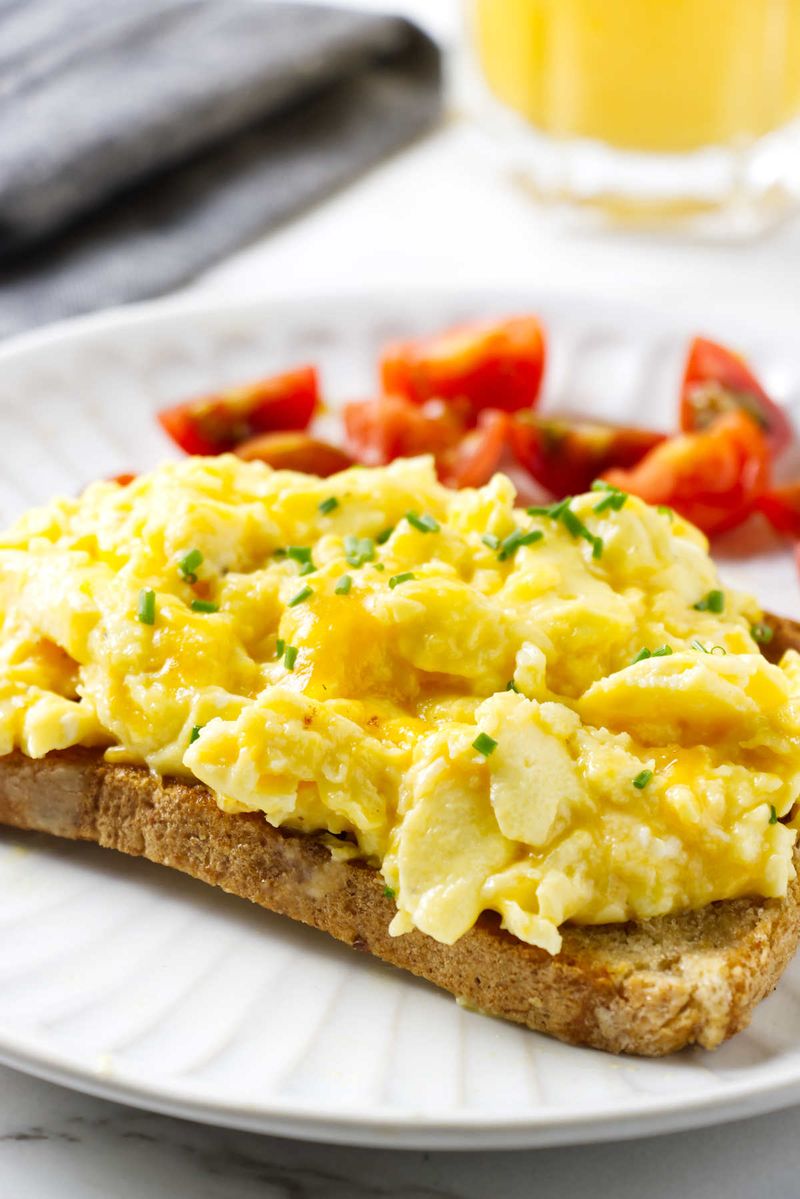
Cream cheese and ricotta both bring something special to the pan. Neither one makes eggs stringy like shredded cheddar.
Instead, they melt into a soft, smooth richness.
Chef Nelson Serrano-Bahri, director of innovation at the American Egg Board, suggests cream cheese for a slightly tangy flavor and creamy texture. Add about half a tablespoon per egg once the eggs are almost set.
Small cubes melt faster than one big chunk.
Ricotta takes a gentler path. Chef Ina Garten is known for using it to give scrambled eggs a custard-like feel.
Its mild, milky taste pairs well with herbs like basil or chives.
Both cheeses are easy to find and work well for bagel lovers or pasta fans who have leftovers. Got half a tub of ricotta from lasagna night?
Breakfast just got an upgrade.
Stir gently once the cheese goes in. You want soft swirls, not a gluey mess.
Pull the pan off the heat while everything still looks a little shiny, and enjoy a plate that feels way fancier than your effort level.
Starch and Cream: Old Tricks That Still Work
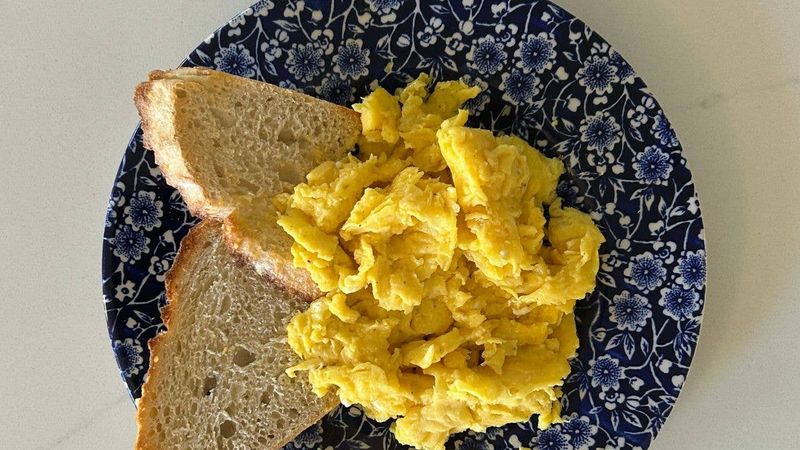
Potato starch might be the most unexpected helper on this list. Mix a little with milk to make a smooth slurry, then whisk it into your eggs.
Cornflour, also called cornstarch, works the same way.
The starch binds water with the egg proteins. That keeps the eggs from squeezing out liquid and turning chewy.
Even better, it helps them stay creamy if your heat runs a bit high.
That makes starch a smart pick for beginners. Everyone has rushed breakfast with the burner turned up too far.
A slurry gives you a little safety net.
Heavy cream is the classic choice that many grandparents swear by. Its high fat content slows down how fast the egg proteins set.
Slower setting means softer, creamier curds.
A splash is plenty. Too much cream can make eggs watery, which defeats the whole point.
Think a tablespoon or so for a few eggs.
Both options prove that creamy eggs aren’t a brand-new trend. Cooks have been chasing that perfect texture for a long time, and these tricks have earned their spot.
Low Heat, Butter, and Knowing When to Stop
Even the best ingredient can’t save eggs blasted on high heat. Technique matters just as much as what goes in the bowl.
Luckily, the rules are simple.
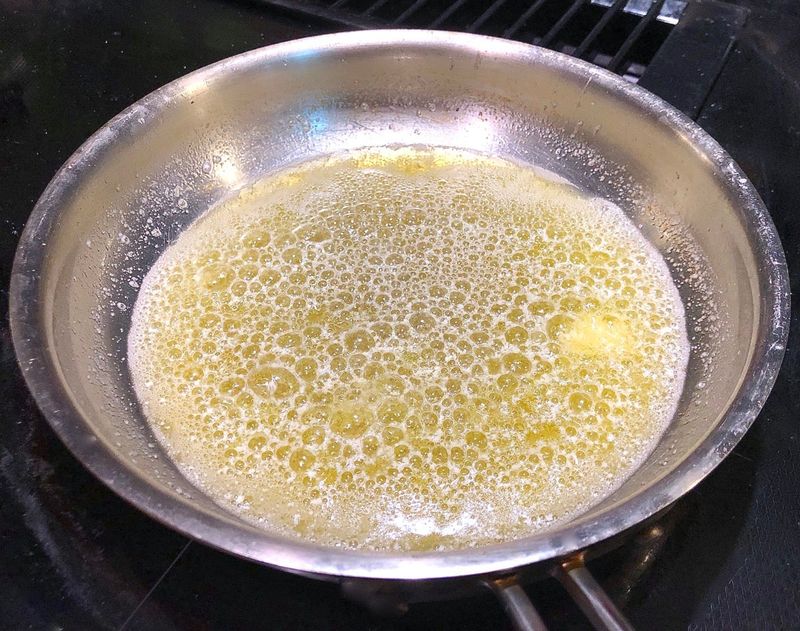
Start with butter. It adds flavor and makes eggs noticeably creamier.
Olive oil or even a little bacon fat can work too, if that’s what you have.
Next, keep the heat low and stir gently the whole time. Slow cooking gives you small, tender curds instead of big rubbery chunks.
Yes, it takes a few extra minutes. Your patience gets paid back in every bite.
The biggest secret? Take the pan off the heat while the eggs still look slightly wet.
They’ll keep cooking from the leftover warmth in the pan. Wait until they look fully done, and they’ll be dry by the time they hit your plate.
Some cooks also salt their eggs five to ten minutes before cooking, a tip shared by The Food Lab and Alton Brown. Try it if you’re curious.
Pair these habits with a spoonful of sour cream, and you’ll have the creamiest scramble on your block.
Share this story