Beans can turn a party dip into a source of both fiber and protein, without asking chips to leave the table. That small change opens up plenty of room for creamy spreads, bright vegetables, and bold seasonings that make snack time feel generous rather than strict.
I like a party spread that gives guests choices, including familiar favorites and a few bowls that spark curiosity without requiring a speech about nutrition. A good dip can help you serve more vegetables, use simple pantry staples, and offer something satisfying while the main dish finishes cooking or the next game gets started.
The ideas below follow common dietitian recommendations, such as including beans, vegetables, and unsaturated fats, rather than claiming individual professional endorsement. You’ll find practical mixing tips, serving ideas, and food safety reminders, because a thoughtful party snack should leave you free to enjoy the party too.
1. Lemon Garlic Hummus
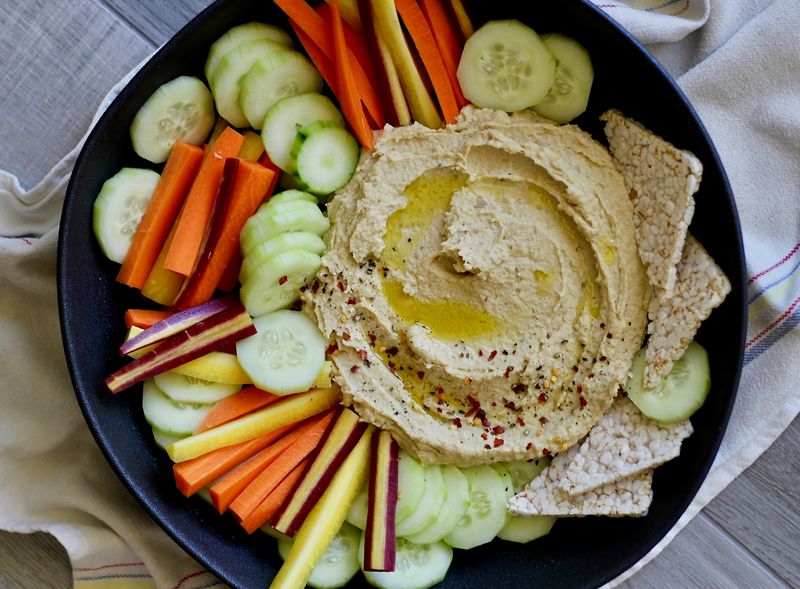
A can of chickpeas has excellent party potential, especially when a blender joins the planning committee. Blend drained chickpeas with tahini, lemon juice, garlic, and cold water, and you have a creamy dip that brings plant protein and fiber to the snack table without requiring much preparation or fancy equipment.
For a simple batch, start with one can of chickpeas, two tablespoons of tahini, and two tablespoons of lemon juice. Add a small garlic clove, then blend while pouring in water a spoonful at a time until the mixture reaches a texture you can scoop easily with vegetables or pita.
Give the dip a taste before adding salt, especially if your canned beans already contain some. Rinsing canned chickpeas can reduce their sodium, while lemon zest, cumin, and chopped parsley add flavor without making salt carry the whole performance, which is a fairly demanding job for one tiny pantry ingredient.
Set out cucumber spears, carrot sticks, bell pepper strips, and whole wheat pita alongside the bowl. Offering several dippers gives guests choices, and the mix of crunchy vegetables and soft bread keeps the spread interesting without turning your grocery list into a major project before friends arrive at your door.
Hummus suits a casual open house because you can prepare it before guests arrive and refrigerate it in a covered container. Stir before serving, then add water if needed, since the dip may thicken while chilled, and finish with paprika or herbs rather than a heavy layer of extra oil.
Remember that tahini contains sesame, a major food allergen, so label the bowl clearly for guests. Put out a small serving and keep the backup refrigerated, replacing it as needed rather than letting the full batch sit out through a long afternoon of chatting, snacking, and debating the next playlist.
2. Greek Yogurt Ranch Dip
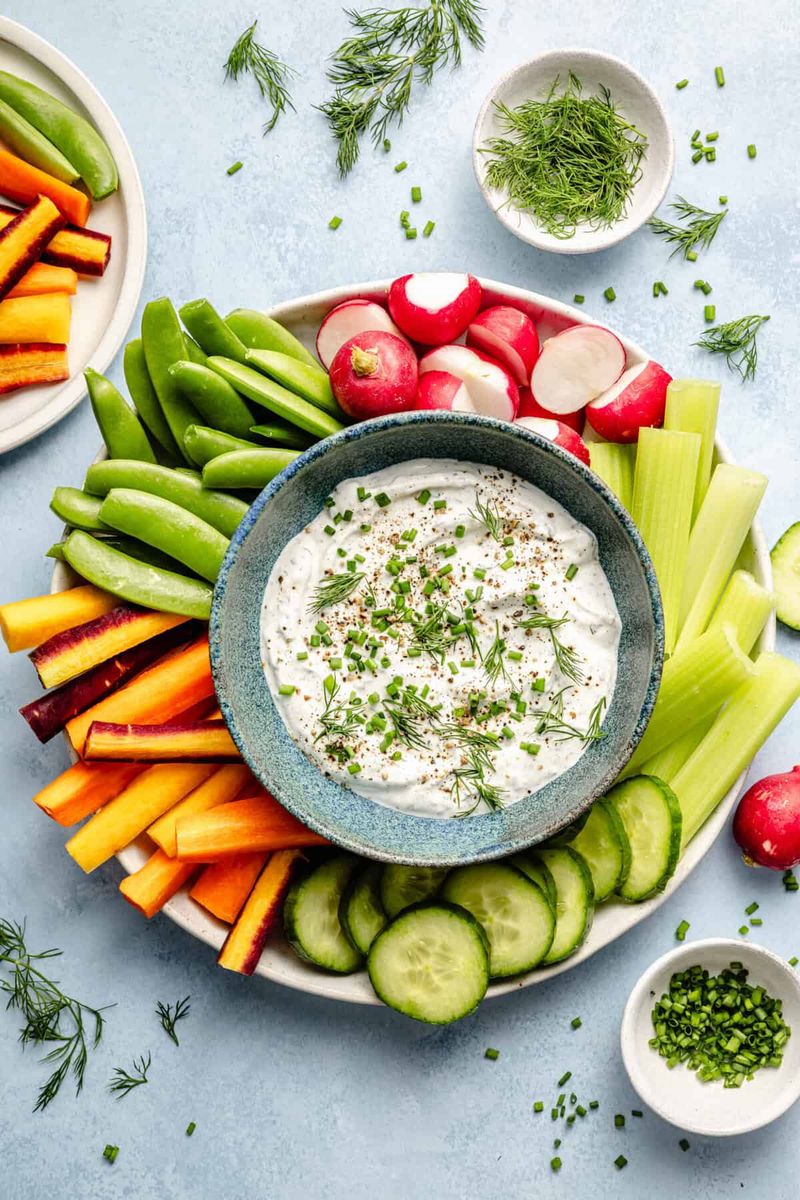
Ranch can keep its familiar herb flavor while plain Greek yogurt takes over the creamy base. You get protein from the yogurt, plus an easy way to serve crunchy vegetables at a birthday gathering, game night, or casual lunch without asking guests to learn an entirely new snack vocabulary first.
Stir one cup of plain Greek yogurt with dried dill, chopped chives, garlic powder, and onion powder. Start with small amounts, then add lemon juice and a splash of milk or water if you want a looser dip, giving the herbs time to soften before deciding whether it needs more.
Choose the yogurt that fits your taste and needs, rather than assuming one fat level suits everyone. Plain varieties let you control the seasoning without added sweetness, and checking the label helps you compare protein, saturated fat, and sodium when several tubs are competing for space in your shopping cart.
A vegetable tray feels more inviting when the pieces are easy to grab and sturdy enough for dipping. Try snap peas, cucumber rounds, carrot sticks, and broccoli florets, cutting larger pieces down so guests can enjoy them comfortably without needing a plate balanced on one knee and impressive engineering skills.
For a children’s party, serve a mild version and put extra pepper or herbs beside the bowl. Avoid making promises that a dip will convince a reluctant eater, but offer vegetables without pressure and let guests decide which combinations work for them during the meal or between planned party activities.
Prepare the mixture ahead and refrigerate it so the flavors have time to come together before serving. Dairy dips need cold storage, so nest the serving bowl over ice during longer gatherings and use clean utensils, with a clear milk allergen label where guests can read it before they scoop.
3. Black Bean Lime Dip
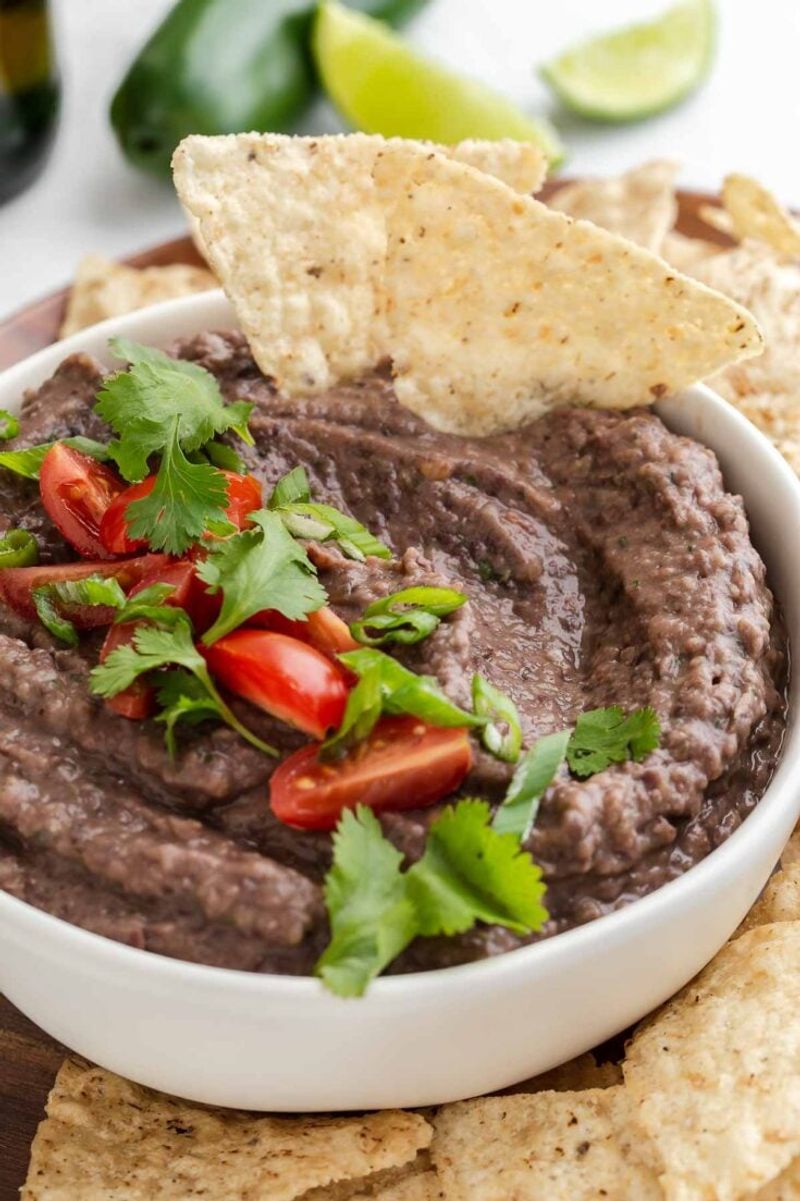
Your pantry might already hold the main ingredient for a dip that can handle a lively game night. Black beans bring fiber and plant protein, while lime juice and cumin help build flavor without requiring a long ingredient list or a last minute trip for something you will use once.
Drain and rinse two cans of black beans, then blend them with lime juice, cumin, and a small garlic clove. Add water gradually until the dip becomes scoopable, leaving a little texture if you prefer a rustic bowl rather than a spread that looks completely smooth from edge to edge.
For more depth, soften chopped onion in a small amount of olive oil before adding it to the blender. You can also mix in chopped cilantro or a spoonful of salsa, but taste as you go because salsa and canned beans may already contribute enough sodium for your own preference.
Offer bell pepper strips, jicama sticks, and corn tortilla wedges as dippers, keeping the choices easy to recognize. Whole grain options can add fiber, but chips still belong at a party if you enjoy them, and pairing them with beans gives the snack more substance than chips served by themselves.
A black bean dip makes a practical centerpiece for a build your own snack board with separate toppings. Put diced tomatoes, sliced scallions, and chopped jalapeño in small dishes so guests can choose their own heat level, which prevents one enthusiastic pepper fan from seasoning the entire bowl for everyone.
Make the dip ahead, cover it, and keep it refrigerated until you are ready to set the table. Use a small serving bowl and replenish it with chilled dip during longer gatherings, then save any untouched refrigerated portion for spreading inside lunch wraps or serving beside rice the following day.
4. Avocado Pea Guacamole
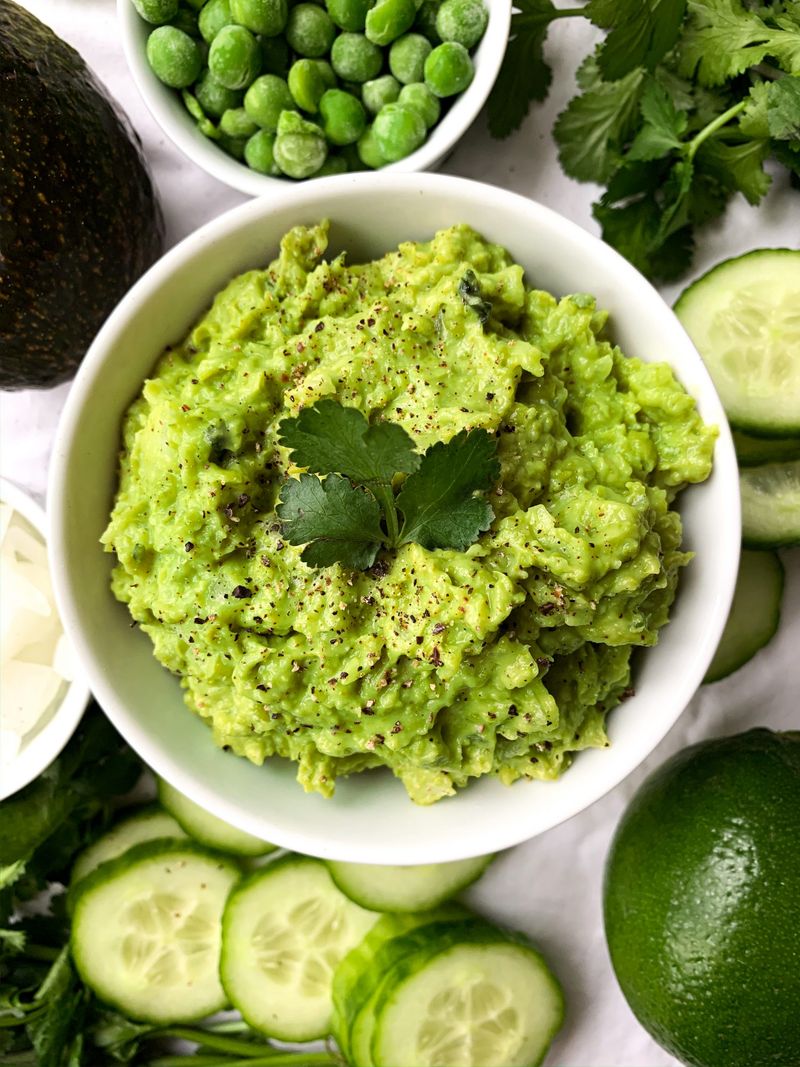
Frozen peas can join the guacamole bowl without asking avocado to surrender its starring role at the party. They add fiber and some plant protein, while avocado supplies mostly unsaturated fat, creating a dip that works well when you want a familiar favorite with a slightly different ingredient mix inside.
Thaw half a cup of peas according to the package directions, then cool them before blending or mashing. Fold them into two mashed avocados with lime juice, finely chopped onion, and cilantro, adjusting the amount of peas if you prefer the avocado flavor to stay more prominent in the bowl.
Keep some texture by using a fork for the avocado rather than sending the entire mixture through a blender. A small amount of diced tomato adds another vegetable, while minced jalapeño brings heat that you can control, especially when your guest list includes people with very different ideas about spicy.
For a backyard gathering, pair the dip with cucumber spears, radish slices, and your favorite tortilla chips. Consider smaller serving dishes scattered near the food rather than one oversized bowl, since shorter trips to the dip can reduce crowding and make it easier to keep spare portions properly chilled indoors.
Lime juice adds flavor but does not reliably prevent browning or make guacamole safe at room temperature indefinitely. To limit contact with air before serving, press food safe wrap against the surface and refrigerate the covered container, understanding that some color change can still happen despite your best preparation efforts.
Avocado provides useful nutrients, but portions still depend on appetite, the rest of the meal, and individual needs. Let guests serve themselves without turning the snack table into a nutrition lesson, and label the peas clearly so anyone expecting traditional guacamole knows about the extra ingredient before taking a scoop.
5. Spinach White Bean Dip
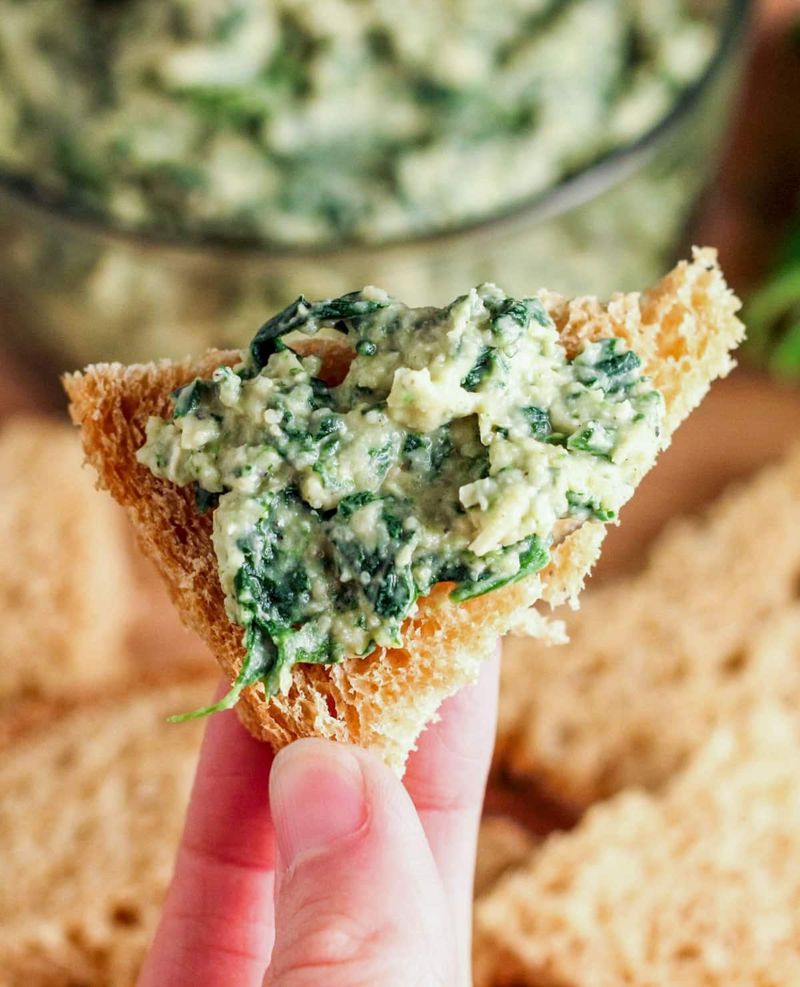
Spinach dip can lean on beans for body instead of asking cheese to do the entire construction job. Cannellini beans blend into a mild base with fiber and plant protein, giving you room to add leafy greens, lemon, and garlic without making the recipe difficult to prepare for your guests.
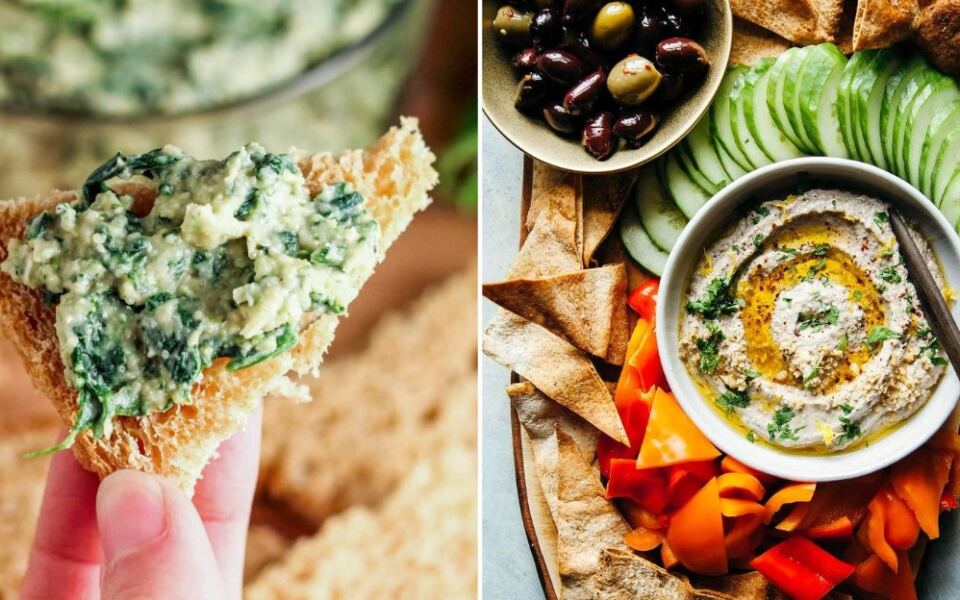
Start with one can of drained, rinsed white beans and a cup of cooked spinach with excess moisture squeezed out. Blend the beans with lemon juice, a tablespoon of olive oil, and a little water, then fold in the chopped spinach so you can control the texture of the finished dip.
Frozen spinach works here, provided you follow its cooking instructions and drain it thoroughly before mixing it with the beans. Extra liquid can make the dip thinner than intended, so press the spinach in a clean towel or use a fine mesh strainer before adding more water to the blender.
Season with black pepper, garlic, and a pinch of nutmeg if that flavor appeals to you and your guests. A modest sprinkle of Parmesan is optional, but the beans can carry the recipe without dairy, which gives you flexibility when planning a menu around different food preferences or allergy needs.
Serve the dip with whole grain toast points, sliced bell peppers, or firm cucumber sticks during a family lunch. You can offer it chilled or heat it thoroughly before serving, but keep either version at a safe temperature rather than leaving the dish on the table throughout a long gathering.
Check ingredient labels before calling a batch dairy free, especially if you add prepared seasonings or a cheese substitute. For leftovers, refrigerate promptly in a covered container and use a clean spoon when serving again, perhaps as a sandwich spread that makes tomorrow’s lunch feel less like an afterthought altogether.
6. Roasted Red Pepper Walnut Dip
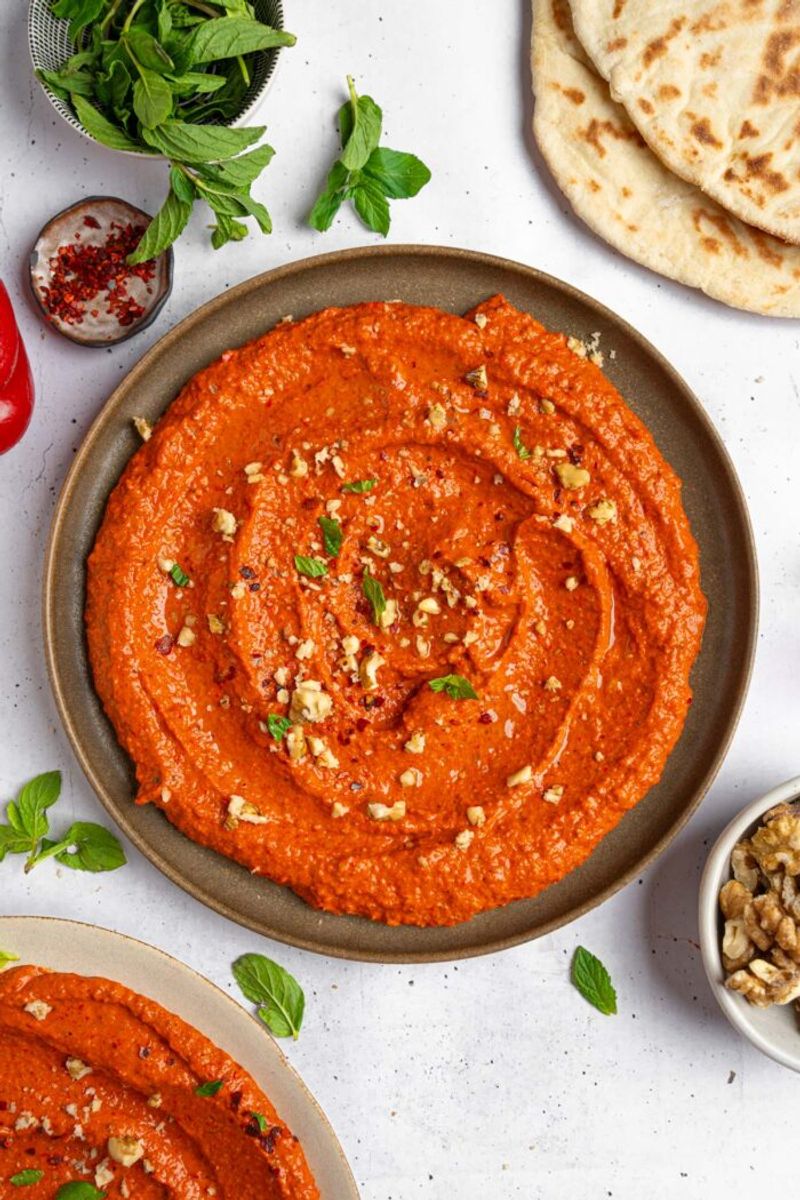
A jar of roasted peppers can give your party table a colorful centerpiece without requiring oven space. Blend the peppers with walnuts, lemon juice, and seasonings for a dip that combines vegetables with unsaturated fats, then serve it at a gathering where guests enjoy trying something beyond the usual creamy bowls.
Drain one jar of roasted red peppers well, then blend with half a cup of walnuts and lemon juice. Add cumin, garlic, and a small amount of olive oil as needed, stopping before the mixture becomes completely smooth if you want the nuts to leave a little texture behind here.
Some versions of pepper and walnut dips include breadcrumbs, which help absorb moisture and build a thicker consistency. You can add a spoonful at a time if needed, choosing whole wheat crumbs for extra whole grain ingredients or a suitable gluten free option when that matches your guests’ dietary requirements.
Walnuts contribute nutrients, but they also make this dip unsuitable for guests with a walnut allergy. Place a clear label beside the bowl and give it a separate serving spoon, keeping nearby crackers and vegetables from becoming shared landing spots for utensils that have already touched the nut containing mixture.
At a dinner party, pair the dip with flatbread triangles, cucumber rounds, and roasted cauliflower that has cooled safely. Its pepper base brings variety to a spread that may already include several bean or yogurt dips, while a smaller bowl lets guests sample it without committing to a large portion.
Taste before adding salt because jarred peppers and packaged breadcrumbs can both contribute sodium to the finished recipe. Refrigerate the dip until serving, and reserve some in a separate container for later meals, where a spoonful can add flavor to a grain bowl or a simple sandwich filled with vegetables.
7. Cucumber Dill Tzatziki
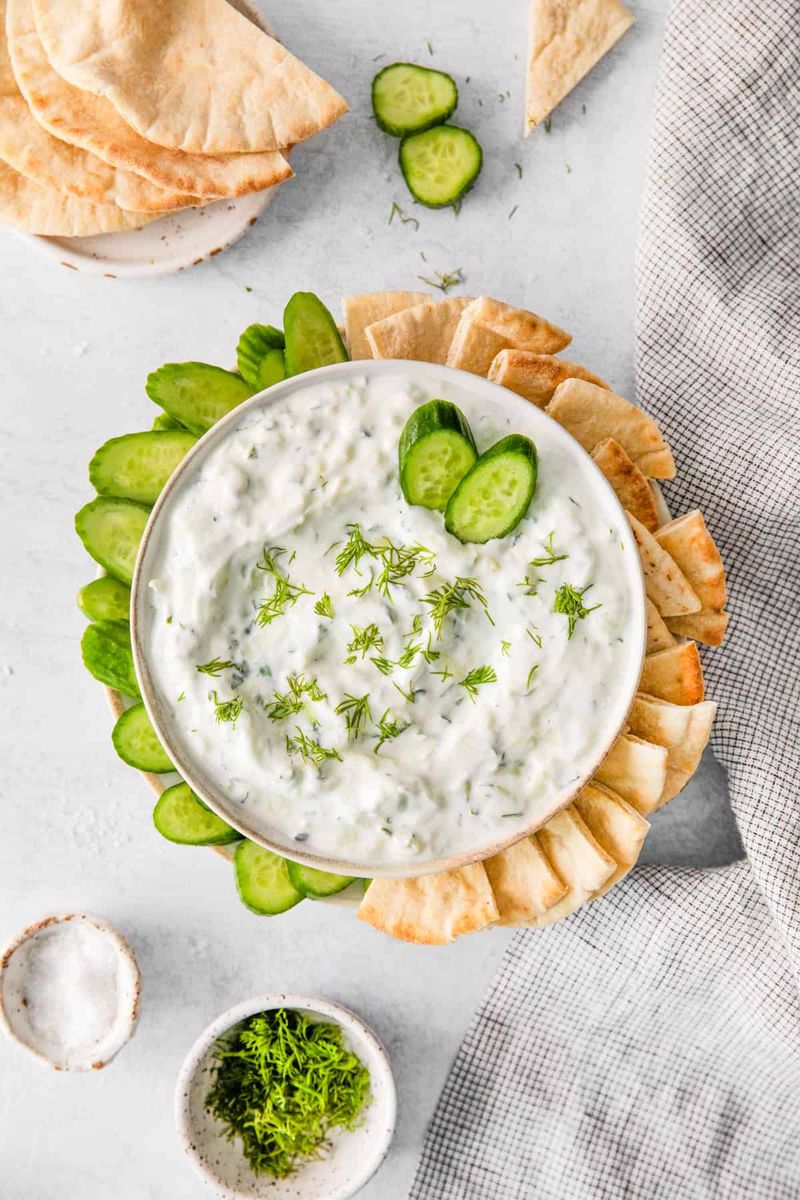
Cucumber brings plenty of water to a dip, which explains why a little squeezing makes such a difference. Remove some moisture before mixing it with yogurt, and you can build a thick tzatziki that stays on a pita wedge instead of making an unexpected escape onto someone’s party outfit nearby.
Grate half a cucumber, squeeze it in a clean kitchen towel, and stir it into plain Greek yogurt. Add chopped dill, lemon juice, and a little grated garlic, starting with less garlic than you think you need because its flavor can become more noticeable as the mixture rests before serving.
The yogurt contributes protein, while cucumber adds another vegetable to a meal that might otherwise focus mainly on bread. Choose plain yogurt rather than a sweetened variety, and use the fat level you enjoy, keeping your overall meal and dietary needs in mind rather than treating one ingredient as magic.
A picnic spread benefits from dippers that travel neatly, such as carrot sticks, pepper strips, and whole wheat pita. Pack the tzatziki in a sealed container inside an insulated cooler with enough ice packs, then leave it chilled until people are ready to eat instead of unpacking it with decorations.
For a buffet lunch, put out a modest bowl and refill it from a cold backup as needed. Perishable dips should not sit out longer than two hours, or one hour above 90 degrees Fahrenheit, so plan your serving schedule around the weather and the length of your gathering outside.
You can also serve tzatziki alongside cooked vegetables or spread it inside a wrap after the party ends. Label the dip for milk, keep its spoon separate from other dishes, and give leftovers prompt refrigerator space so a useful kitchen staple does not become an overlooked bowl beside the sink.
8. Roasted Eggplant Tahini Dip
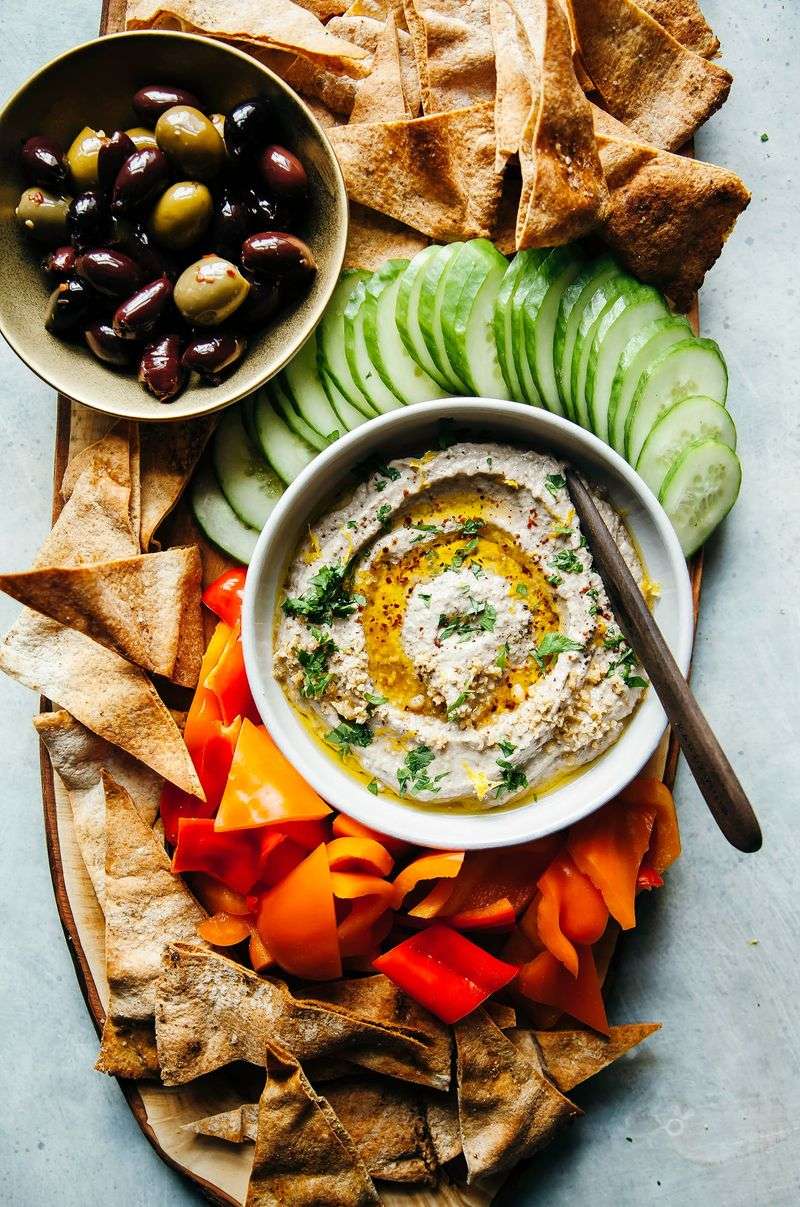
Eggplant becomes soft enough for dipping after roasting, so the oven handles much of the work for you. Once the flesh cools, you can mix it with tahini and lemon for a vegetable based spread that fits a relaxed dinner party without adding another complicated task to your cooking schedule.
Halve an eggplant, brush the cut surfaces lightly with olive oil, and roast until the flesh feels fully tender. Let it cool enough to handle safely, scoop the flesh into a bowl, and drain excess liquid before mashing so you can judge the final thickness more easily as you mix.
Stir in tahini, lemon juice, and a small amount of garlic, then taste before adding salt or more seasoning. Use a fork for a textured dip or a food processor for a smoother result, adding water sparingly because roasted eggplant already contains moisture that affects how the finished mixture holds.
Eggplant contributes fiber, while tahini adds mostly unsaturated fat and a rich sesame flavor to the vegetable base. Neither ingredient turns the dip into a complete meal by itself, so pair it with other foods rather than expecting a small scoop to cover your guests’ full range of nutritional needs.
Offer radishes, cucumber spears, and toasted whole grain pita when you set it out before the main course. A sprinkle of chopped parsley or paprika adds a finishing touch, but skip elaborate toppings if they complicate allergen labeling or make it harder for guests to recognize what they are choosing.
Because tahini contains sesame, make that ingredient clear on a small card beside the serving dish for guests. Prepare the dip ahead if convenient, refrigerate it promptly, and use a smaller bowl at the table so you can refresh the serving without exposing the entire batch during a long meal.
9. Edamame Ginger Dip
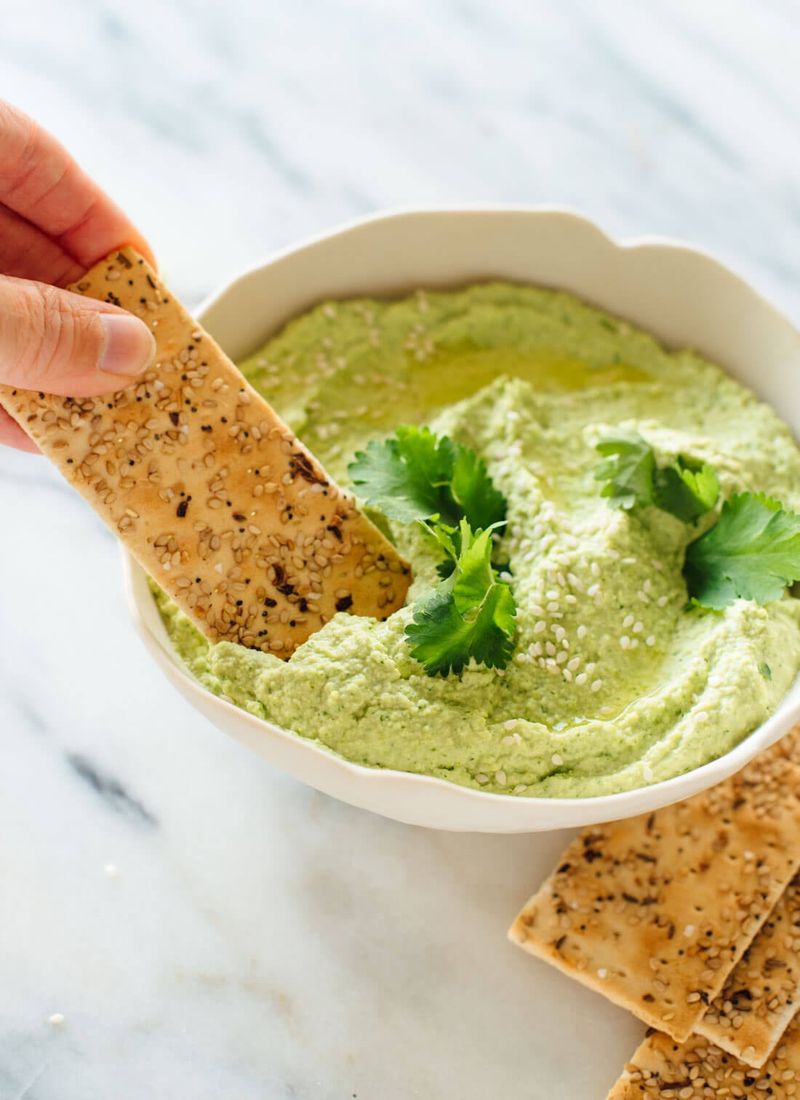
Green soybeans deserve a chance to work the snack table rather than staying beside the main course. Edamame supplies plant protein and fiber, and blending it with ginger and lime creates a dip that gives guests another option when the spread already includes hummus, salsa, or a familiar yogurt recipe.
Choose shelled frozen edamame and cook it according to the package instructions before using it in the dip. Cool the beans, then blend about two cups with lime juice, grated fresh ginger, a small garlic clove, and water added gradually until the blades can move the mixture without leaving chunks.
A little olive oil can soften the texture, while chopped scallions add flavor without requiring much extra preparation. If you want a smoother finish, give the blender more time and scrape down the sides between pulses, making sure the appliance has stopped before reaching near its blades with a spatula.
Keep salty seasonings modest, especially when you plan to serve crackers that already bring sodium to the snack plate. Taste the dip alongside your chosen dipper before adjusting it, since a spoonful sampled alone may seem less seasoned than the same mixture paired with a crisp, lightly salted rice cracker.
For a game night, arrange snap peas, cucumber sticks, and crackers around a clearly labeled bowl of dip. Edamame is soy, a major food allergen, so name that ingredient directly instead of relying on the dip’s color or a playful title to tell guests what is inside the serving dish.
Prepare a mild batch first and offer chili flakes separately for people who enjoy an extra kick with snacks. Store the mixture in the refrigerator until serving, and keep a little aside for lunch bowls later, giving tomorrow’s vegetables a flavorful companion without starting a new recipe from the beginning.
10. Cocoa Peanut Butter Yogurt Dip
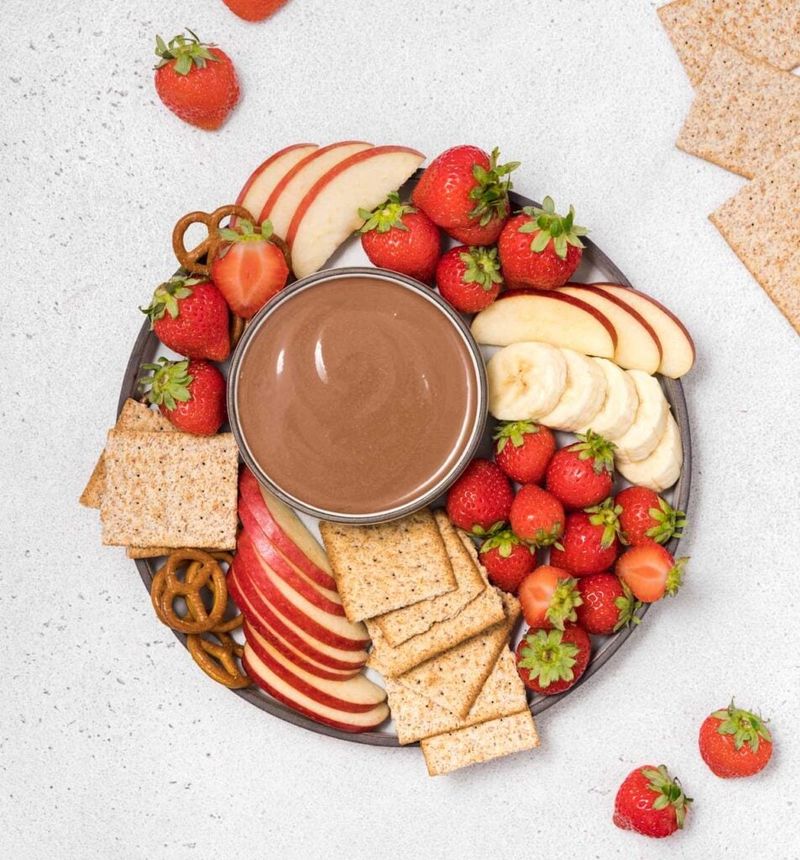
Dessert can arrive in a dip bowl, and fruit gets an easy invitation to join the final course. Plain Greek yogurt, peanut butter, and unsweetened cocoa make a simple base with protein and peanut flavor, giving a birthday spread or movie night a sweet option that you can adjust yourself.
Whisk one cup of plain Greek yogurt with two tablespoons of peanut butter and one tablespoon of unsweetened cocoa. Add a little maple syrup or another preferred sweetener to taste, then stir thoroughly so the cocoa blends into the yogurt instead of leaving dry pockets waiting for an unlucky scoop.
Choose smooth peanut butter if you want an even texture, and check its label for added sugar and sodium. You do not need to find a perfect jar, but comparing products helps you decide how much extra sweetness or seasoning belongs in the bowl after the main ingredients come together.
Serve with strawberries, banana rounds, and apple wedges, cutting the fruit shortly before guests plan to eat dessert. For younger children, choose shapes and sizes suited to their age and chewing skills, and avoid putting out whole nuts as a topping when they could create a choking risk for them.
Peanuts and milk need clear allergen labels here, and a shared fruit tray can spread those ingredients between bowls. Offer separate portions with clean utensils when needed, and remember that swapping in sunflower seed butter changes the recipe but does not automatically make it suitable for a specific guest’s allergies.
Keep the dip chilled until dessert time and put out only what guests are likely to finish soon. A sprinkle of cocoa makes a simple finish without extra fuss, leaving you with a dessert that feels playful, offers useful nutrients, and still understands that the party came first this evening.
Share this story