A single jelly packet on an empty plate can tell a Waffle House cook exactly how to make your eggs. No ticket needed.
Just a little grape or strawberry square, placed in a very specific spot.
The company’s own spokesperson has confirmed the system is real. She even compared its secrecy to a famous soda recipe, while admitting it sits in plain sight.
I like how something so tiny keeps a busy grill moving at all hours. I can’t imagine juggling a dozen orders without it.
The whole thing started with a chain born in Georgia, and it still runs on clever plate tricks today.
So what does a mayo packet really mean? And why would a pickle slice care about your bacon?
The answers are sitting right there on the plate.
The Plate Talks Before the Cook Does
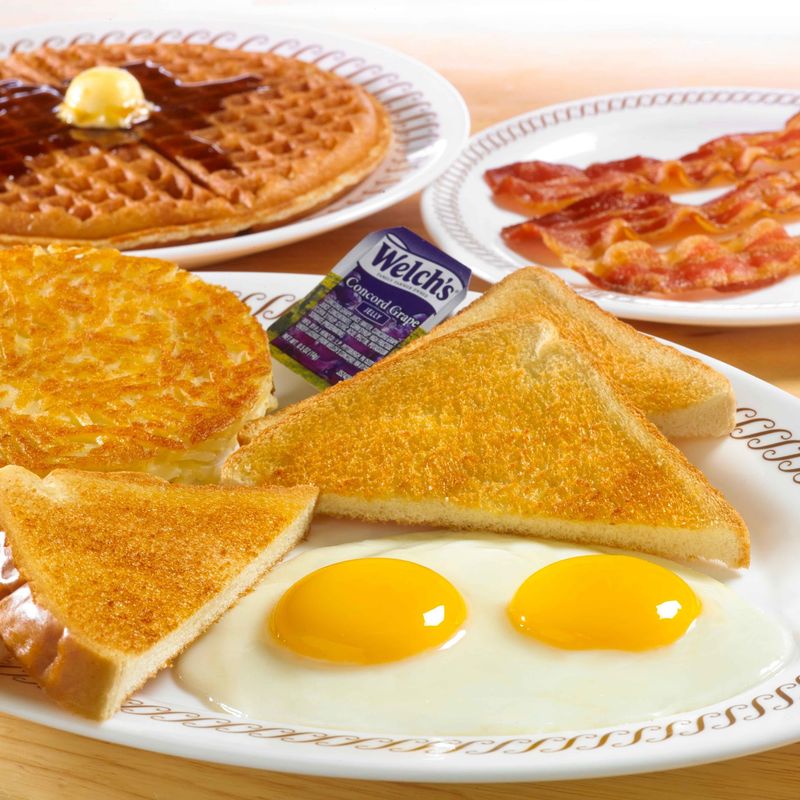
Most restaurants run on paper tickets. Waffle House runs on something closer to a puzzle, and it’s called the plate-marking system.
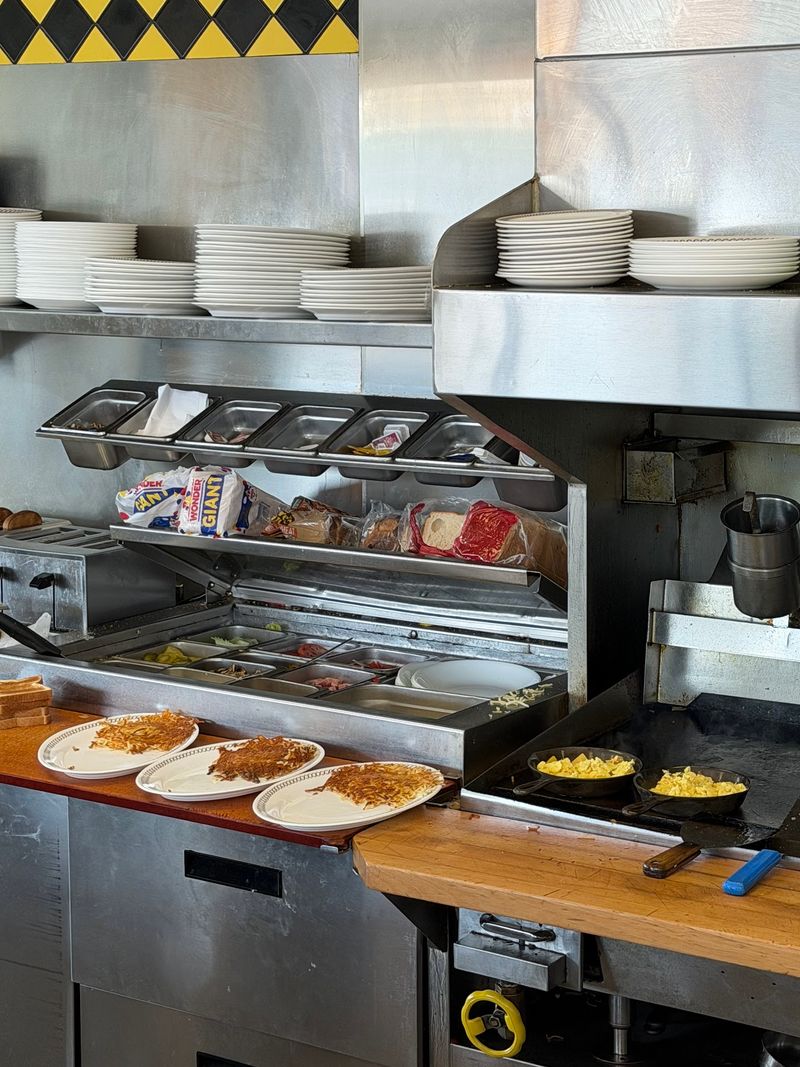
Here’s how it works. A server calls out an order, and the grill operator grabs a plate.
Then the cook drops condiment packets, pickles, or other small items onto it in exact positions.
Each spot and angle carries a message. The plate becomes a reminder card that never needs a pen.
Some folks call it the Magic Marker System, which sounds fancier than a jelly packet deserves.
Waffle House public relations director Njeri Boss has confirmed the method is real. She joked that it’s secret like the Coca-Cola recipe but hidden in plain sight.
I love that description, because it’s exactly right.
You could sit at the counter and see the whole thing happen. You just wouldn’t know what you were reading.
That’s part of the fun.
The system is now part of regular employee training. So every new grill operator learns this quiet language before mastering the waffle iron.
It’s a little like learning to read all over again, except the alphabet comes in tiny plastic packets.
Jelly Packets Pull the Heaviest Weight
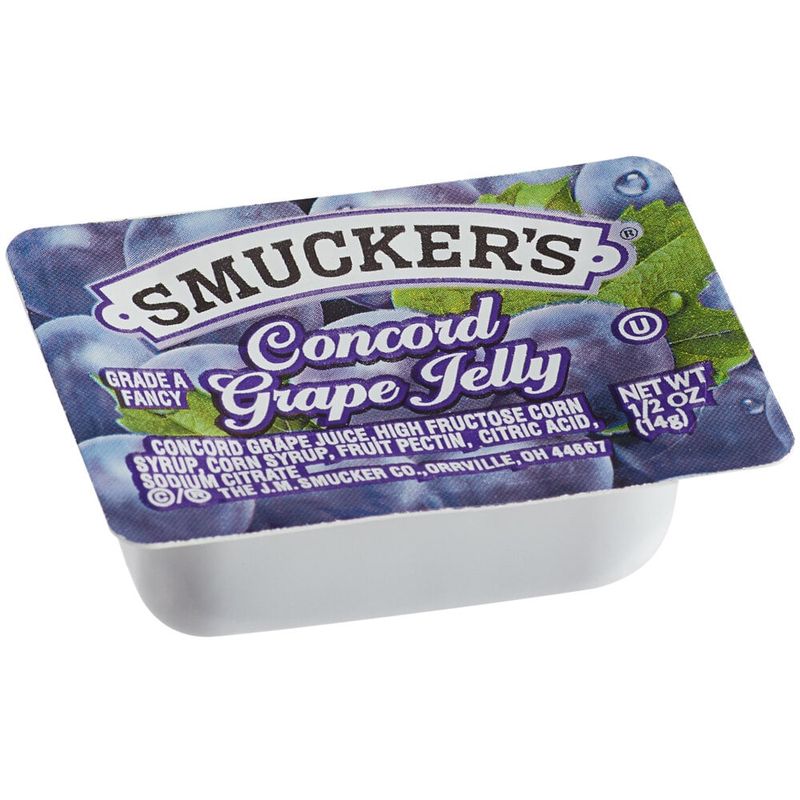
Grape jelly might be the hardest-working packet in the building. At Waffle House, its position on a plate can change an entire meal.
Reports on the system explain a few examples. A jelly packet placed horizontally at the top of a plate can signal an omelet with ham.
Turn that same packet vertical and move it lower, and it points to scrambled eggs.
One account describes a jelly pouch in the six o’clock position meaning two scrambled eggs. Top-of-the-plate placement has been linked to sunny-side-up eggs.
That’s a lot of responsibility for something you’d normally spread on toast.
The beauty is speed. A cook can glance at a row of plates and know what each one needs.
Nobody has to squint at handwriting or flip through a stack of tickets.
Keep in mind that codes can shift over time. The company has said the system gets refined, so exact meanings may vary.
Still, the basic idea stays the same.
Next time you see a jelly packet, give it a little respect. It may have already done a full shift of work before you ever peeled it open.
Mayo and Brown Sugar Have Secret Side Jobs
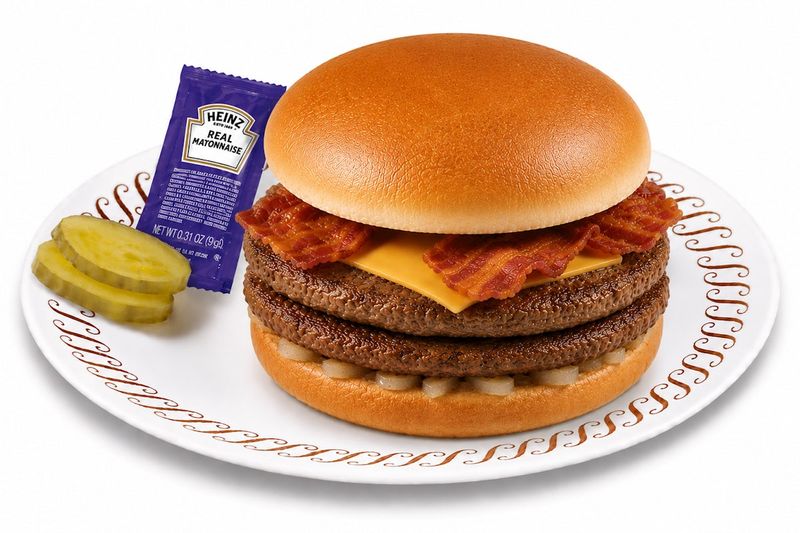
Mayonnaise has opinions about your eggs. At least, it does in a Waffle House kitchen.
According to reports on the code, mayo packets can show how well-done scrambled eggs should be. That’s handy, because egg preferences can get surprisingly personal.
Some folks want them soft, and others want them firm enough to bounce.
Then there’s brown sugar. A brown sugar packet sitting on a napkin has been described as a sign for grits instead of oatmeal.
A napkin, of all things, joins the conversation too.
I find this part delightful. Ordinary items get second careers as instructions.
Nothing new has to be bought, and nothing extra clutters the counter.
Small details like these help cooks handle custom requests. Waffle House menus offer plenty of choices, so the code needs room to cover them.
Packets give it that room without slowing anyone down.
If you ever order your eggs a very particular way, a mayo packet may be standing guard for you. That’s a funny thought to enjoy with your coffee.
It’s also proof that tiny tools can solve big kitchen headaches.
Pickles Keep Track of Your Breakfast Meat
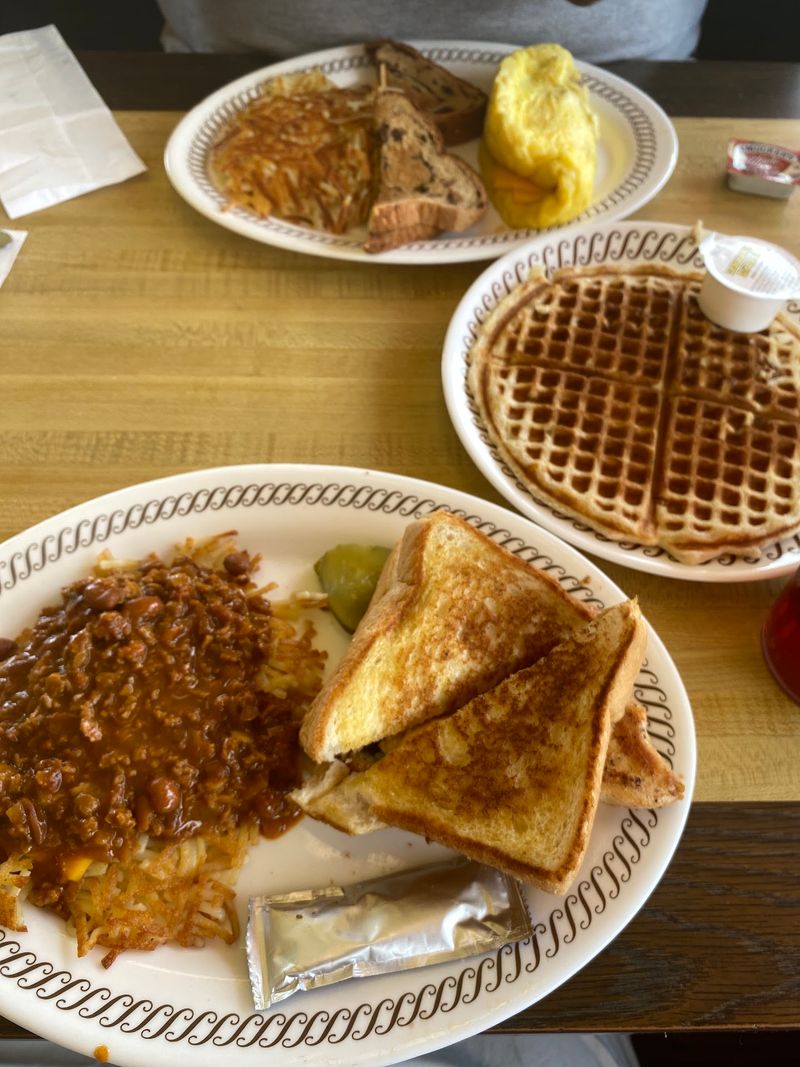
Two pickle slices at the bottom of a sandwich plate. Sounds random, right?
In this system, it reportedly means a breakfast sandwich with bacon.
Pickles get moved around the plate to show other meats too. A different spot can point to another choice, or even no meat at all.
So that little green circle is basically a menu shortcut.
Sandwiches can get complicated fast. Bread, eggs, cheese, and meat all need sorting.
A pickle placement settles the meat question with one quick move.
It’s also clever because pickles already belong near sandwiches. Cooks aren’t hunting for strange props.
They’re using what’s already at arm’s reach.
That efficiency matters at a diner known for staying busy around the clock. Every saved second adds up when plates keep coming.
Grill operators can line up orders and keep cooking without stopping to double-check.
I’ll admit, I’ll never look at a pickle on a diner plate the same way again. It could be decoration.
Or it could be quietly announcing bacon to everyone who knows the secret.
Fast Beats Fancy Every Single Time
Njeri Boss put it plainly when asked about the system. She said there really isn’t a better system than what Waffle House does.
Her reasons were simple. It’s fast, and it’s quite easy to learn.
Those two things matter a lot when the grill is full.
Paper tickets take time to write and read. Packets take a second to drop.
That difference lets cooks juggle many orders without losing track.
Memory alone can fail during a rush. Boss noted the marks mean grill operators don’t have to rely only on remembering everything.
The plate does part of the thinking.
Many Waffle House locations have compact, open kitchens. A visual code fits that kind of space nicely.
There’s no need for ticket rails or printers everywhere.
There’s another bonus too. A system built on packets doesn’t need electricity to work.
That’s useful for a chain famous for staying open when conditions get rough.
Fancy screens look modern, but they can’t beat a jelly packet for pure reliability. Sometimes the old-school answer is the smartest one.
Waffle House seems to agree completely.
Cooks Invented It Long Before It Was Official
Nobody sat in a boardroom and dreamed this up. The plate code grew from the grill itself.
Early grill operators developed their own small markings to remember orders. Servers called out requests, and cooks needed a quick way to keep them straight.
Little tricks started showing up on plates.
Over time, those personal habits came together into one shared method. Eventually, Waffle House began teaching it to new employees as a standard practice.
A homemade shortcut became company tradition.
I like that story because it gives cooks the credit. The people closest to the heat solved the problem.
That feels fitting for a diner built on working hard at every hour.
The exact start date isn’t clearly documented. Stories about its origin get passed around, but solid details are hard to pin down.
What’s certain is that it works.
The code also keeps changing. It has been improved over the years to match the menu and the kitchen.
So the version used today may look different from an older one.
Think of it as a recipe that’s still being tweaked. Generations of cooks have added their own pinch.
Your Hash Browns Come With Their Own Vocabulary
Scattered, smothered, covered. If you’ve heard those words together, you already know a bit of Waffle House language.
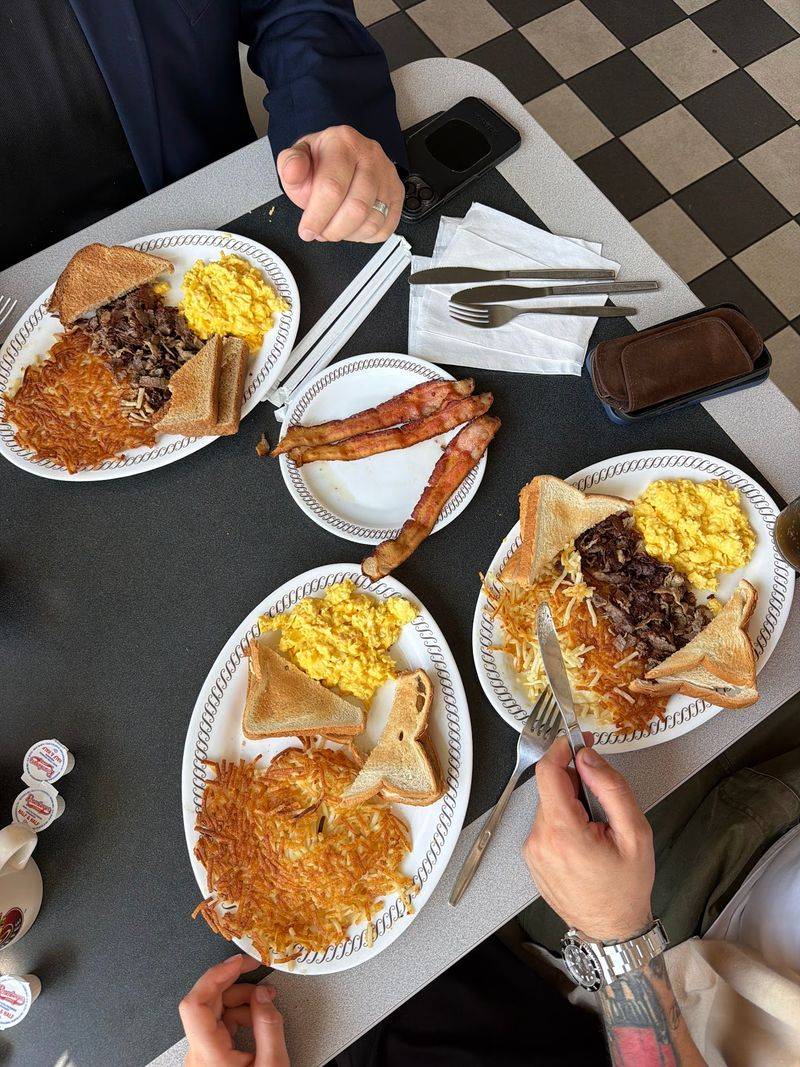
Hash browns at Waffle House come with fun ordering terms. Smothered means onions.
Covered means cheese, and chunked means hickory-smoked ham.
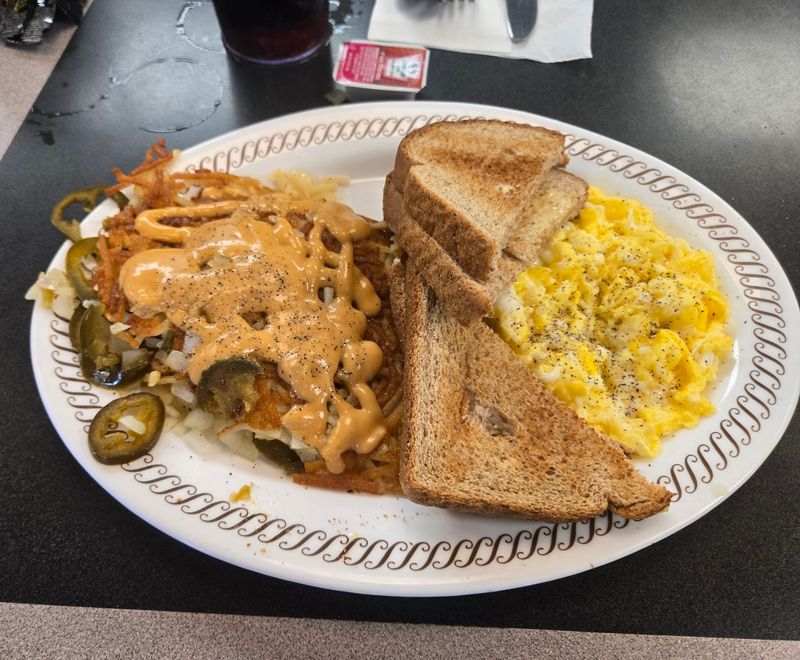
Peppered brings jalapeños to the party. You can stack these choices together, which makes every order feel custom.
It’s also why cooks need a sharp system for tracking everything.
The spoken words and the plate code work as a team. Servers call out the hash brown style using these terms.
Then the grill operator turns that order into food.
The rest of the menu keeps things busy too. There are waffles, eggs, sandwiches, burgers, and steaks.
The well-known All-Star Special pairs eggs, hash browns, a waffle, meat, and toast.
With that many combinations, guessing simply isn’t an option. A clear code helps each plate match the request.
That’s a big deal when hungry people are waiting.
I think learning the hash brown words is the easiest way to join the fun. You’ll sound like a pro before your coffee cools.
A Georgia Neighborhood Started the Whole Show
Two neighbors had a simple idea in 1955. They wanted a fast, sit-down restaurant that stayed open all day and night.
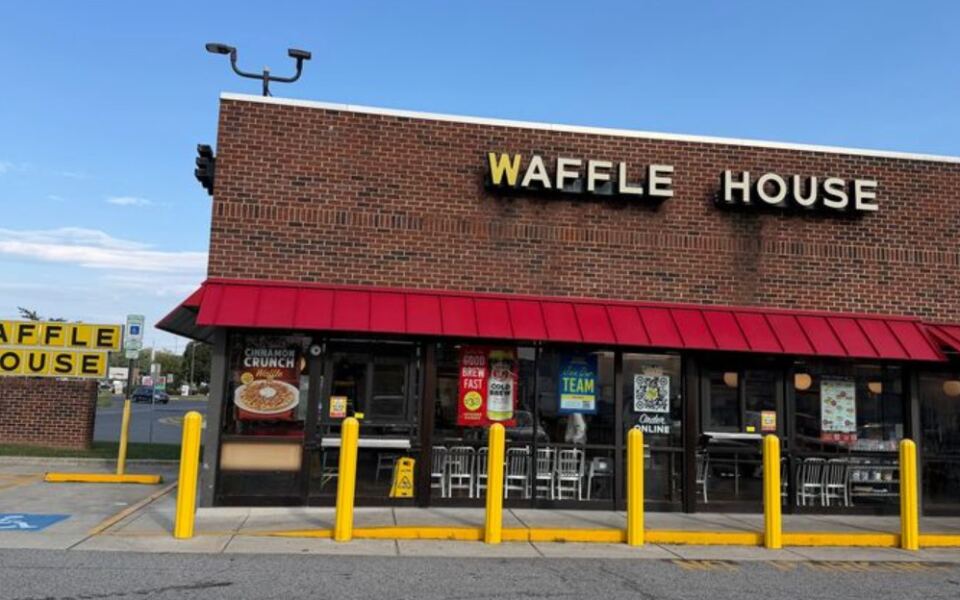
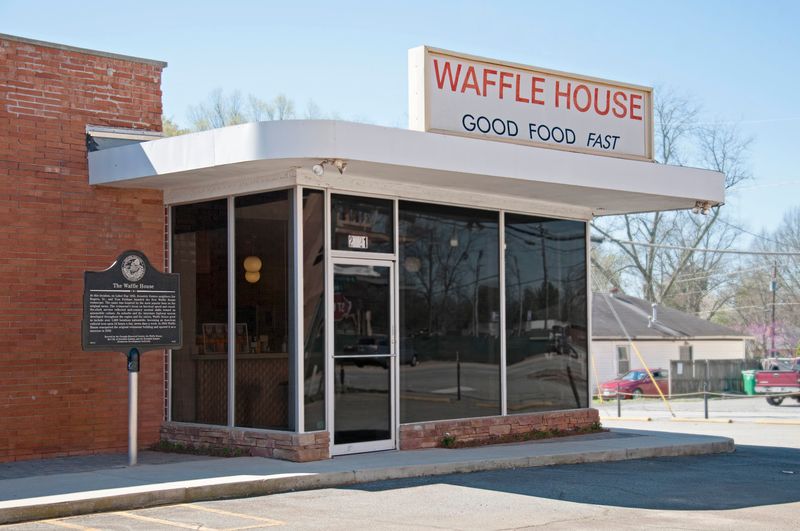
Joe Rogers Sr. and Tom Forkner opened the first Waffle House on Labor Day weekend, September 5, 1955. It sat in Avondale Estates, Georgia.
Their early menu had 16 items.
The name came from smart math. Waffles were the most profitable item on that first menu.
So the restaurant got named after its best earner.
The original building still stands at 2719 East College Avenue, Avondale Estates, GA 30002. It’s no longer a working restaurant.
Instead, it has been restored as the Waffle House Museum.
Waffle House, Inc. now has its headquarters in Norcross, Georgia. The chain has grown to roughly 2,000 locations across 25 states.
That’s a lot of jelly packets doing double duty.
I like that the company never strayed far from home. Georgia shaped its style, its pace, and its love of breakfast.
The plate code fits right into that practical spirit.
A tiny diner from a quiet suburb ended up teaching cooks a whole new language.
Even Emergency Planners Keep an Eye on It
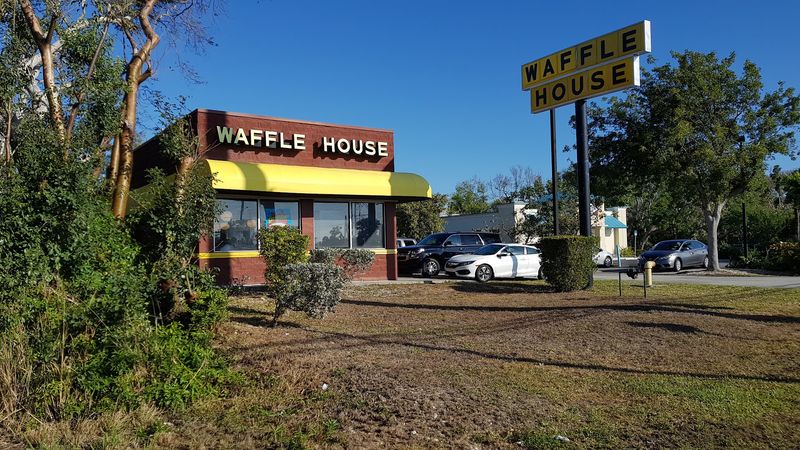
FEMA once borrowed a breakfast chain to measure storms. That’s how famous Waffle House is for staying open.
The idea is called the Waffle House Index. Green means a location is open with a full menu.
Yellow means it’s open with a limited menu.
Red means the restaurant is closed. Because Waffle House works so hard to stay open, a closure signals serious trouble in the area.
Former FEMA leader Craig Fugate helped make the idea well known.
Here’s where the packets matter. A plate code doesn’t need power, printers, or screens.
That kind of simple system can keep a kitchen moving when things get messy.
Most locations operate 24 hours a day, every day of the year. Travelers, night-shift workers, and early risers all count on them.
The doors rarely close, even on holidays.
Georgia and much of the South know that yellow sign well. It often glows off the highway at odd hours.
That steady light feels reassuring.
So when you spot that jelly packet on a plate, remember its bigger job. It’s part of a system built to keep going, rain or shine.
Share this story